
Font size
 Worksheets
APES Quiz #2 - Terrestrial & Aquatic Biomes
Total questions: 40
Worksheet time: 34mins
Which biome, because of its climate, has the largest number of species of plants and animals?
tundra
desert
tropical rainforest
chaparral
Which major biome is home to cacti, mesquite, white thorn, pack rats, small reptiles, and coyotes?
desert
taiga
rainforest
grassland
Which biome contains large populations of grazing herbivores, few species of birds, and deep, rich soil?
Boreal Forest
Tundra
Deciduous Forest
Grassland

Northern biome with many coniferous trees; very cold temperatures in the winter months.
Taiga (Boreal Forest)
Savanna
Desert
Temperate Rainforest
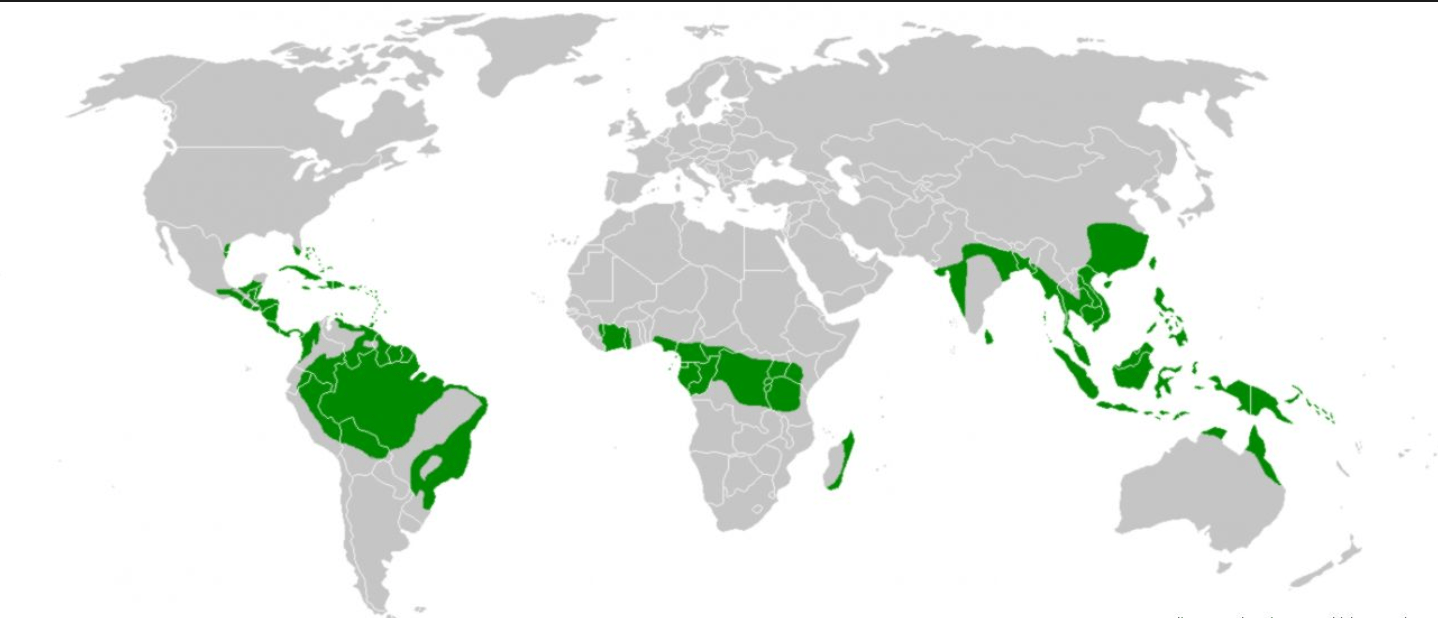
Which biome covers most of the land mass near Earth's equator?
tundra
desert
grassland
tropical rainforest

Which biome has deciduous trees (that lose their leaves in the fall)?
Temperate Forest
Rainforest
Grasslands
Taiga

Which biome has 4 seasons?
Taiga
Tundra
Tropical Rainforest
Temperate Forest

Which biome is highlighted in the picture?
Desert
Taiga
Temperate Forest
Tropical Rainforest
Which biome has less than 25cm of rain each year?
Grasslands (Savanna)
Temperate Deciduous Forest
Desert
Rainforest

The three-toed sloth is adapted to living in a hot, humid climate with lush vegetation and no seasons. What biome would you most liked find this organism?
Temperate Deciduous Forest
Tropical Rainforest
Grasslands
Taiga (Boreal Forest)

Which biome do we live in?
Grasslands
Taiga
Rainforest
Temperate Forest

Which biome is represented by the rainfall amounts in letter C?
desert
prairie
deciduous forest
tropical rainforest

Which best explains why there are fewer plants on the forest floor than in the canopy of the tropical rain forest?
more precipitation
less protection from animals
more human interference
less sunlight

In a tropical rain forest, the layer which forms an umbrella effect with trees is called the ____________ and the layer of shorter trees and vines underneath that layer is called the ____________.
canopy; understory
understory; canopy
top; middle
green; brown

What biome is located on the map?
tropical rainforest
taiga
temperate rainforest
desert
These biomes are open, fairly flat areas that cover one fourth of the world's land. They can be found on every continent except Antarctica
Taiga
Desert
Grassland
Tropical Rainforest

Which type of biome is it?
Temperate grassland
Taiga
Desert
Savanna grassland

Match the following
when a plant or animal changes physical or behavioral characteristics over many generations to better survive in their environment
adaptation
animals or birds that move depending on the season
migratory
the long-term temperature, humidity, precipitation, wind, etc in an area
climate
have similar ecosystems, climates, vegetation, and wildlife
biome

One characteristic feature of the tundra is that only the surface thaws in the summer and refreezes in the winter, leaving a permanently frozen subsoil. This characteristic is known as (a)

The kangaroo rat is able to get all of the water it needs through its food and therefore, never needs to drink liquid. This animal has adapted to survive in which biome?
Forest
Tundra
Desert
Grassland
Which biome is characterized by low temperatures and low amounts of rainfall?
Tundra
Desert
Temperate Deciduous Forest
Tropical Rainforest


The rain forest soil is
poor and rocky
frozen soil
thick and nutrient rich
thin and nutrient poor

What are the 2 types of aquatic biomes?
rivers and streams
lakes and oceans
marine and fresh water
marine and oceanic

The kind of wetland formed where saltwater and fresh water meet is called
brujeria
estuary
swamp
marsh
What is the single most important difference between the marine, freshwater, and estuary biomes?
Salinity (dissolved salt)
Sunlight
Oxygen
Amount of Water
The major biological source of dissolved oxygen in the ocean comes from
decomposition of organic sediments on the ocean floor
oxidation of sulfur by bacteria in ocean vent communities
photosynthesis by phytoplankton
respiration by zooplankton

Tropical trees that grow in COASTAL wetland areas and have roots with breathing pores...
Coniferous
Mangroves
Tussocks
Deciduous
non woody trees

The intertidal zone of oceans
surrounds continents
is on the coastline
has tides that rise and fall each day
is the open ocean
ends at the continental shelf

Receives less than 10 in. of rain per year. Plants in this biome have many adaptations to prevent water loss, & animals tend to be nocturnal.
desert
Alternating wet & dry seasons with animals & plants adapted to drought (a.k.a. tropical or subtropical grasslands). Elephants, zebras, & lions are found here.
savanna
Located along the equator, this biome has the highest species biodiversity of all the biomes. Exotic plants & animals are found here.
tropical rainforest
Found near large bodies of water. The climate is nice here year round. Plants are resistant to fire & others actually promote fire!
chaparral
Found north & south of the tropical rainforests. They get less rain than a tropical rainforest but more than a savanna. Deciduous trees are found here.
tropical dry forest
Permanently frozen soil, dwarf forms of plants, little precipitation, little decomposition.
tundra
This biome in the northwestern USA has a cold winters and hot summers with abundant rainfall to support very tall trees like redwoods and sequoias.
temperate rainforest
A forested biome dominated by evergreen, cone-shaped, and cone-bearing plants.
taiga
Four distinct seasons with precipitation evenly distributed through the year. Common plants and animals include oak, hickory, deer, bears and many songbirds.
temperate deciduous forest
The hot and dry summers, along with low and dense plant growth makes the risk of fire high in this area. Prairie dogs are found here.
temperate grassland

The biome shown in the climatogram above would best be described as a:
temperate deciduous forest
desert
tundra
tropical rain forest

Which biome is best represented in this climatograph?
Tundra
Desert
Tropical rainforest
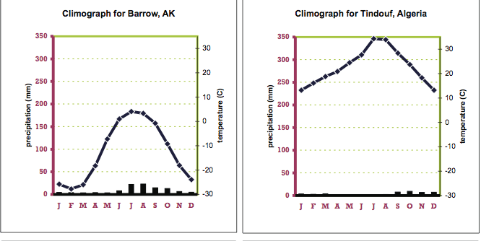
Which of the following is a similarity between the tundra and the desert?
low temperatures
high temperatures
low precipitation levels
permanently frozen ground

