
Font size
 Worksheets
Section 5: Cell transport
Total questions: 11
Worksheet time: 7mins
Every living cell exists in a liquid environment that it needs to survive. The plasma (a) is selectively permeable, meaning only certain molecules are allowed in and out of cells.
모든 살아있는 세포는 생존에 필요한 액체 환경에 존재합니다. 원형질막은 선택적으로 투과 가능합니다. 즉, 특정 분자만 세포 안팎으로 허용됩니다.

(a) — particles tend to move from an area where they are more concentrated to an area less concentrated.
확산 - 입자는 더 집중된 영역에서 덜 집중된 영역으로 이동하는 경향이 있습니다.

In cells substances can diffuse across membranes WITHOUT requiring use of energy
세포에서 물질은 에너지를 사용하지 않고도 막을 통해 확산될 수 있습니다.
passive transport
facilitated diffusion
active transport
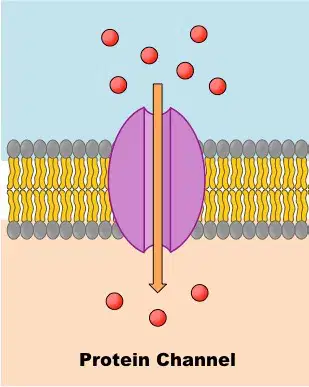
molecules that cannot diffuse on their own, moves through protein channels in membrane
스스로 확산할 수 없는 분자는 막의 단백질 채널을 통해 이동합니다
passive transport
facilitated diffusion
active transport
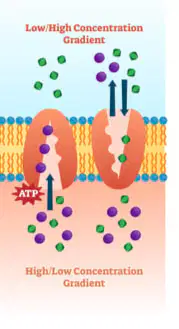
transport protein (carrier) protein requires ENERGY to help move particles across the membrane against a force
수송 단백질(운반체) 단백질은 힘에 대항하여 막을 가로질러 입자를 이동시키는 데 에너지가 필요합니다.
passive transport
facilitated diffusion
active transport
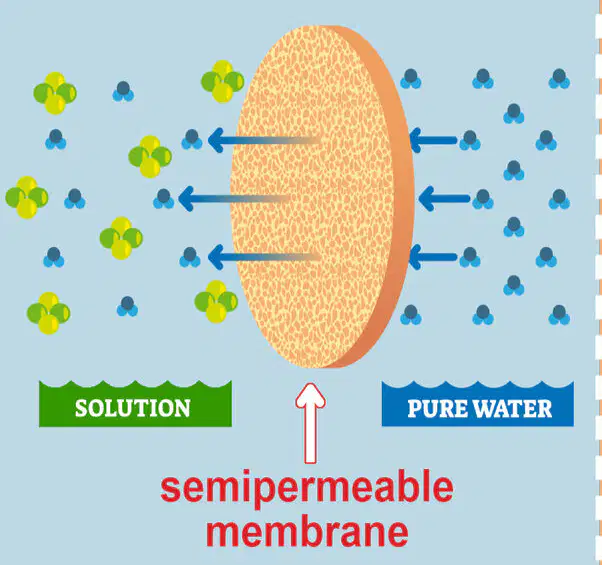
(a) — diffusion of water across a selectively permeable membrane
삼투 - 선택적으로 투과성 막을 통과하는 물의 확산

large particles are engulfed, then enclosed by cell membrane — moves into cell
큰 입자는 삼켜진 다음 세포막으로 둘러싸여 세포 안으로 이동합니다.
endocytosis
exocytosis

large particles are released from cell by secreting them or expelling them out
큰 입자는 세포를 분비하거나 추방하여 세포에서 방출됩니다.
endocytosis
exocytosis
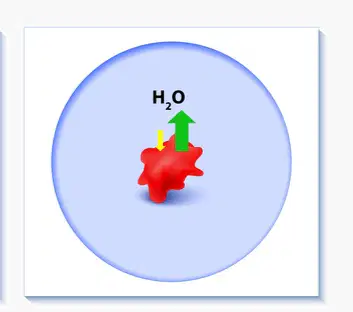
solution has higher solute concentration than cell, causing animal cells to shrink
용액의 용질 농도가 세포보다 높아 동물 세포가 수축됩니다.
hypertonic solution
isotonic solution
hypotonic solution

cells neither lose or gain water - concentration of solutes is the same inside and outside the cell
세포는 물을 잃거나 얻지 않으며, 용질의 농도는 세포 안팎에서 동일합니다.
hypertonic solution
isotonic solution
hypotonic solution
solution has lower solute concentration than cell causing animal cells to swell and burst
용액의 용질 농도가 세포보다 낮기 때문에 동물 세포가 부풀어 오르고 터집니다.
hypertonic solution
isotonic solution
hypotonic solution

