
Font size
 Worksheets
Q1 Benchmark Review
Total questions: 18
Worksheet time: 12mins
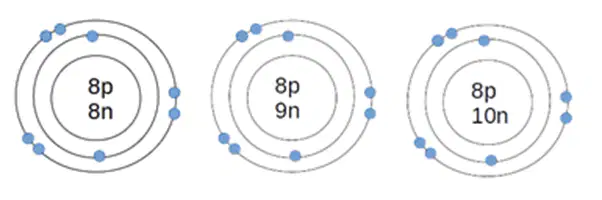
Natasha was comparing models of three atoms. She noticed they contained the same number of protons, but a different number of neutrons. Which of the following statements is TRUE for the atoms shown?
Each of the atoms represents isotopes of the same element.
Each of the atoms represent ions of the same element.
Each of the atoms represents a different element.
None of the atoms are neutral atoms.
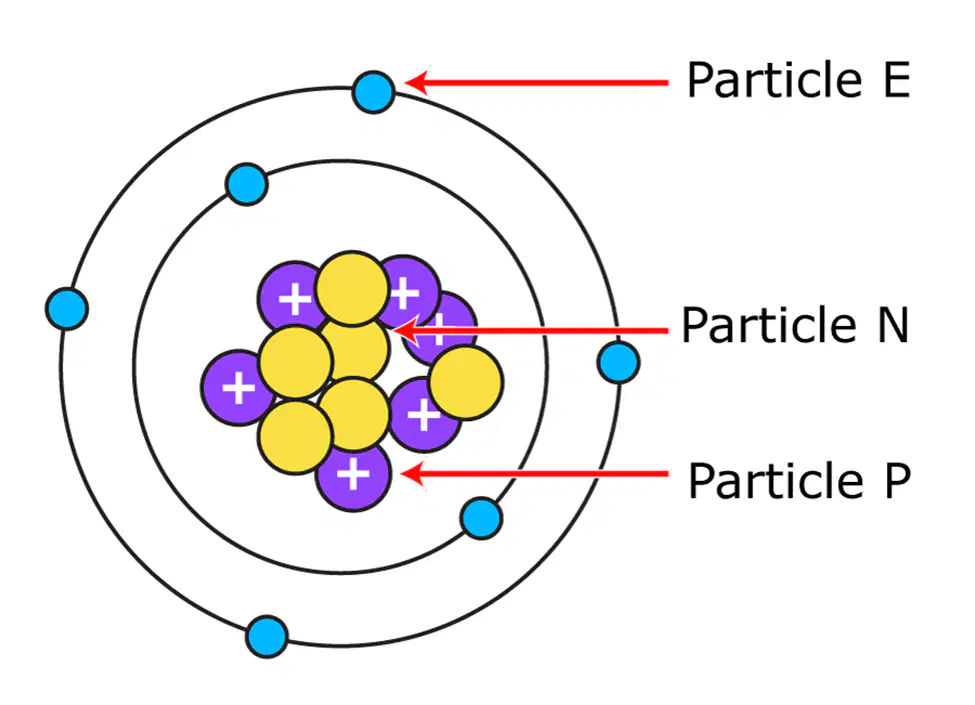
This is a model of a neutral carbon-12 atom. Which subatomic particle needs to be added in this atom so that is will become carbon-13?
One particle E needs to be added to its shells.
On particle P needs to be added to its nucleus.
One particle N need to be added to its nucleus.
On particle P and one particle N needs to be added to the nucleus.
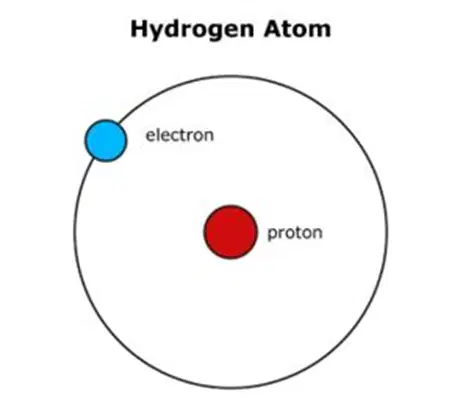
This is a model of a neutral hydrogen atom. Which of the following models represents a hydrogen atom with an atomic mass of 2?

A

B

C

D
When forming a bond, which ion will aluminum form?
–5 ion
-3 ion
+3 ion
+5 ion
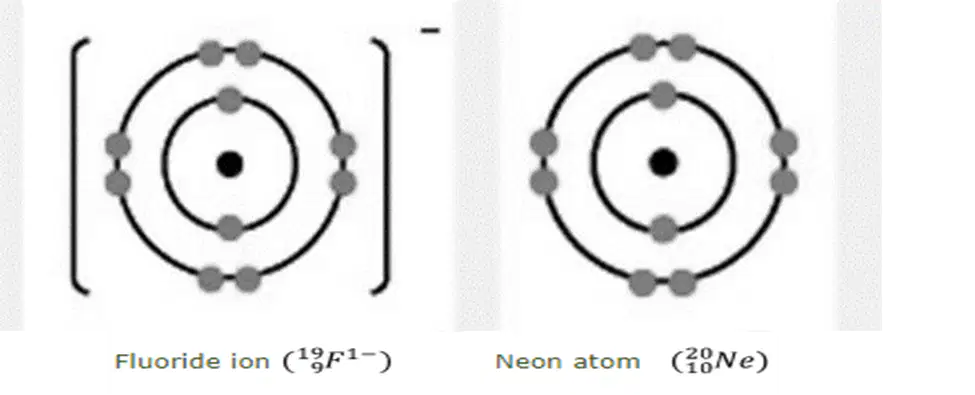
A fluoride ion and neon atom are shown. Which of the following comparisons is true?
The fluoride ion has a different electron configuration than the neon atom because of the 1- negative charge.
They are similar because fluorine atom with a single negative charge has the same number of electrons as neon atom with a single negative charge.
They have the same number of electrons and protons because the nucleus of a fluoride ion is the same as the nucleus of a neon atom and both have 10 protons.
They have the same number of electrons but different number of protons because, the fluoride ion has 9 protons and 10 electrons, while the neon atom has 10 protons and 10 electrons.
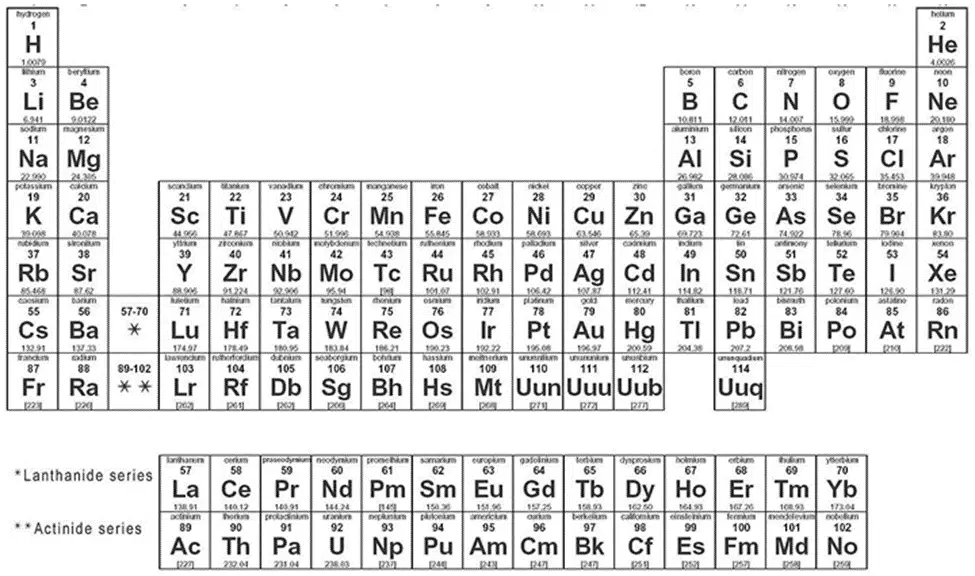
Using the data on the periodic table provided, which of the following statements is TRUE?
The number of valence electrons increase going from left to right because more electrons are added on the outermost energy level.
All of the transition metals are solids because they have more in common with metals than they do with nonmetals.
The noble gases are found on the right side of the periodic table because that is where the nonmetals are found.
All metals form negative ions because they give up electrons to form bonds in compounds.
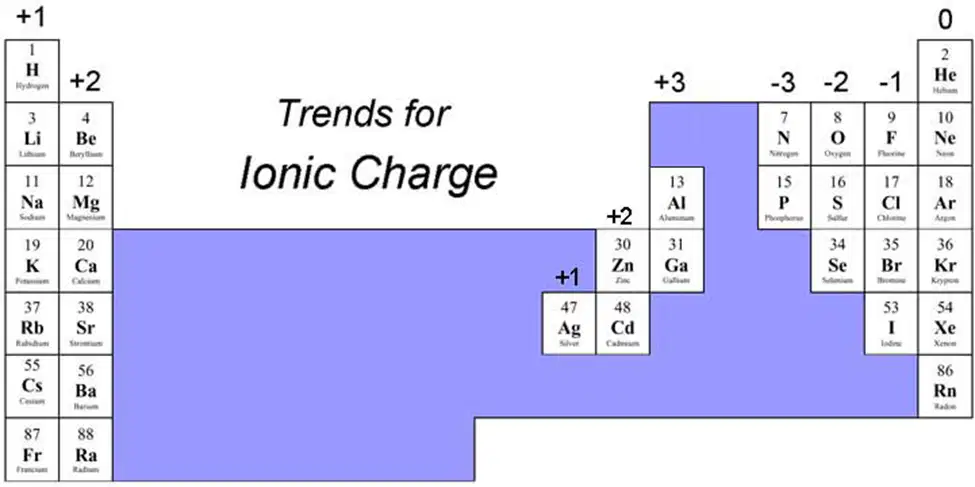
The chart shows ion charges for main group elements. How could the elements sulfur (S), neon (Ne), and magnesium (Mg) be organized in order of increasing number of valence electrons?
neon, sulfur, magnesium
sulfur, neon, magnesium
magnesium, sulfur, neon
magnesium, neon, sulfur
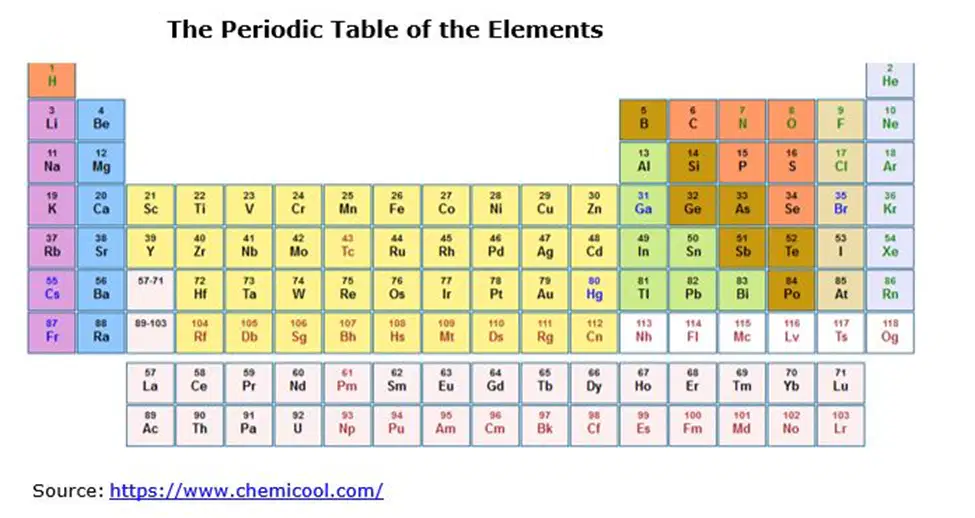
Throughout centuries, the metals copper (Cu), silver (Ag), and gold (Au) have been used to make coins and jewelry because they are less reactive with water, which makes them resistant to corrosion. They are also shiny and have remarkable colors. Which of the following explains how the similar properties of these three metals are reflected in the Periodic Table? (19036)
They all belong to the same group.
They all belong to the same period.
Copper is in group 4; silver is in group 5; and gold is in group 6.
Copper is in period 4; silver is in period 5; and gold is in period 6.
The periodic table shows the location of all the elements. Which element has chemical properties that are the most similar to chlorine (Cl), and why?
Sulfur (S), because it is in the same period as chlorine
Bromine (Br), because it is in the same group as chlorine
Sodium (Na), because it can combine with chlorine easily
Selenium (Se), because it belongs to the nonmetals like chlorine
Which of the following elements is a metalloid that would create a positive ion? (4261)
Aluminum
Antimony
Calcium
Sulfur
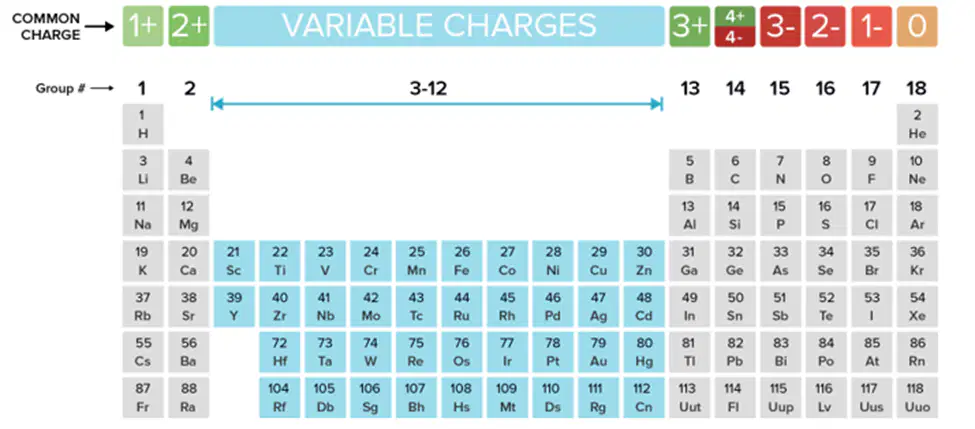
What pattern can you observe in the Periodic Table regarding the ions that elements tend to form?
Elements tend to form positive ions as they become more metallic.
Elements tend to form negative ions as they increase in electrical conductivity.
Elements tend to form positive ions as their melting and boiling points decrease.
Elements tend to form negative ions as they decrease in number of valence electrons.
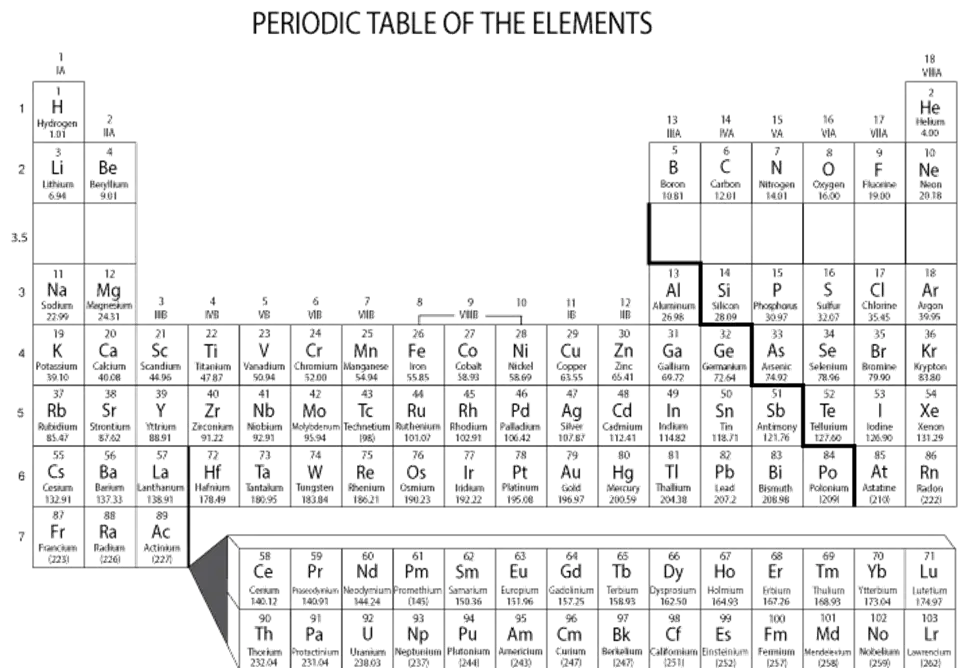
Suppose that some new elements were discovered and in placing these elements on the periodic table, scientists added an extra row to the periodic table. This new row is between rows two and three and will be known as period 3.5. Which THREE statements describe the properties of the elements in this new row on the periodic table?
The element in Group 2 will have two valence electrons and will likely be in a solid state.
The element in Group 14 will have characteristics of both metals and nonmetals and will be a semiconductor.
The element in Group 16 will have chemical and physical properties similar to those of chlorine, aluminum, and magnesium.
The element Group 15 will gain three valence electrons when forming chemical bonds and will have the atomic number 15.
The element in Group 17 will gain or share one valence electron when forming chemical bonds and is most likely in a gas state.
Which depicts the arrangement of particles in matter as the temperature is increased at constant pressure? (51641)

A

B

C

D
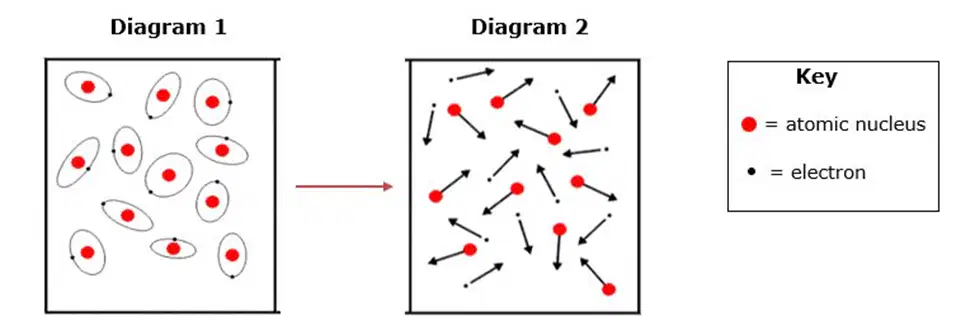
A teacher showed a student diagrams of a substance that went through a phase change. What question does the student need to ask to determine what phase change has taken place?
How much heat is within the system of diagram 1?
Is the substance electrically neutral in both diagrams?
What has happened to the parts of the atoms in diagram 2?
How much space is there between the particles in both diagrams?
Which of the following investigations could be carried out to prove that as pressure of a gas increases in a closed system, the volume will decrease?
study how a pressure cooker works to cook food
study a working model of the lungs and diaphragm
study a working piston system that is filled with air and then heated
study how a fire extinguisher works to displace the oxygen in a fire.
When a solid melts to form a liquid, or a liquid evaporates to form a gas, heat energy must be added to the substance to cause the phase to change from one form to another. Which TWO models indicate the changes in particle arrangement for the phase changes shown?
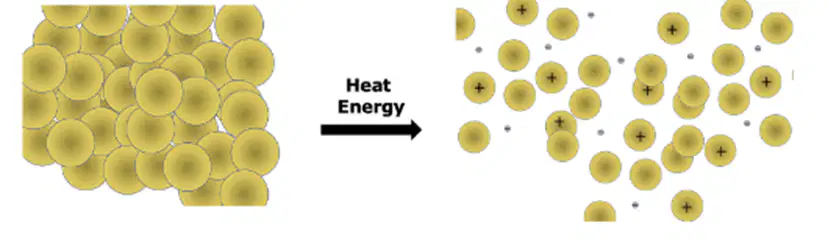
A
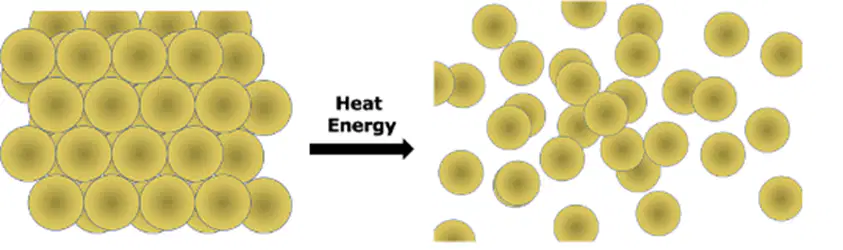
B
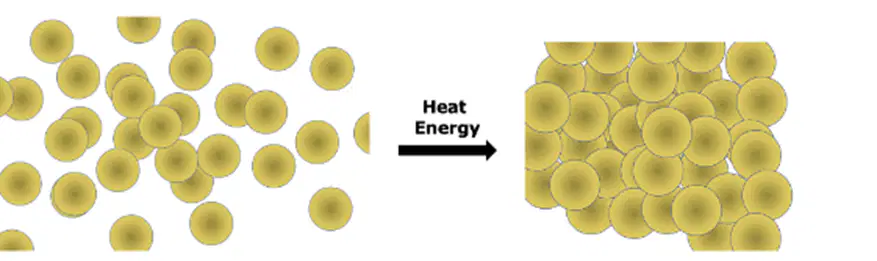
C
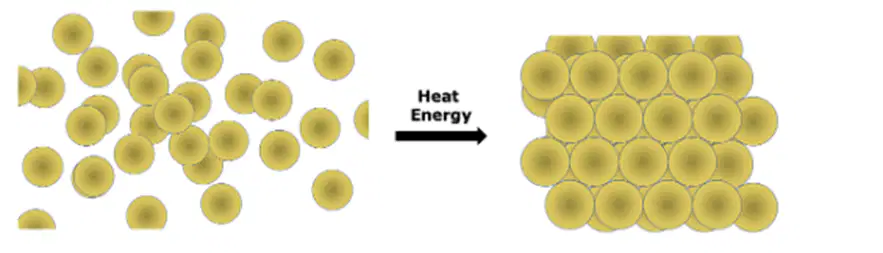
D
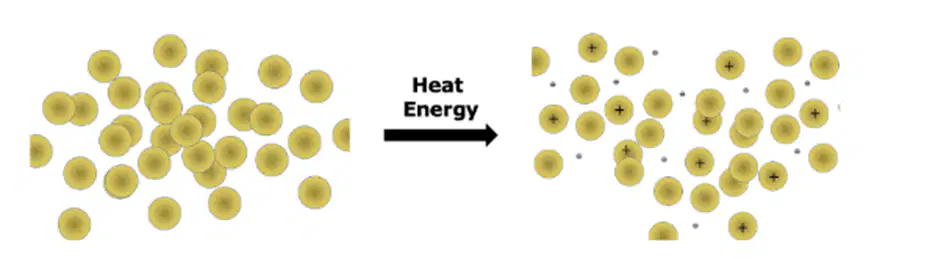
E
The Periodic Table of elements is a systematic arrangement of all known elements as rows and groups. The element chlorine is an example. Which TWO explanations show why the atomic number of each element is a whole number, while the atomic mass is not?
The atomic number is the number of electrons, but the atomic mass is the total mass of protons and neutrons for all known isotopes.
Protons only exist as whole particles, but the atomic mass represents a weighted average of the mass of all naturally occurring isotopes.
The atomic number is the number of protons, which is unique to each element, but the atomic mass is the sum of the mass for all protons and neutrons in the nucleus averaged for all naturally occurring isotopes.
The atomic number is exact because protons only exist as whole particles, but the atomic mass is not because isotopes can have fractional numbers of neutrons.
The atomic number is the number of electrons, but the atomic mass is sum of the number of electrons, protons, and neutrons averaged over all naturally occurring isotopes.
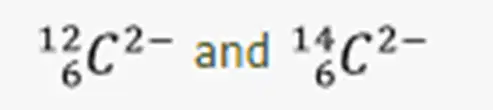
Two ions of carbon are shown in the picture. For ease of reading each ion will be listed as 12C and 14C to keep the view simpler (but all the numbers remain important!)
12C has 6 electrons, 6 protons and 6 neutrons whereas 14C has 8 electrons, 6 protons and 6 neutrons
12C has 8 electrons, 6 protons and 6 neutrons whereas 14C has 8 electrons, 6 protons and 6 neutrons
12C has 8 electrons, 6 protons and 6 neutrons whereas 14C has 6 electrons, 6 protons and 8 neutrons
12C has 8 electrons, 6 protons and 6 neutrons whereas 14C has 8 electrons, 6 protons and 8 neutrons

