
 Worksheets
Chapter 4: Tissue: The Living Fabric
Total questions: 30
Worksheet time: 16mins
During the process of tissue repair, which of the following processes produces scar tissue?
Inflammation
Clotting
Regeneration
Secretion
Fibrosis
Embryonic ectoderm develops into which of the following major tissue types?
connective tissue and epithelial tissue
muscle tissue and epithelial tissue
epithelial tissue and nervous tissue
nervous tissue and muscle tissue
connective tissue and muscle tissue
What type of tissue forms tendons
dense irregular connective tissue
adipose
dense regular connective tissue
areolar
elastic cartilage
The basement membrane is located between which of the following tissue types
muscle and nervous tissues
nervous and connective tissues
epithelial and muscle tissues
epithelial and connective tissues
connective and muscle tissue
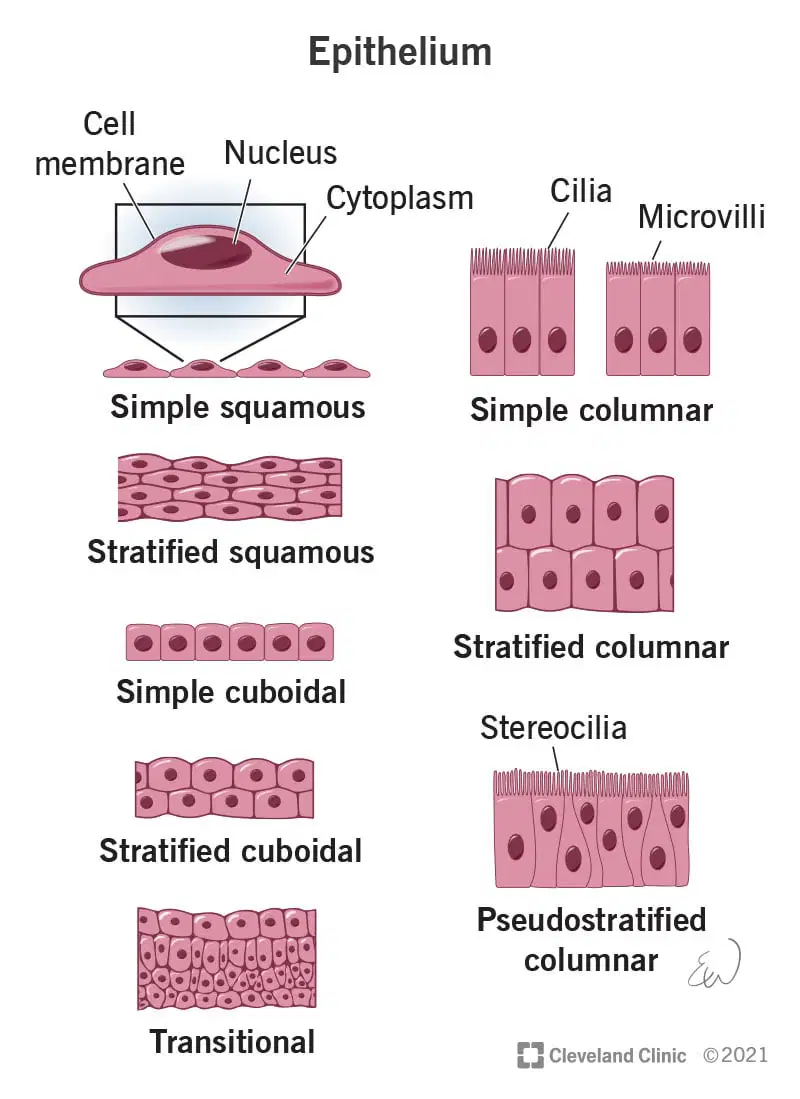
Which of the following types of epithelial tissue lines the interior of blood vessels?
stratified squamous epithelium
simple cuboidal epithelium
simple squamous mesothelium
transitional epithelium
simple squamous endothelium
Which of the following is a unicellular gland associated with mucus production?
macrophage
chondrocyte
goblet cell
plasma cell
fibroblast
Which of the following apical epithelial cell structures function(s) in the movement of materials across the surface of the cell?
flagellum
reticular lamina
keratin
microvilli
cilia
Which of the following descriptions best describes a squamous-shaped cell?
a spherical cell
a cell that is taller than it is wide
a cell that possesses the ability to change its shape
a cell that is as wide as it is tall
a flattened, scale-like cell
Which of the following correctly characterizes epithelial tissue?
It exhibits polarity
It is vascularized
It lacks innervation
It has a low rate of regeneration
It has loosely compacted cells
What are the 4 major tissue types?
Epithelial
Connective
Muscle
Nervous
Adipose
What is the epithelial membrane that lines body cavities closed to the exterior?
Mucous
Cutaneous
Serous
Hypodermis
Areolar, Adipose, & Reticular tissue is considered?
Dense connective tissue
Loose connective tissue
Regular connective tissue
Irregular connective tissue
What is the epithelium of serous membranes?
Simple cuboidal epithelium
Endothelium
Pseudostratified columnar epithelium
Mesothelium
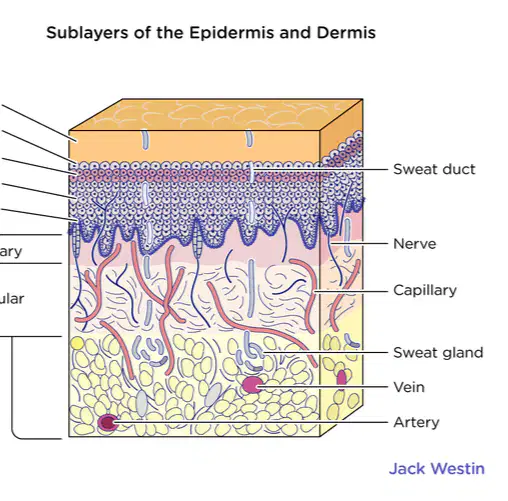
What is the correct order of the layers of the Epidermis? (Deep to Superficial)
Spinosum, Basal, Granulosum, Lucidum, Corneum
Corneum, Lucidum, Granulosum, Spinosum, Basal
Basal, Spinosum, Granulosum, Lucidum, Corneum
Basal, Spinosum, Lucidum, Granulosum, Corneum
Endocrine glands contain ducts to produce hormones. (T/F)
True
False
Cartilage that is found in costal cartilages, ribs, tip of nose, trachea
Fibrocartilage
Elastic
Hyaline
Areolar
All connective tissue arises from mesenchyme. (T/F)
False
True
Which are the involuntary muscles?
Cadiac
Skeletal
Smooth
Nervous
Highly specialized nerve cells that generate and conduct nerve impulses are?
Ganglia
Axons
Neurons
Neurotransmitters
Which steps are involved in tissue repair?
Inflammation
Remodeling
Generation
Organization
All connective tissues share what features in common?
secretion of ground substance and elastic fibers
polarity and fast regeneration rate
mesenchymal origin and secretion of ground substance
mesenchymal origin and fibroblasts
chondroblasts and fibroblasts
Which of the following tissues lines the majority of the digestive tract, from stomach to rectum?
transitional
stratified cuboidal
simple columnar
pseudostratified ciliated columnar
simple squamous
Transitional epithelium can be found in which body system?
urinary
nervous
lymphatic
cardiovascular
respiratory
What type of connective tissue provides support and protection for body structures and is a site for synthesizing blood and fat storage?
blood
reticular connective tissue
cartilage
nervous tissue
osseous tissue
Which of the following is found on the surface of the skin?
cartilage
simple columnar epithelium
stratified squamous epithelium
stratified cuboidal epithelium
Which type of muscle is unstriated, unbranched, involuntary, spindle shaped, and found in the walls of most hollow organs?
cardiac
epithelium
smooth
skeletal
Which of the following exocrine glands stores its secretion until the gland ruptures?
endocrine gland
holocrine gland
apocrine gland
merocrine gland
A flat, sheetlike tendon that connects muscle to bone is known as __________.
elastic connective tissue
an aponeurosis
a tendon
a ligament
A multicellular gland with round secretory cells and branching ducts is described as __________.
alveolar, compound, and exocrine
tubular, compound, and endocrine
tubular, simple, and exocrine
alveolar, simple, and exocrine
Select all dense connective tissues (Fibrous)
Regular
Elastic
Reticular
Irregular