
Font size
 Worksheets
2023 Quiz 1 in MAPE 5 - First Quarter
Total questions: 90
Worksheet time: 54mins

What is the name of this note?
whole note
quarter note
half note
dotted half note

What is the name of this rest?
eighth rest
sixteenth rest
quarter rest
quarter restwhole rest

What is the name of this note?
quarter note
sixteenth note
eighth note
whole note
How many beats is a whole note worth?
4 beats
1 beat
2 beats
1/2 of a beat
What note receives 1/4 beat?
sixteenth note
half note
eight rest
eight note

What is the name of this rest?
whole rest
half rest
quarter rest
sixteenth rest

What is the name of this rest?
eighth rest
quarter rest
sixteenth rest
half rest
Indicates the number of beats per measure and kind of note that receives one beat
Key Signature
Notes and rest
Time Signature
Bar lines
Represent a different musical pitch
ledger
rest
staff
sharp
Also known as bass clef
Treble clef
C clef
G clef
F clef
What are the notes located at the lines on treble clef?
E,G,B,D,F
F,A,C,E
G,B,D,F,A
A,C,E,G
Define the pitch range of the musical piece
Staff
Key Signature
Clef
Ledger
Combination of the bass and treble clef
Sharp
Chromatic sign
Grand staff
Notes
Indicates the number of beats per measure and kind of note that receives one beat
Key Signature
Notes and rest
Time Signature
Bar lines
Use to separate measures in musical piece.
Ledger
Bar line
Dotted note
Double bar line
DISTANCE BETWEEN TWO BARLINES
Notes
Rest
Measure
G clef
What are the notes located at the spaces on F Clef?
EGBDF
GBDFA
ACEG
FACE
It extend the staff, it can be located above or below.
Sharp
Flat
Rest
Ledger
It convey strong beats.
Sharp
Accent
Chromatic
Natural
It raises the pitch of a note half step
Natural
Accent
Flat
Sharp
This sign cancel the flats or sharps
Accent
Natural
Rest
Clef
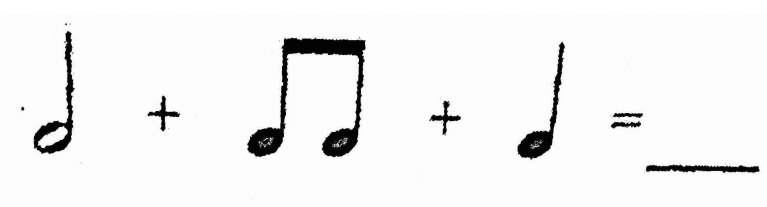
What number completes the musical equation?
3
2
4
1


How many beats are in a 5/4 Time Signature?
3 beats
4 beats
5 beats
6 beats
What type of note gets the beat in 4/4 Time Signature?
Sixteenth Note
Half Note
Quarter Note
Eighth Note

How many beats per measure and what note gets the beat?
2 beats per measure, Dotted Quarter Note gets the beat
6 beats per measure, 8th Note gets the beat
3 beats per measure, 8th Note gets the beat
2 beats per measure, Quarter Note gets the beat


What word is formed?
Write your answers in CAPITAL LETTERS.
(a)

What word is formed?
Write your answers in CAPITAL LETTERS.
(a)

What word is formed?
Write your answers in CAPITAL LETTERS.
(a)

What word is formed?
Write your answers in CAPITAL LETTERS.
(a)

Identify the So-fa Syllable.
Do
Fa
Sol
La

Identify the So-fa Syllable.
Do
Sol
Ti
Re

What word is formed?
Write your answers in CAPITAL LETTERS.
(a)
These are everywhere!
Lines
Codes
Bars
Clays
This is usually associated with continuity.
Concave
Convex
Spiral
Scrolls
This expresses submissiveness.
Spiral
Concave
Convex
Scrolls
This express fascination.
Spiral
Convex
Concave
Diagonal
This expresses Confidence.
Convex
Concave
Spiral
Line
This express stability and solemnity.
Vertical
Horizontal
Diagonal
Straight Jagged
This kind of line gives a hint of being steady.
Diagonal
Straight Jagged
Horizontal
Vertical
This lines that express tranquility and calmness.
Lines
Diagonal
Horizontal
Spiral
This express motion.
Line
Slanting
Horizontal
Scrolls
Vertical lines suggest uprightness, dignity, and sincerity. Horizontal lines suggest calmness, peace, and sobriety.
TRUE
FALSE
-----are more free form. These shapes we can see from nature. They have a natural look. Their lines and shapes are usually irregular or asymmetrical. Plants and animals have organic shapes.
(a)
-------- have clear edges. Examples of this kind of shape are circles, ovals, rectangles, triangles, and squares. They can usually be seen in man-made objects like pots and jars.
(a)
Which of the following is an example of organic shape?


in what group of color are they?
Primary
Secondary
Tertiary
monocromatic
Which is the example of Horizontal Line?


----move from left to right or right to left. They show calmness or peace
horizontal lines
vertical lines
diagonal lines
curved lines
zigzag lines
----run from top to bottom or bottom to top. They show strength and stability.
horizontal lines
vertical lines
diagonal lines
curved lines
zigzag lines
-----are slanting lines. They sometimes lean left or right. These lines can show movement or excitement.
horizontal lines
vertical lines
diagonal lines
curved lines
zigzag lines
-----can be made up of wiggly or spiral lines. They also show movement. They can be found in nature and in man-made constructions.
horizontal lines
vertical lines
diagonal lines
curved lines
zigzag lines
-----are series of connected straight lines.
horizontal lines
vertical lines
diagonal lines
curved lines
zigzag lines
-----are lines that are usually found in man-made constructions. The shapes of tables, chairs, and books are formed by------
organic lines
geometric lines
Lines found in nature are called -----. These lines are often irregular and curved. They seem to flow and give a feeling of gracefulness. The shapes of plants, trees, and animals are formed by-------
organic lines
geometric lines
------have clear edges. They can usually be seen in man-made objects like pots and jars.
organic shapes
geometric shapes
These shapes we can see from nature. They have a natural look. Their lines and shapes are usually irregular or asymmetrical.
organic shapes
geometric shapes
Shapes are made of lines. Everything we see in the world around us has a shape.
true
false

BLUE + YELLOW =
What color do they make?


RED + BLUE =
What color do they make?


Mixing a primary color and a secondary color creates a ______________________.
Tertiary Color
Warm Color
Secondary Colors
Primary Colors
Cool Colors
Red, yellow and blue are called the__________________________.
Secondary Colors
Primary Colors
Tertiary colors

These are ______________ colors.
Tertiary
Primary
Secondary
-----is one's ability to do daily activities without tiredness or fatigue easily. It is the capacity of the body to function effectively when doing work and leisure activities. A person who is physically fit is capable of living life to the fullest.
(a)
is any form of exercise or movement of the body that uses energy.
(a)
Health-Related Physical Fitness
Cardiovascular Fitness
Muscular Strength
Flexibility
Muscular Endurance
Body Composition
Skill-Related Fitness Components
Speed
Power
Agility
Balance
Coordination
The ability to quickly change direction without losing speed or power.
Speed
Power
Agility
Balance
Coordination
The ability to stabilize the body both in movement and when maintaining stillness.
Speed
Power
Agility
Balance
Coordination
The ability to use your senses in combination with your actions when in movement.
Speed
Power
Agility
Balance
Coordination
The ability to combine both speed and force in movements and actions.
Speed
Power
Agility
Balance
Coordination
The ability to perform actions or cover distance quickly.
Speed
Power
Agility
Balance
Coordination
Perform more activity without shortness of breath.
ex. Walking, jogging, swimming, dancing, or riding a bike
Cardiovascular Fitness
Muscular Strength
Flexibility
Muscular Endurance
Body Composition
Ability to exert force during an activity
ex. Strengthening exercises, lifting weights and walking stairs
Cardiovascular Fitness
Muscular Strength
Flexibility
Muscular Endurance
Body Composition
The range of motion around our joints
Examples: Stretching exercises, mobility exercises, yoga, or foam rolling.
Cardiovascular Fitness
Muscular Strength
Flexibility
Muscular Endurance
Body Composition
The ability of our muscles to continue to perform an activity without fatigue
Examples: High repetitions with strengthening exercises, dancing, swimming, rowing, and weight lifting.
Cardiovascular Fitness
Muscular Strength
Flexibility
Muscular Endurance
Body Composition
The amount of body fat, muscle, bone, and other tissues that make up our body
Cardiovascular Fitness
Muscular Strength
Flexibility
Muscular Endurance
Body Composition
The ability to respond quickly to what you feel, see or hear
(a)
Anthropometric measurements assess the size, shape, and proportions of the human body. Anthropometry is used by health providers to identify individuals who are malnourished and refer them for proper care and treatment.
true
false
A measurement that indicates how heavy a person is
(a)
The distance between the highest and lowest points of a person standing upright
(a)
-----measures body fat based on height and weight.
(a)
Measures muscular endurance of the upper body
PUSH-UP TEST
STANDING LONG JUMP
3 MINUTE STEP TEST
Curl-ups
Measures the leg and thigh power
PUSH-UP TEST
STANDING LONG JUMP
3 MINUTE STEP TEST
Curl-ups
Increase heart rate and evaluate the heart's recovery rate during the minute immediately following the step test exercise
PUSH-UP TEST
STANDING LONG JUMP
3 MINUTE STEP TEST
Curl-ups
measure the strength and endurance of the abdominal muscles.
PUSH-UP TEST
STANDING LONG JUMP
3 MINUTE STEP TEST
Curl-ups

