
 Worksheets
River Valley Civilizations
Total questions: 76
Worksheet time: 3605secs


- Nile River
- Hieroglyphics
- Pyramids
Sumer


- Huang He (Yellow) River
- Calligraphy writing
- Paper and Silk
Sumer

Sumer

Sumer

Sumer


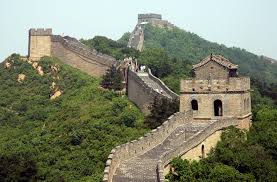
What Dynasty was the first in China?
Qin
Zhou
Shang
Kowloon
Which Dynasty was the longest one in China's history?
Qin
Zhou
Chang
Kowloon

The longest river in the world; associated with Ancient Egypt.
Tigris River
Nile River
Amazon River
Niger River
. Which heading would complete the partial outline below?
__________________________
-specialized workers
-cities
-technology
-religion and government
-record keeping and writing system
Economic Development in Ancient Egypt
Cultural Diffusion in the Indus River Valley
Characteristics of Civilizations
Features of the Neolithic Revolution
What was the Neolithic Revolution?
humans’ transition from hunter-gatherers to farmers
transition from river valley civilizations to empires
using city walls for protection
using stone for tools and weapons
What was the geographic feature that Mesopotamia, Ancient Egypt, India, and Ancient China were built around?
Deserts
Oceans
Mountains
River Valleys
Which statement best describes how geography affected the growth of the ancient civilizations in Mesopotamia, Ancient Egypt, India, and Ancient China?
large deserts provided many mineral deposits
mountain ranges provided protection for all civilizations
river valleys provided rich soil to grow plentiful crops
The oceans provided trade routes
Hammurabi’s Code was a major contribution to the development of civilization because it ___.
was the first written code of law
ended executions as a form of punishment
treated citizens and slaves equally
rejected the caste system
What was the name of the first writing system that was developed in Mesopotamia?
cuneiform
hieroglyphics
alphabet
pictograms
“If a man knocks out the tooth of a man of the same rank, his own tooth shall be knocked out. If a man knocks out the tooth of a commoner below him, he shall pay a piece of silver.” -Code of Hammurabi
Based on this part of Hammurabi’s Code, which statement is true?
All people are equal under the law
Violence is ALWAYS punished with violence
The law does not apply the same way for all social classes
People used silver for false teeth in Meopotamia
A unique characteristic of the Ancient Egyptian government was that ___
kings were at the top of the Hindu caste system
rulers used the “Mandate of Heaven” to justify their right to rule
the pharaohs ruled as “king-gods”
dynasties ruled for centuries
Which of the following best describes the Egyptian religion?
worship of ancestors
believed in the caste system and reincarnation
different gods controlled different parts of life and nature
monotheistic worship of one god
Which title best completes the partial outline?
__________________________
-Natural barriers of large deserts protected it from invaders
-Predictable annual flooding of the Nile River left rich soil behind
-Pharaohs ruled as “king-gods”
The Development of Ancient World
Civilization of Ancient Egypt
The Geography of Ancient Mesopotamia
Religion of the Indus River Valley
The natural barriers of this River Valley Civilization included the Himalaya Mountains and large deserts, but no natural barrier in the north (which made them build a wall as a barrier).
Mesopotamia
Egypt
China
India
Hammurabi’s Code, the Ten Commandments, and Confucianism are similar because they all ___
provided guidelines and laws for their societies
focused on the search for Enlightenment
used harsh punishments for crimes
were in favor of equality among all classes

Which social system concept is illustrated by this diagram?
Four Noble Truths
Mandate of Heaven
the caste system
Hammurabi’s Code
What belief is shared by both the Hindus and the Buddhists?
People should pray five times a day
Anyone can achieve moksha (nirvana)
They are God’s chosen people
The soul can be reincarnated
The terms moksha, karma, dharma, Brahmin, and nirvana are most closely associated with which religion?
Judaism
Christianity
Buddhism
Hinduism
One similarity between all of the early empires was ___.
the use of harsh punishments to keep the empires together
the use of a road system and standardized coins to increase trade in the empires
the rulers of the empires forced conquered people to follow their religions
the use of large, advanced armies to conquer neighboring people
Which one shows events in the correct chronological order?
W. Rise of Early Empires
X. Neolithic Revolution
Y. Humans are hunter-gatherers
Z. Beginning of River Valley Civilizations
z-w-x-y
y-x-z-w
x-y-z-w
w-x-y-z

Why was Egypt called the "Gift of the Nile"?
Protection from the Nile kept invaders from entering from the north
Fish and wildlife from the Nile were traded with neighboring civilizations
Egyptians believed the gods had placed the Nile in Egypt as a sign of supremacy
Irrigation from the Nile provided for farming in a desert region
Which of the following is one change that directly resulted from the development of farming approximately 10,000 years ago?
It led to the production of stone tools
It led to the creation of settled communities
It led to the expansion of political rights for women
It led to the growth in the number of nomadic groups.

Which characteristic of civilization is described above?
Government organization
Specialization of labor
Social stratification
Record keeping

Which characteristic of civilization in the Indus River Valley is illustrated in the diagram?
Economic systems
Systems for record keeping
Religious institutions
Advanced urban areas
The use of pottery and textiles are related to which characteristic of early civilizations?
Class structure
Advanced record keeping
Complex institutions
Specialized workers

Which letter indicates the area of Mesopotamia?
A
B
C
D

Based on information from the illustration, how did the environment of Egypt contribute to the development of a settled civilization in the region?
Merchants needed walled cities to protect from invaders
Farmers needed irrigation systems to grow crops
The narrow river restricted travel to small boats
Palm trees only grew near the river

Which geographic pattern is illustrated on the map?
Early civilizations settled close to the equator
Early civilizations were vulnerable to invasions
Early civilizations depended on trade with one another.
Early civilizations formed near fresh water sources
Why is the government of ancient Egypt considered a theocracy?
The government has a representative legislature
Leadership passes from father to son
The pharaoh is considered a god-king.
Wealthy elite control most parts of government
Which lasting impact did Hammurabi's Code have on law?
Laws were made more consistent and predictable
Laws were created by a representative group
Laws no longer suggested punishments
Laws needed to be interpreted by impartial judges.
Which ancient civilization was the first to use city planning and sewer systems?
China
Mesopotamia
Indus Valley
Egypt
Ziggurats were giant stepped pyramids built very tall with multiple level and stairs in between. The first Ziggurats were built in Ur.
advance cities
complex institution
specialized workers
record keeping

Over thousands of years, Mesopotamian scribes recorded daily events, trade, astronomy, and literature on clay tablets. Cuneiform was used by people throughout the ancient West Asia to write several different languages.
advance cities
complex institution
specialized workers
record keeping
The Egyptians and Mesopotamians believed in many gods. What is this called?
Montheistic.
Polytheistic.

The Mesopotamians lived and worshiped in this dwelling.
None of the Above.
Ziggurat.
Pyramid.
House.

What type of writing is this?
cuneiform.
hieroglyphics.
magan carta.
times new roman.
The lowest level of social structure in Indus Valley were
The priests
The slaves
The Untouchables
The farmers
protection
Why did they introduce the drainage systems?
To manage the waterflow in and out of the cities.
So they could store all the water to use it all the shower.
So they had something to drink
The Egyptians enlisted thousands to build the pyramids. The major purpose of the pyramids was to...
practice the building skills of the laborers.
house the pharaoh for the afterlife ensuring the continuation of the civilization.
prove the wealth of the Pharaoh and to add beauty to the Egyptian landscape.
provide all Egyptians to be preserved.

Which TWO things does this map show?
early modern humans moved from Africa to Europe, Asia, and Australia
migration of early modern humans began in Asia
early modern humans moved from North America into South America
early modern humans moved based on food availability

Match the following
Old Stone Age
Paleolithic
New Stone Age
Neolithic
agriculture
marked the end of the Paleolithic Era
fossils
remains of living things
artifacts
remains of thing made by people
What metal replaced the stone age tools and improved civilization?
Bronze
Silver
Iron
Steel
The oldest story in Sumer was a mythical adventure story called The Epic of _________.
Hammurabi
Gilgamesh
Iggy the Cat
Ozymandias
Around 2000 BC, tragedy struck the people of Mohenjo-Daro and Harappa when warlike invaders from Central Asia conquered Mohenjo-Daro and Harappa.
These invaders were called ______.
Goths
Aryans
Vandals
Huns
The written language of the Aryans was called _____.
Sanskrit
Phoenician
Latin
Greek
What made the Yellow River in China so deadly?
poison water
flooding
rain
frozen river
The idea that the father is the centerpiece to a family is called ________.
Mandate of Heaven
filial piety
Legalism
Eightfold Path
________believed the family was the center of Chinese culture and he said the father should be completely obeyed. Equality between men and women was not acceptable during this time. Farming and land was the key to economics.
Plato
Socrates
Confucius
Lao Tzu

__________- a person who studies history and pre-history by examining artifacts
optometrist
architect
archeologist
phlebotomist

_______ - man-made object
unified
antagonist
ability
artifact

The people pictured above would be an example of....
farmers
nomads
scribes
pharaohs

