
Font size
 Worksheets
Cell Theory
Total questions: 20
Worksheet time: 43mins
Which statement was NOT included in cell theory?
All living things are composed of cells.
Living cells come only from other living cells.
Each cell contains a cell membrane, cytoplasm, nucleus, mitochondria, and endoplasmic reticulum.
Cells are the smallest structure of living things that can perform the functions necessary for life.
Which instrument is credited for helping scientists develop cell theory?


This early cell theory scientist looked in a microscope and discovered "animalcules" in the gunk from his teeth and pond water.
Schleiden
Leeowenhoek
Hooke
Virchow
Schwann
Who discovered and named cells while looking at cork?
Captain Hook
Robert Hooke
Matthais Schleiden
Rudolf Virchow
What was Schleiden convinced of?
All plants are made of cells
All animals are made of cells
All cells are prokaryotic
None of the above
Who noted that all animals are made of cells and helped write the first two parts of cell theory?
Rudolf Virchow
Anton van Leeuwenhoek
Theodor Schwann
Robert Hooke
Who discovered that all cells come from other living cells and had research that lead to the last major principle of cell theory?
Matthias Schleiden
Theodore Schwann
Robert Hooke
Rudolf Virchow
These three scientists together helped come up with the second part of the cell theory (all living things are made of one or more cells). CHOOSE 3 ANSWERS
Schleiden
Leeowenhoek
Hooke
Virchow
Schwann

Robert Hooke, Anton van Leeuwenhoek, Theodor Schwann, Rudolf Virchow, and Matthias Schliden were all responsible for what theory?
The Theory of Gravity
The Theory of Relativity
The Cell Theory
The Theory of Continental Drift
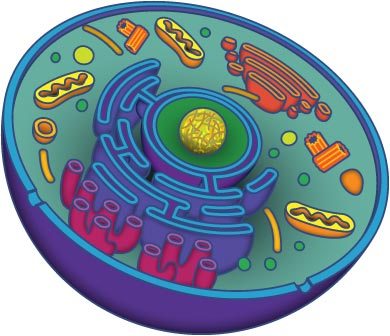
All living things are made up of...
cells
tissues
organ
organ systems
What is the basic structural and functional unit of all living things?
atom
cell
bacteria
animalcules
All cells -----
come from other dead cells
come from other living cells
crystallize out of the air
What year did Robert Hooke coin the term "cells"?
1556
1665
1838
1839
Who observed cells dividing under a microscope in 1855?
Schleiden
Schwann
Janssen
Virchow
Plants have cells but animals do not.
They are both made of one or more cells.
They both come from the same kind of cell.
They both come from a non-living organism.
Zacharius Jansen is credited with the invention of the
cell
microscope
telescope
thermometer
What was A.V. Leeuwenhoek talking about when he used the term "animalcules?"
cells
bacteria
animals
multicellular organisms
How did the scientist who coined the term "cell" come up with it?
He looked at a piece of cork under a microscope.
He saw box-like structures that reminded him of the rooms that monks lived in.
Both choices are correct
Neither choices are correct
A unicellular organism is
an organism made of more than one cell
an organism that is made of many cells
an organism that is made of only one cell
an organism that is related to a unicorn

