
 Worksheets
Quiz 2 - Motion, Kinematics
Total questions: 78
Worksheet time: 2hrs 55mins
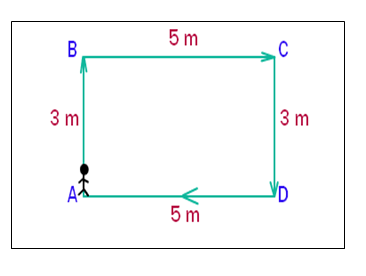
Michael walks in the following order: from Point A, to Point B, and finally to Point C. Which is true?
Distance and displacement are EQUAL
Distance is less than displacement
Displacement is less than distance.
Another word for "size" is...
magnification
magnetism
magnitude
magnanimity
An example of scalar magnitude:
velocity
mass
acceleration
force
The rate at which velocity changes is called:
negative acceleration
speed
acceleration
velocity
The distance traveled by an object divided by the time taken to travel that distance is called:
negative acceleration
speed
acceleration
velocity
The distance and direction of an object divided by the time taken to travel that distance is called:
negative acceleration
speed
acceleration
velocity
Which is a measurement of speed?
60 miles/hour
60 miles/hour2
60 miles/hour east
Which is a measurement of velocity?
60 miles/hour
60 miles/hour2
60 miles/hour east
Which is a measurement of acceleration?
60 miles/hour
60 miles/hour2
60 miles/hour east
The term used to describe how far you end up from where you started is:
speed
motion
distance
displacement
The term used to describe how far your travel total is:
speed
motion
displacement
distance
The term used to describe the rate at which something moves is:
speed
motion
displacement
distance
The term used to describe the rate at which something moves is:
speed
motion
displacement
distance
You are riding in a car at 65 miles/hour on the freeway. As the freeway curves you maintain a speed of 65 miles/hour. Which of these is true?
You are accelerating
Your velocity is changing
Your speed is changing
Your velocity is changing and you are accelerating
Distance traveled in a certain amount of time:
Speed
Velocity
Acceleration

Which motorcycle has the lowest speed?
A
B
What is the average speed for motorcycle B?
1.33 km/min
1.33 mi/hr
0.66 km/min
0.66 mi/hr
What is the speed of a baseball that travels 80 meters in 15 seconds?
0.1875 m/s
0.1875 mi/hr
5.33 m/s
5.33 mi/min
At what speed would a car have to move in order to travel 20 kilometers in 2 hours.
5 km/hr
10 km/hr
20 km/hr
40 km/hr

Tommy started at Position A, then traveled home at Position B and finally on to the tree at Position C. What is Tommy's total distance traveled?
3 m
4 m
5 m
7 m
Tommy started at Position A, then traveled home at Position B and finally on to the tree at Position C. What is Tommy's total displacement traveled?
3 m
4 m
5 m
7 m
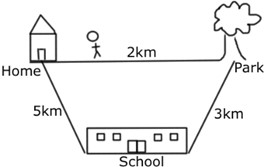
Jerry walked from home to school, then from the school to the park. What is his total displacement?
2 km E
5 km N
8 km S
10 km W
100 m
Distance
50 m/s
Speed
2 s
Time
50 m/s to the West
Velocity
Match the following
Scalar is a
Variable with magnitude only
Vector is a
Variable with magnitude and direction
Magnitude is
How much; the intensity
Direction
Which way; N, S, E, W
Velocity is
Speed and direction of motion


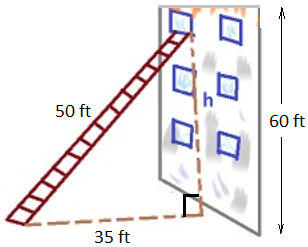
Find the missing side
11
61
61
11

Which graph represents forward motion?
A
B
C
D

Which graph represents an object NOT moving?
A
B
C
D

Which graph represents an object that is slowing down?
A
B
C
D

Which graph is moving the fastest?
A
B

Calculate the speed of the object when it is moving away from the start. (include units)
(a)

What is the distance travelled by the object that made this graph? (include units in your answer)
(a)

A scientific theory:
Describes a natural phenomenon
Explains a natural phenomeon
A scientific law:
Describes a natural phenomenon
Explains a natural phenomenon
Which of the following is supported by lots of evidence?
Theory
Law
Both
Neither
Which of the following tells what happens every time under certain conditions?
Theory
Law
Both
Neither
Which of the following can be revised with new evidence?
Theory
Law
Both
Neither

Which choice best explains why the scientific model of the atom has changed over time?
The discovery of new evidence resulted in changes to the atomic theory.
Advancements in atomic models proved the atomic theory was accurate.
The atomic theory was modified with the discovery of a new element.
Changes in atomic models show that the atomic theory was based on opinion.
Which statements correctly describe laws? Check all that apply.
Laws are created based on repeated experimentation.
Laws are based on observation.
Laws can be changed or replaced.
Laws are factual statements
Which statements correctly describe theories? Check all that apply
Theories result from several repeated experiments
Theories cannot predict what may happen in the future
Theories explain observations and hypotheses
Theories may be revised over time.
Select the graph that best describes the motion shown in the video


Select the graph that best describes the motion shown in the video

Select the graph that best describes the motion shown in the video


Select the graph that best describes the motion shown in the video


Select the graph that best describes the motion shown in the video


Select the graph that best describes the motion shown in the video


Select the graph that best describes the motion shown in the video


Select the graph that best describes the motion shown in the video


Select the graph that best describes the motion shown in the video

Select the graph that best describes the motion shown in the video


Select the graph that best describes the motion shown in the video
A runner starts from rest and accelerates uniformly to a speed of 8.0 m/s in 4.0 seconds. The magnitude of the acceleration of the runner is:
0.50 m/s2
2.0 m/s2
9.8 m/s2
32 m/s2

Base your answer(s) to the following question(s) on the graph, which represents the relationship between the displacement of an object and its time of travel along a straight line.
What is the magnitude of the object's total displacement after 8.0 seconds?
0 m
2 m
8 m
16 m

Describe the motion of the object given the velocity time graph.
It is speeding up
It is not moving
It has constant speed
It is slowing down
Vector is a quantity with:
magnitude and direction
magnitude
direction
none of the above

A cat walks 3 meters west toward a laser, then jumps 5 meters due south of the laser when it sees a string. What is the total distance the cat has traveled (to the nearest tenth)?
3.0m
5.0m
8.0m
5.8m
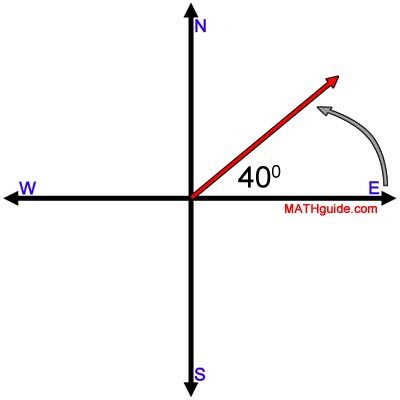

Describe the direction of the vector.
20o east of south
20o south of east
20o south of west
20o west of south

The picture shows the flight vector for a helicopter. What is the magnitude and direction of the vector?
38.6 mi; 31.2o east of north
26.2 mi; 31.2o north of east
38.6 mi; 31.2o north of east
26.2 mi; 58.8o north of east
What is this Equation: a2+b2=c2
Standard Vector Form
Resultant Vector
Pythagorean Theorem
Equation of a Circle
If a car moves 12 miles North, 19 miles East, and 12 miles South, what is its displacement?
12 miles
19 miles, East
31 miles
43 miles, East

