Worksheets
Basic Concept of Physics
Total questions: 20
Worksheet time: 10mins
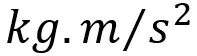
What is the unit to measure force?
Kilogram
Meter
Joule
Newton
What force holds the planet in motion around the sun?
Magnetic
Gravitational
Electrical
Air Resistant
If both forces are going in the same direction you should …. those force
Add
Substract
Divide
Multiply
What is the definition for the word amplitude?
The number of complete waves that pass per second
The distance from the equilibrium position of a peak plus the same distance from a trough
The distance from the equilibrium position of a peak plus the same distance from a trough
The maximum distance from the equilibrium position of any point on a wave
What is the formula for finding the wavelength of a wave?


What is a frequency?
The number of wave crests passing a point in one second
The height of the waves times each second
The number of waves in total
The speed of waves over time
Name two quantities that are vectors
Force and speed
Mass and weight
Force and acceleration
Speed and acceleration
Acceleration is defined as the change in ….
Time it takes for one place to move to another place
Distance divided by the time interval
Velocity of an object
Velocity devided by the time interval
Pressure measured in what units
Newton
Joule
Watt
Pascal
In nature, heat always flows from a ….
Cold object to a warm object
Warm object to a cold object
Small object to a large object
Large object to a small object
If the resultant force on an object is zero, then an object at rest will remain at rest, and an object in motion will continue to move at a constant speed as long as there is no external force acting on it
Newton’s 1st Law
Newton’s 2nd Law
Newton’s 3rd Law
Newton’s Law of Gravity
When an object exerts force on a second object, the second object exerts an equal force but opposite direction to the first object
Newton’s 1st Law
Newton’s 2nd Law
Newton’s 3rd Law
Newton’s Law of Gravity
The acceleration of an object caused by a force is directly proportional to the magnitude of the force and inversely proportional to its mass
Newton’s 1st Law
Newton’s 2nd Law
Newton’s 3rd Law
Newton’s Law of Gravity
Two objects attract each other in a force comparable to the masses of the two objects and inversely proportional to the square of the distance between the two objects.
Newton’s 1st Law
Newton’s 2nd Law
Newton’s 3rd Law
Newton’s Law of Gravity
The magnitude of the repulsive force or attraction of an object having an electric charge is proportional to the magnitude of the electric charge of both objects and inversely proportional to the square of the distance between the two objects
Hooke’s Law
Kepler’s Law
Faraday’s Law
Coulomb’s Law
If an object is dipped in a liquid, it will receive a force called buoyancy (upward force) as much as the weight of the liquid it moves
Pascal’s Law
Archimedes’s Law
Bernoulli’s Law
Boyle’s Law
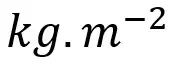
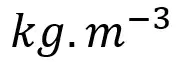
The unit of density is ….


What is the correct equation linking force, mass and acceleration?
m=F.a
a=F/m
a=F.m
F=m/a
How do you calculate pressure?
Force(N)/Area(m^2)
Area(m^2)/Force(N)
Force(kg)/Area(m)
Area(m)/Force(kg)
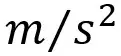
What is the unit for acceleration?