
 Worksheets
Solar System Overview (Enlish, Spanish, Swahili)
Total questions: 8
Worksheet time: 4mins
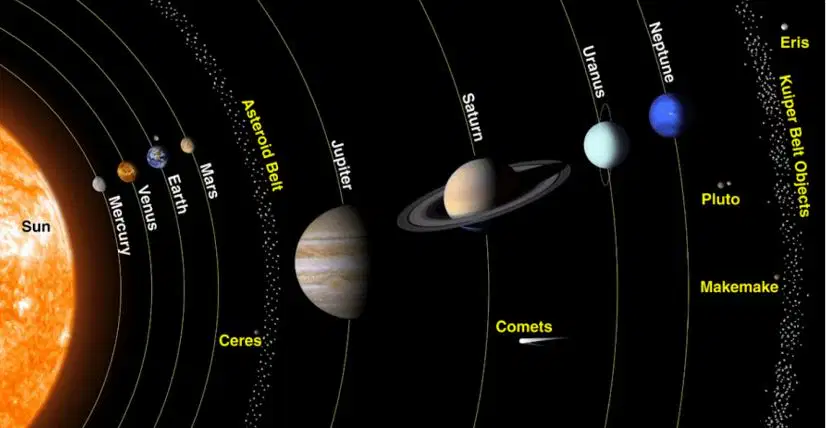
Which of these planets IS NOT a rocky planet?
¿Cuál de estos planetas NO ES un planeta rocoso?
Ni sayari ipi kati ya hizi SIYO sayari yenye mawe?
Earth / Tierra / Dunia
Jupiter / Júpiter / Jupita
Mars / Marte / Mirihi
Mercury / Mercurio / Zebaki
Venus / Venus / Zuhura
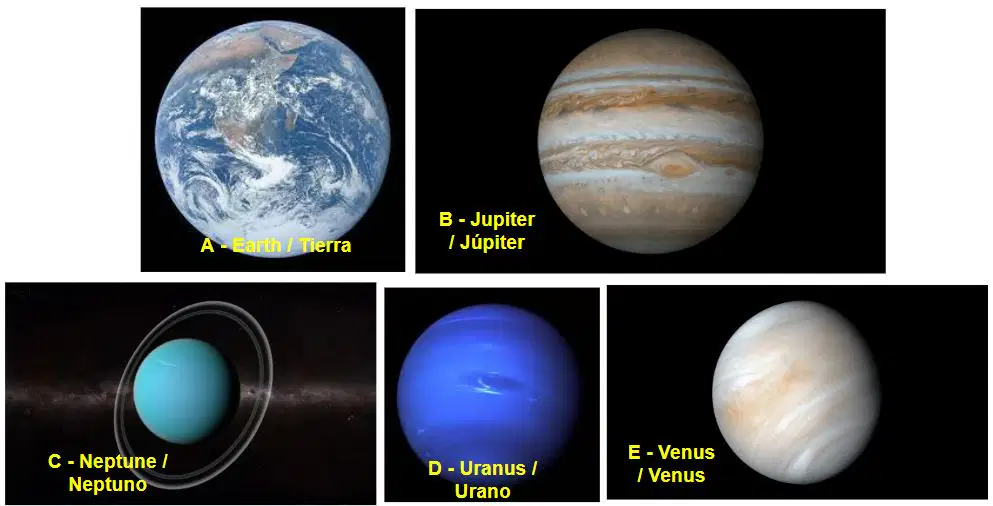
Which of the following planets IS CLOSEST to the Sun?
¿Cuál de los siguientes planetas NO ES un gigante gaseoso?
Ni sayari ipi kati ya zifuatazo ILIYO KARIBU NA Jua?
A - Earth / Tierra / Dunia
B - Jupiter / Júpiter / Jupita
C - Neptune / Neptuno / Neptune
D - Uranus / Urano / Uranus
E - Venus / Venus / Zuhura
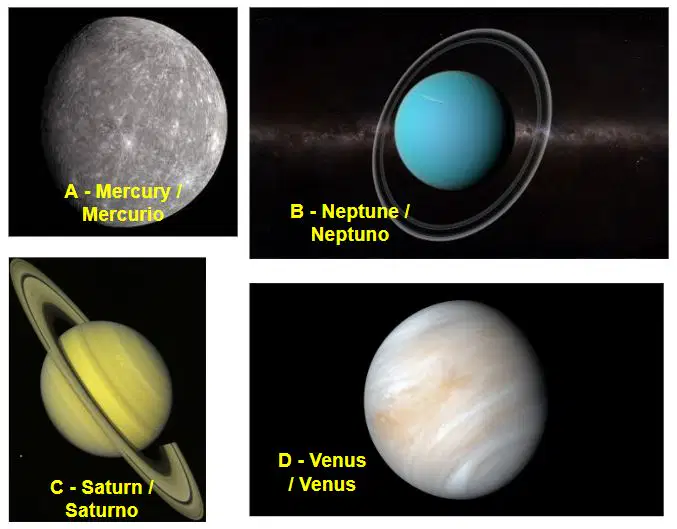
Which of these planets IS FURTHEST from the Sun?
¿Cuál de estos planetas ESTÁ MÁS ALEJANO del Sol?
Ni sayari ipi kati ya hizi ILIYO MBALI ZAIDI kutoka kwa Jua?
Mercury / Mercurio / Zebaki
Neptune / Neptuno / Neptune
Saturn / Saturno / Zohali
Venus / Venus / Zuhura
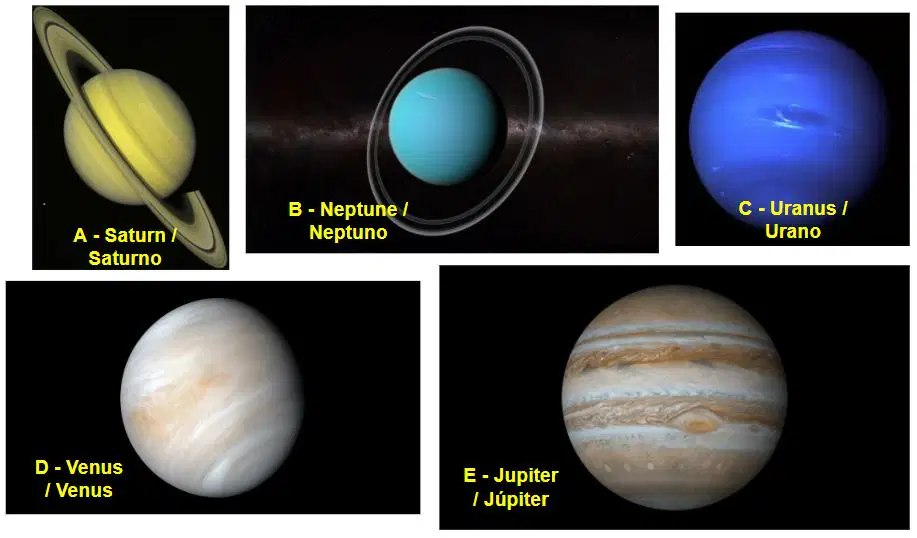
Which of the following IS NOT a gas giant?
¿Cuál de los siguientes NO ES un gigante gaseoso?
Ni lipi kati ya zifuatazo SIYO jitu la gesi?
A - Saturn / Saturno / Zohali
B - Neptune / Neptuno / Neptune
C - Uranus / Urano / Uranus
D - Venus / Venus /
Zuhura
E - Jupiter / Júpiter / Jupita
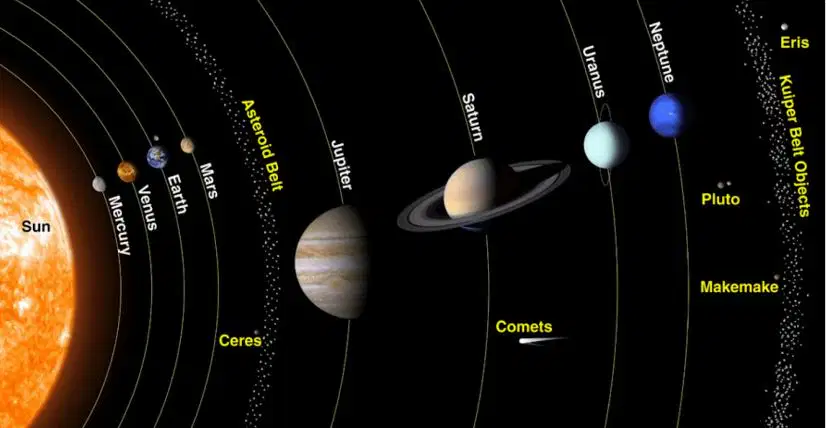
Where are the terrestrial planets located in our solar system?
¿Dónde están ubicados los planetas terrestres en nuestro sistema solar?
Je, sayari za dunia ziko wapi katika mfumo wetu wa jua?
Orbiting the Sun closer than the Asteroid Belt.
Orbitando el Sol más cerca que el cinturón de asteroides.
Kuzunguka Jua karibu zaidi kuliko Ukanda wa Asteroid.
Orbiting the Sun between the Asteroid Belt and the Kuiper Belt.
Orbitando el Sol entre el cinturón de asteroides y el cinturón de Kuiper.
Kuzunguka Jua kati ya Ukanda wa Asteroid na Ukanda wa Kuiper.
Orbiting the Sun beyond the Kuiper Belt.
Orbitando el Sol más allá del Cinturón de Kuiper.
Kuzunguka Jua zaidi ya Ukanda wa Kuiper.
Terrestrial planets are not a real thing.
Los planetas terrestres no existen.
Sayari za dunia si kitu halisi.
Where are the gas giant (aka Jovian) planets located in our solar system?
¿Dónde están ubicados los planetas gigantes gaseosos (también conocidos como jovianos) en nuestro sistema solar?
Je, sayari kubwa za gesi (aka Jovian) ziko wapi kwenye mfumo wetu wa jua?
Orbiting the Sun closer than the Asteroid Belt.
Orbitando el Sol más cerca que el cinturón de asteroides.
Kuzunguka Jua karibu zaidi kuliko Ukanda wa Asteroid.
Orbiting the Sun between the Asteroid Belt and the Kuiper Belt.
Orbitando el Sol entre el cinturón de asteroides y el cinturón de Kuiper.
Kuzunguka Jua kati ya Ukanda wa Asteroid na Ukanda wa Kuiper.
Orbiting the Sun beyond the Kuiper Belt.
Orbitando el Sol más allá del Cinturón de Kuiper.
Kuzunguka Jua zaidi ya Ukanda wa Kuiper.
Gas giant planets are not a real thing.
Los planetas gigantes gaseosos no existen.
Sayari kubwa za gesi sio kitu halisi.
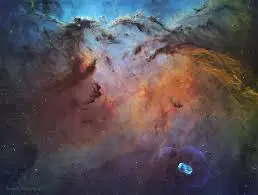
The image shown is the Fighting Dragons nebula. What function do nebulae serve in galaxies?
La imagen que se muestra es la nebulosa Fighting Dragons. ¿Qué función cumplen las nebulosas en las galaxias?
Picha iliyoonyeshwa ni nebula ya Fighting Dragons. Nebulae hufanya kazi gani katika galaksi?
Nebulae do not have a purpose, they are just cool to look at.
Las nebulosas no tienen un propósito, simplemente son agradables de ver.
Nebulae hazina kusudi, ziko poa tu kuzitazama.
Nebulae are where stars and planetary systems form.
Las nebulosas son el lugar donde se forman las estrellas y los sistemas planetarios.
Nebulae ni mahali ambapo nyota na mifumo ya sayari huunda.
Nebulae are where stars and planetary systems die.
Las nebulosas son el lugar donde mueren las estrellas y los sistemas planetarios.
Nebulae ni mahali ambapo nyota na mifumo ya sayari hufa
Nebulae are not real objects in the Universe.
Las nebulosas no son objetos reales del Universo.
Nebulae sio vitu halisi katika Ulimwengu.
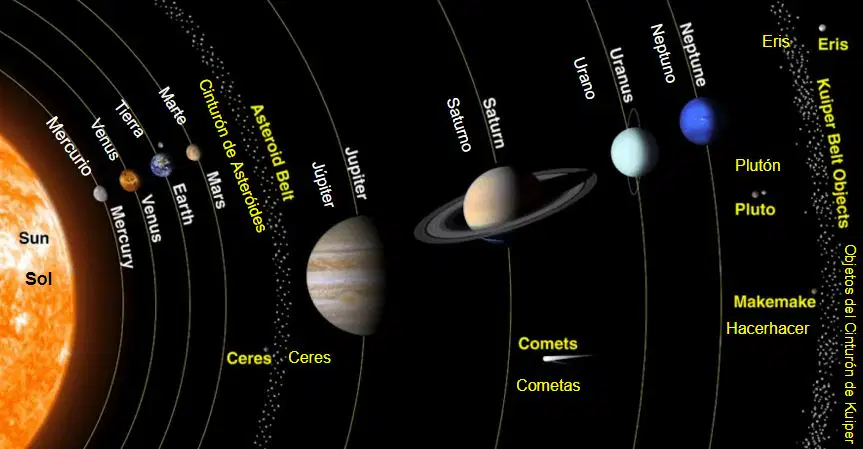
What role did the Sun have in the massive size of the gas giants?
¿Qué papel tuvo el Sol en el enorme tamaño de los gigantes gaseosos?
Jua lilikuwa na jukumu gani katika saizi kubwa ya majitu ya gesi?
The Sun took all of the material that would have made the rocky planets larger.
El Sol tomó todo el material que habría agrandado los planetas rocosos.
Jua lilichukua nyenzo zote ambazo zingefanya sayari zenye miamba kuwa kubwa.
The Sun assembled extra material as the Asteroid Belt and Kuiper Belt.
El Sol reunió material extra como el Cinturón de Asteroides y el Cinturón de Kuiper.
Jua lilikusanya nyenzo za ziada kama Ukanda wa Asteroid na Ukanda wa Kuiper.
Solar winds from nuclear fusion blew excess gas and dust to the outer solar system.
Los vientos solares de la fusión nuclear arrojaron el exceso de gas y polvo al sistema solar exterior.
Upepo wa jua kutoka kwa muunganisho wa nyuklia ulipuliza gesi na vumbi kupita kiasi kwenye mfumo wa jua wa nje.

