
 Worksheets
Science ACT Prep
Total questions: 110
Worksheet time: 2hrs 44mins
What containes all the DNA?
Cytoplasm
Fatty Acids
Nucleus
Ribosomes
Where are proteins assembled?
(a)
Mitochondria
Converts chemical energy from food into a usable form - (power plant)
Vacuoles
Storage - Very large in plant cells
Lysomes
Breakdown lipids, carbs, proteins (Recycling center)
Centrome
Small region of cell that produces microtubles
Centrioles
Short microtubles arragned in a cylindrical tube
True or False: The moon revolves around Earth about the same speed.
True
False

Waxing means...
getting larger
getting smaller

Waning means...
Getting bigger
Getting smaller
Reorder the following starting with the phase where you see none of the moon.
new moon
waxing crescent
first quarter
waxing gibbous
full moon
Reorder the following starting with the phase where you see all the lighted side of the moon.
full moon
waning gibbous
third quarter
waning crescent
new moon

new moon

full moon

first quarter

waxing crescent

Waning crescent

Which moon phase is this?
new moon
full moon
third quarter
first quarter

Which moon phase is this?
waxing crescent
waning crescent
waxing gibbous
waning gibbous


Match the following monomer
amino acids
proteins
fatty acids
lipids
saccharides
carbohydrates
nucleic acids
nucleotides
Carbohydrates
starches & sugars
Match the following organelles
Nucleus
Contains the codes & information for protein synthesis
Rough ER
Transports the proteins
Golgi
Packages the proteins
Mitochodrion
Supplies ATP to all organelles
Ribosomes
Synthesizes the proteins
The model that describes the current understanding of the cell (plasma) membrane structure is
fluidity model
fluid mosaic model
semi-permeable model
flexible mixture model


Identify the true statements about the cell membrane
bilayer
flexible
made of fat
beautiful
always working
What do plants need for photosynthesis?
Sunlight and C02
Oxygen and fertilizer
What enters and exits the Stomata?
Oxygen and Carbon Dioxide
Water and Nitrogen
Sunlight and sugar
BLANK and BLANK create Glucose and Oxygen in plants during photosynthesis.
Nitrogen and Water
Carbon Dioxide and Water
Sunlight and Phosphorus
Chloroplast captures sunlight and does photosynthesis. Why most plants are visually green to us!
That's just their color.
Captured sunlight makes things green.
Green wavelengths aren't absorbed
Can animals make their own food?
Yes
No

Why are the gas and ice giants so far from the sun?
ice giants would melt and gas giants would not have formed
they are too big to be by the sun
the gravitational pull would have sucked them in
they pulled away from the sun because they are so big
What is a Dwarf Planet.
Planet
larger than an asteroid and smaller than a planet.
All Of The Above
I dont know
What Dwarf Planets are in Our Solar System
Eris
Make Make
Haumea
Haumea
All The Above
Which planets are the asteroid belt in between?
Venus & Earth
Earth & Mars
Mars & Jupiter
Jupiter & Saturn
Saturn & Uranus
What are comets made of?
mud, rock, water
ice and rock
ice, dust, water
gas and dust
Which planet is closest to sun?
Venus
Earth
Mercury
Which planet has life on it?
Earth
Jupitar
Neptune
Which planet is second from sun?
Mars
Venus
Pluto
Name planet that is known as dwarf planet?
Pluto
Saturn
Earth
How many planets are there?
8
5
10
True or False, Sun is a planet.
False
True
Can't say
Drag the correct force to the box where that force is happening.
Two surfaces rubbing together is called (a) . An example of this is (b) which works on objects falling through the air.
push or pull that causes an object to move, stop, or change direction
force
unit used to measure force
Newton
something returning to its original shape after being squeezed or stretched
elastic
force transmitted through a rope , string, cable, or wire when it is pulled tight by forces acting from opposite ends
tension
push or pull exerted by a magnet
magnetism

Immediately after this picture, the balloon will be able to exert which force?
gravity
electrical
friction
spring

Wil E. Coyote is using what force to move?
friction
magnetism
spring
tension

These skydivers are experiencing what two forces?
electricity and magnetism
gravity and tension
air resistance and gravity
gravity and normal force

Which force will propel Wil E. Coyote forward?
elastic
friction
air resistance
gravity
Which force will pull Wil E. Coyote down?
elastic
friction
air resistance
gravity
Which force will make Wil E. Coyote slow down?
elastic
friction
air resistance
gravity
Electrical, gravitational, and magnetism are all (a) forces, while friction, normal force, and applied force are types of (b) forces.

Match the following forces to how they are working on the cake.
gravity
keeping the cake on the table
normal force
the force the table is putting on the cake
air resistance
not affecting the cake

Which forces does this train have to overcome to reach its maximum speed?
electricity, friction, and air resistance
gravitational, magnetic, normal force
tension, spring, friction
friction, air resistance, gravitational
Label the forces acting in this image.
Label the forces acting in this picture.
Label the forces acting in this picture.
An atom that has an equal number of protons and electrons is:
Positively charged
Negatively charged
Neutral
An atom that has more protons than electrons is:
Positively charged
Negatively charged
Neutral
An atom that has fewer protons than electrons is:
Positively charged
Negatively charged
Neutral
In real life, which is more likely to have caused a neutral atom to get a charge of +1?
A proton was added
An electron was removed
Either process equally likely to have happened
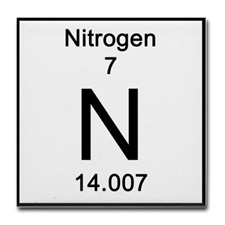

We all have two alleles, or versions, of each gene. Being (a) for a particular gene means you inherited two identical versions. It's the opposite of a (b) genotype, where the alleles are different. People who have recessive traits, like blue eyes or red hair, are always homozygous for that gene.

The gametes produced by the (a) are at the top of the chart, and the gametes produced by the (b) are along the side. The different possible combinations of alleles in their offspring are determined by filling in the cells of the (c) with the correct letters (alleles).

A calico cat shows both the traits for orange fur and black fur. What kind of allele expression is this?
Incomplete dominance
Codominance
Complete dominance
Mendelian inheritance

incomplete dominance
co-dominance
complete dominance
recessive pattern
Match the following combinations of alleles:
Homozygous dominant
DD
Homozygous recessive
dd
Heterozygous
Dd


Jim has type AB blood. His dad could be type O.
True
False
If one of your parents is blood type A and the other is type B, which of the following blood types could you be?
O
AB
A or B
Any of these


What is the mode of inheritance shown here?
Autosomal Recessive because it "skips" a generation
Autosomal Dominant because it shows up in every generation
X linked because it affects females more than males
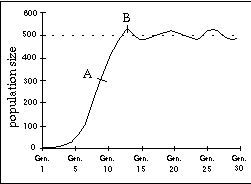
What is the carrying capacity of the graph?
around 500
more than 800
less than 300
around 700
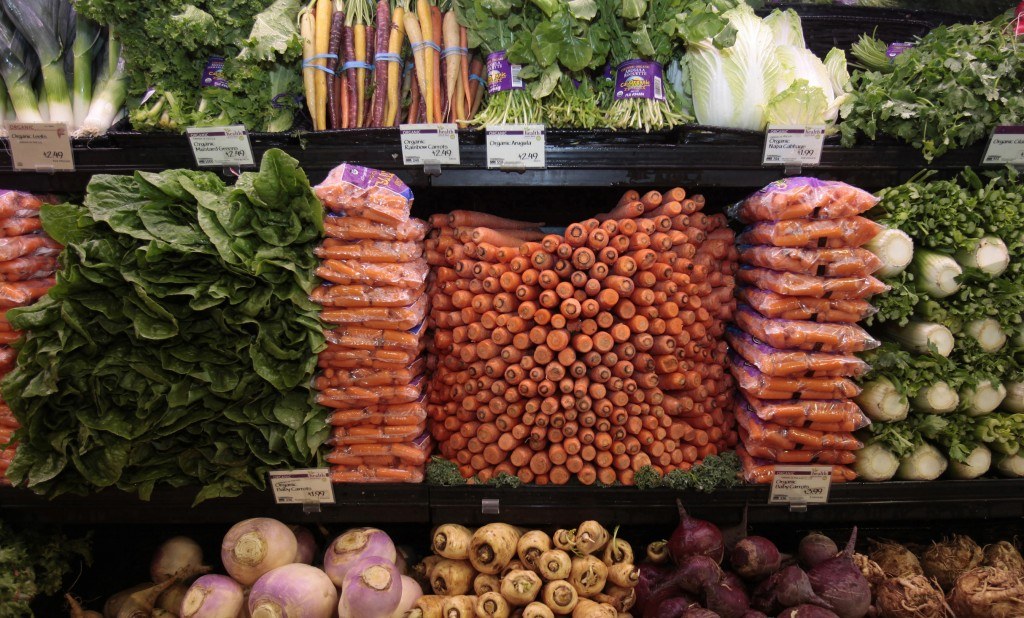
When death rate is equal to birth rate...
population increases
population decreases
population stays the same.
population rapidly increases then becomes stable

Predation

Symbiosis

Commensalism

Parasitism
What will happen if all of the frogs in a population die?
The frogs' predators will decrease and the frogs' prey will increase
The frogs' predators will increase and the frogs' prey will decrease
We better all pray because there isn't anymore frogs.

Look at the carrying capacity graphic.
Why does the month of June have the largest seasonal carrying capacity?
Longer summer days causes vegetation to wilt, leading to animal starvation
An increase in humidity allows predators extra moisture for hunting
Warm weather supplies ample food and shelter for life
The breeding stock is not interested in mating during hot, humid days.
Which graph depicts exponential growth in a population?


Fill in the levels of the ecological pyramid with the organisms in the food web.

Which statement is true based on the food web shown?
Penguins can eat seals.
Squids can eat seagulls.
Krill can eat whales and seals.
Seagulls can eat krill and squid.
What is the purpose of a decomposer?
To break down dead materials and waste from consumers
Eat living organisms
Perform photosynthesis to make carbohydrates
Make carbohydrates using chemical energy.

Match the following:
Producer
Plant
Secondary Consumer
Bird
Tertiary Consumer
Snake
Quaternary Consumer
Owl
Primary Consumer
Grasshopper

