
 Worksheets
Plate Tectonics Test Review
Total questions: 49
Worksheet time: 3hrs 30mins
Name
Class
Date
1.
1.
What name did Wegener give the "supercontinent" - when the pieces of land looked like they fit together like a puzzle?
(a)
2.
What is the name of the idea that Wegener came up with?
Continental (a)
3.

What geologic feature would you most likely find at an oceanic-oceanic divergent boundary?
a)
Rift valley
b)
Mid-Ocean Ridge
c)
Flat land
4.

If you could travel to the center of the earth, you would notice that ______________________ increases as you traveled deeper and deeper through the layers.
a)
pressure
b)
temperature
c)
both the temperature and pressure
5.
What was the main reason scientists didn't accept Alfred Wegener's Continental Drift hypothesis?
a)
Wegener was not a geologist and so he was not respected by anyone.
b)
Wegener could not explain HOW the continents moved.
c)
Oceans were too deep for scientists to accurately prove sea-floor spreading.
6.

Which of these is most likely formed when a continental plate and an oceanic plate collide?
a)
a rain shadow desert
b)
a rift valley
c)
a subduction zone and trench
7.

Why isn't the Earth getting larger if new seafloor is being made along mid-ocean ridges?
a)
because new rock is being added at the mid-ocean ridges
b)
because the seafloor is spreading
c)
because older seafloor is being recycled back into the mantle at the trenches
8.
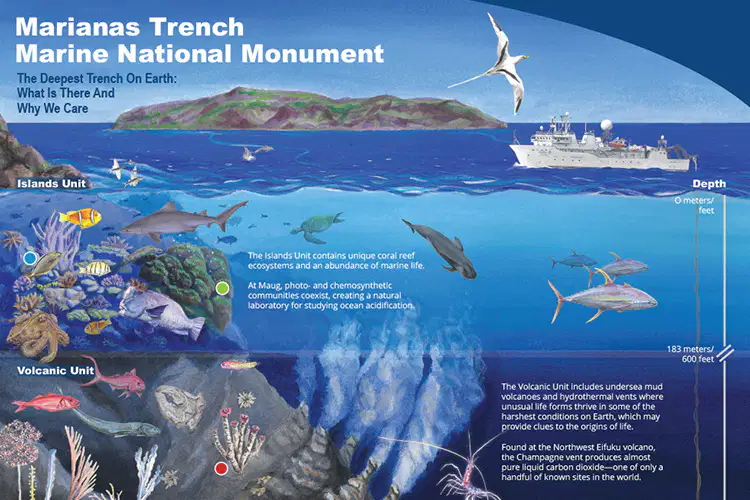
Which of the following processes best explains how the Mariana Trench was formed?
a)
convergent boundary
b)
divergent boundary
c)
none of the above
9.

Which mineral found in the oceanic crust is responsible for recording the Earth's magnetic polarity.
a)
magnesium
b)
iron
c)
calcium
10.
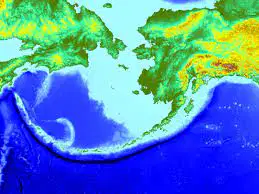
The Aleutian Islands are shown on the map below.
Three students were asked what forms where the Pacific Plate subducts under the North American Plate. Their responses are shown below.
Student 1: A mid-ocean ridge is formed.
Student 2: A mountain range is formed.
Student 3: A trench is formed.
Which student correctly identified answered what formed near the Aleutian Islands?
a)
Student 1
b)
Student 2
c)
Student 3
11.
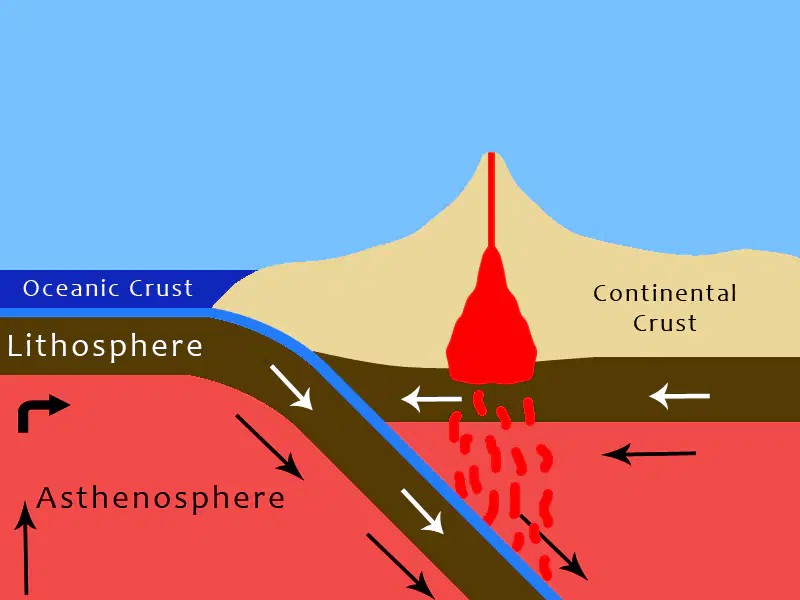
The diagram below models the movement of two tectonic plates.
According to the diagram above, what is occurring as a result of the plate collision?
a)
A mid-ocean ridge is forming.
b)
Volcanoes are forming on the coast.
c)
Volcanic islands are forming.
12.
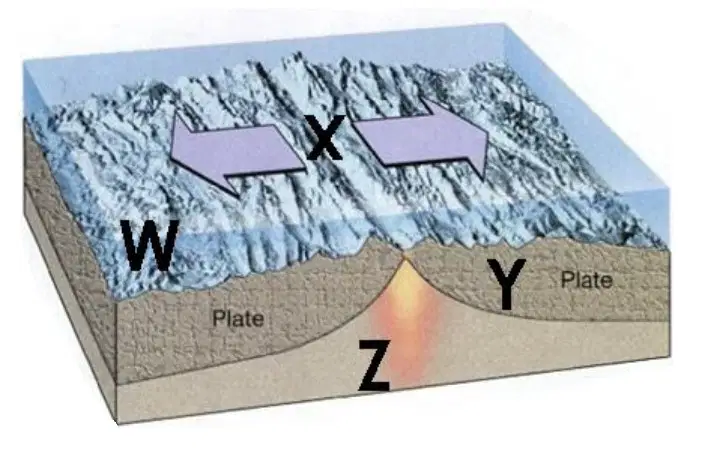
Which point has the youngest rocks? W or X?
a)
W
b)
X
c)
Y
13.
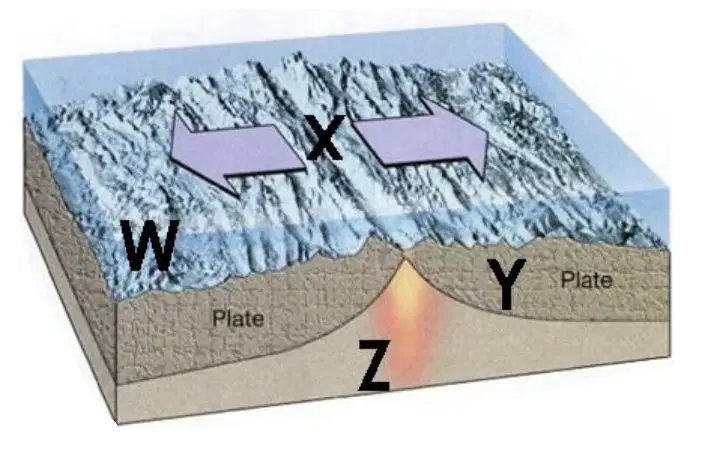
Which point is the mid-ocean ridge?
a)
W
b)
X
c)
Y
14.
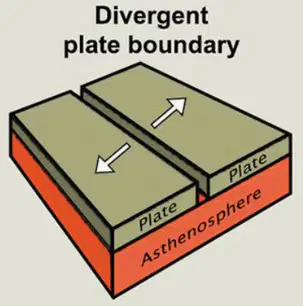
Which of the following does NOT take place at a divergent boundary?
a)
Rift Valley
b)
Subduction
c)
Seafloor spreading
15.
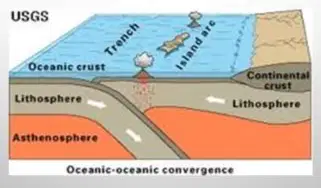
Which two theories were combined to form our present day Theory of Plate Tectonics?
a)
Earth's Layers and Tectotronics
b)
Continental Drift and Seafloor Spreading
c)
Continental Drift and Pangaea Theory
16.
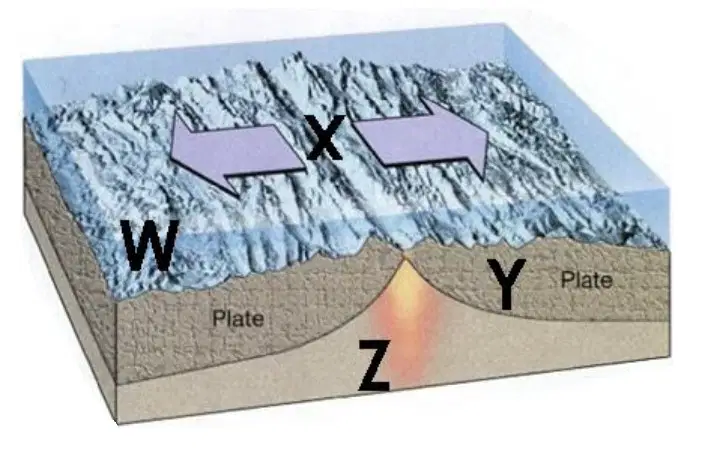
Which of these processes is shown in the diagram below?
a)
subduction
b)
seafloor spreading
c)
converging
17.
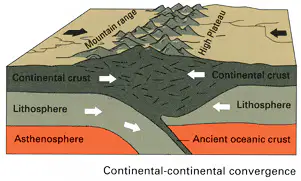
What geologic feature would you most likely find at a continental-continental convergent boundary?
a)
Volcano
b)
Mountain
c)
Island Arc
18.
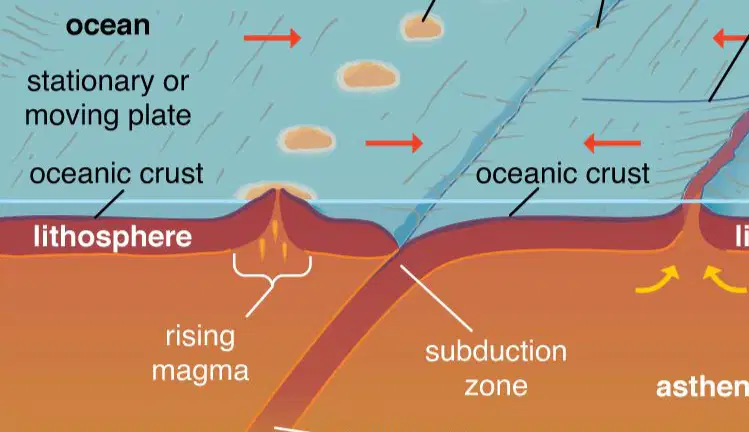
Subduction zones are common at _______
a)
diverging oceanic boundaries
b)
transform boundaries
c)
converging oceanic boundaries
19.
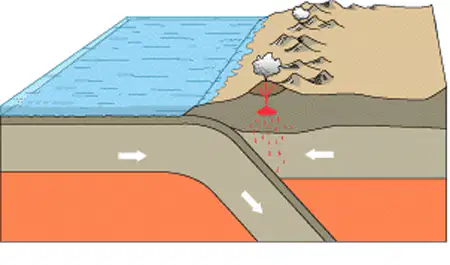
Observe the diagram below of a plate boundary. Which statement BEST describes what is happening?
a)
volcanic islands are forming
b)
the denser oceanic crust is subducting under the continental crust that is less dense
c)
the tectonic plate are moving away from each other
20.
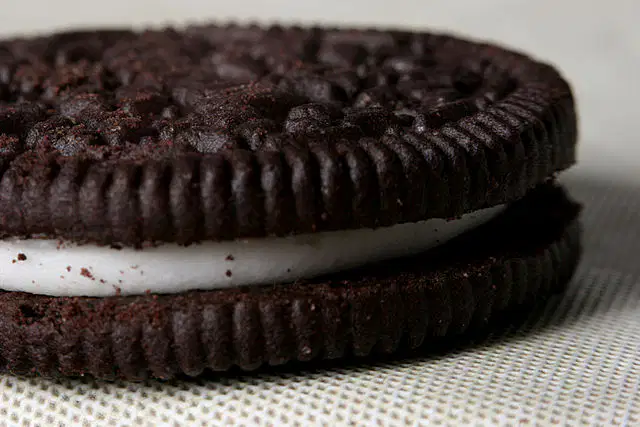
The mantle is often compared to an Oreo cookie. The middle layer is called the ___________________ and is plastic-like.
a)
lithosphere
b)
asthenosphere
c)
lower mantle
21.
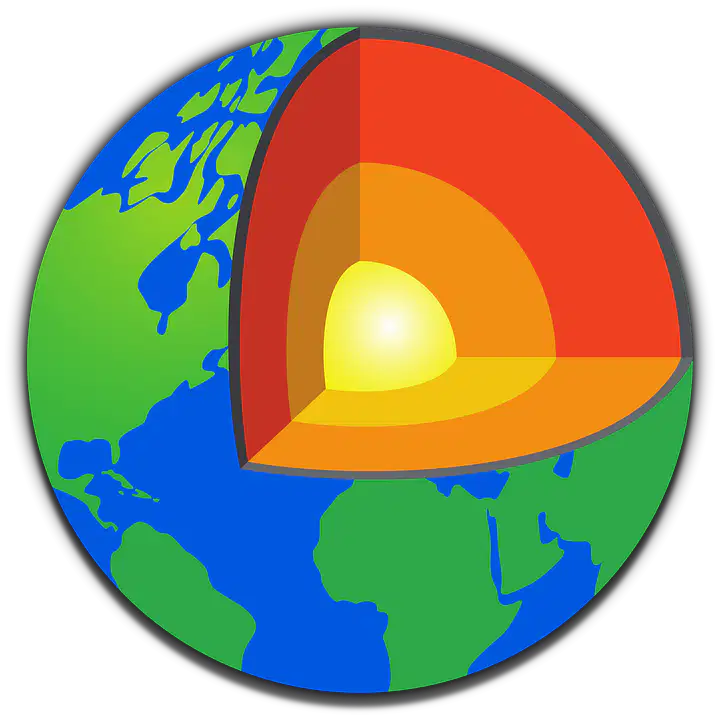
Earth's crust is best modeled using material that is ____.
a)
liquid and hot
b)
soft and flexible
c)
thin and solid
22.

When the heat source is removed from a fluid, convection currents in the fluid will ___ .
a)
speed up
b)
eventually stop
c)
continue at the same rate forever
23.
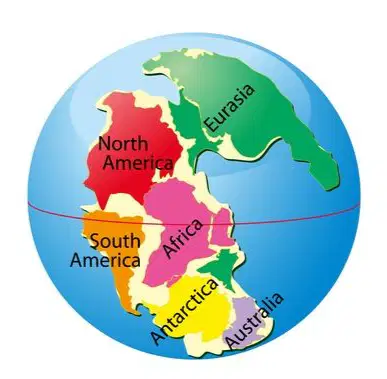
What is Pangaea?
a)
the name of a German scientist
b)
the name of the supercontinent that existed millions of years ago
c)
the name of an ancient fossil
24.
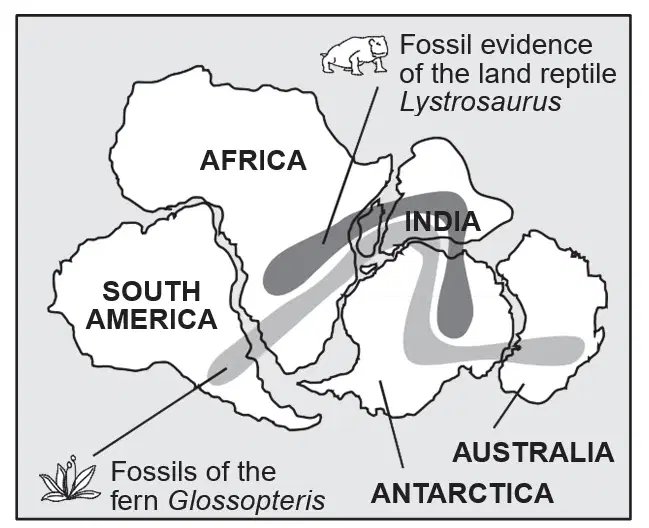
The diagram shows where fossils of two different species, Lystrosaurus and Glossopteris, have been found on more than one continent. How is this kind of evidence BEST used by scientists?
a)
to determine how the rocks formed on the different continents
b)
to support the theory that these continents were once joined together but then moved apart over time
c)
to predict how the continents might look in the future with continued plate movement
25.
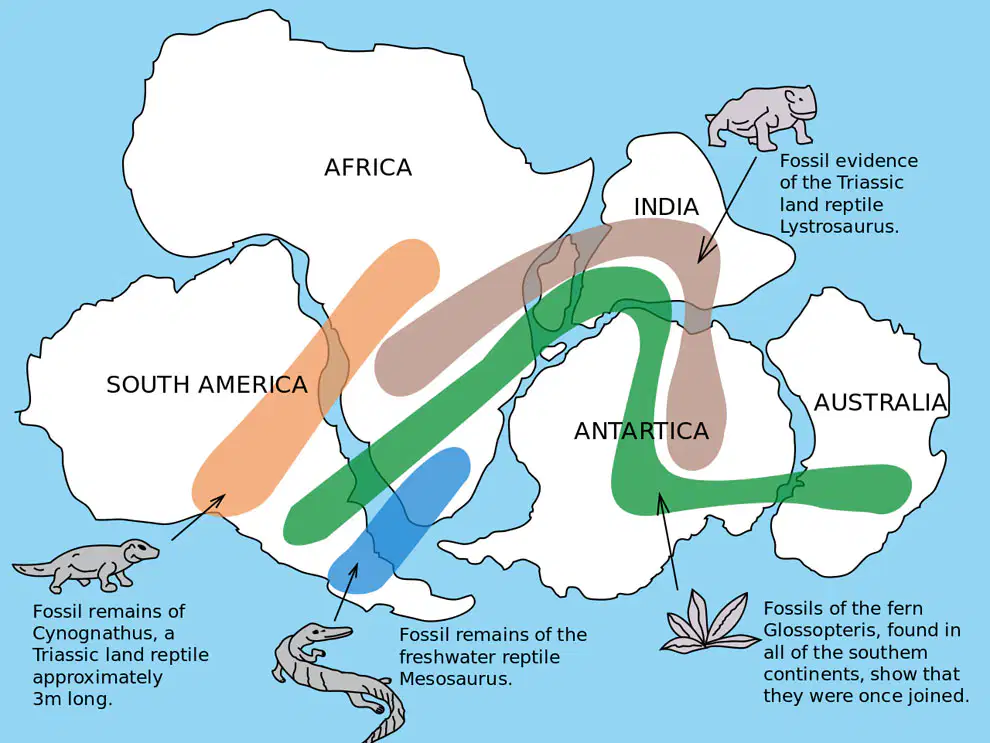
According to Wegener's hypothesis of continental drift, ____ .
a)
the continents do not move
b)
Earth is slowly cooling and shrinking
c)
the continents were once joined together in a single landmass
26.
Most geologists rejected Alfred Wegener's idea of continental drift because __ .
a)
they were afraid of a new idea
b)
Wegener was interested in what Earth was like millions of years ago
c)
Wegener could not identify a force that could explain HOW the continents moved
27.
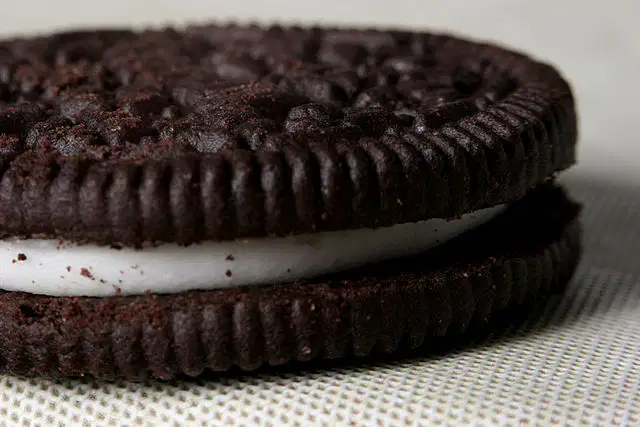
The mantle is often compared to an OREO cookie. The top layer is called the ________________.
a)
lithosphere
b)
asthenosphere
c)
lower mantle
28.
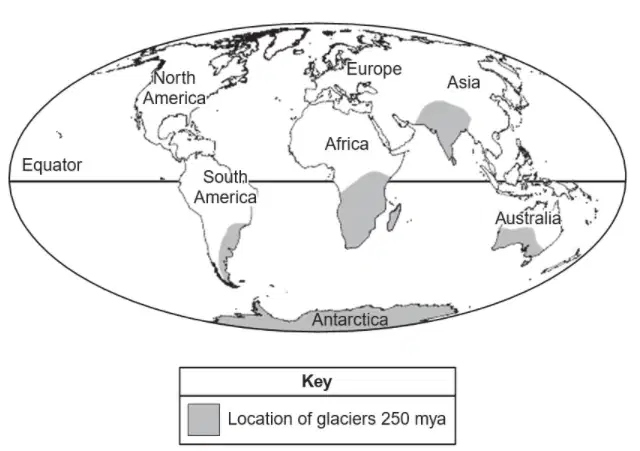
The map shows where glaciers existed 250 million years ago. Which explanation is supported by the data in the map?
a)
Glaciers were mainly located in the northern hemisphere.
b)
Glaciers were located on every continent.
c)
Glaciers were once found in Africa.
29.

In sea-floor spreading, molten material rises from the mantle and erupts ___ .
a)
along the edges of all the continents
b)
along mid-ocean ridges
c)
at the north and south poles
30.
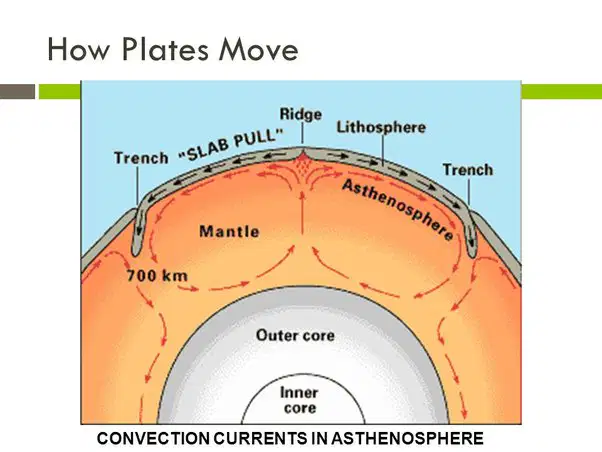
Convection currents in Earth’s _________ cause the tectonic plates move and interact with each other.
a)
asthenosphere
b)
outer core
c)
inner core
31.
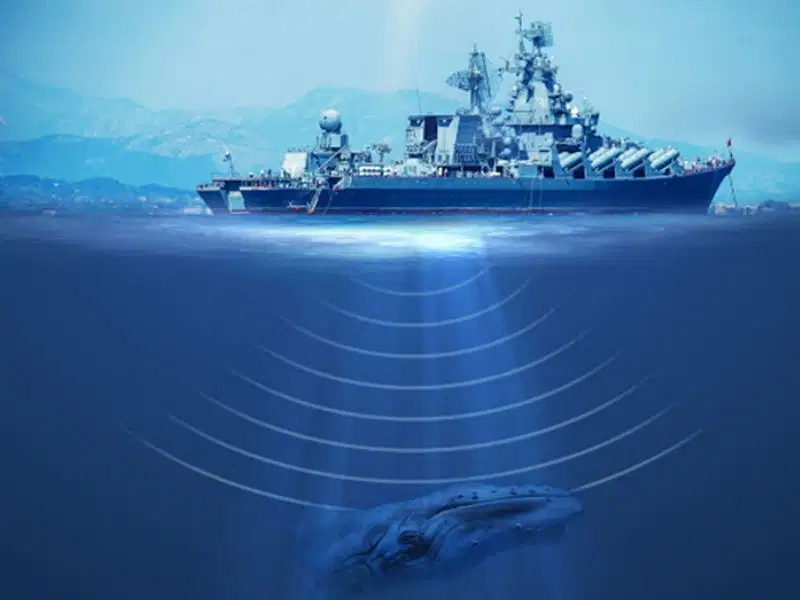
The technology scientists used in the mid-1900's to map the mid-ocean ridge was called _________________.
a)
GPS
b)
SONAR
c)
GOOGLE MAPS
32.
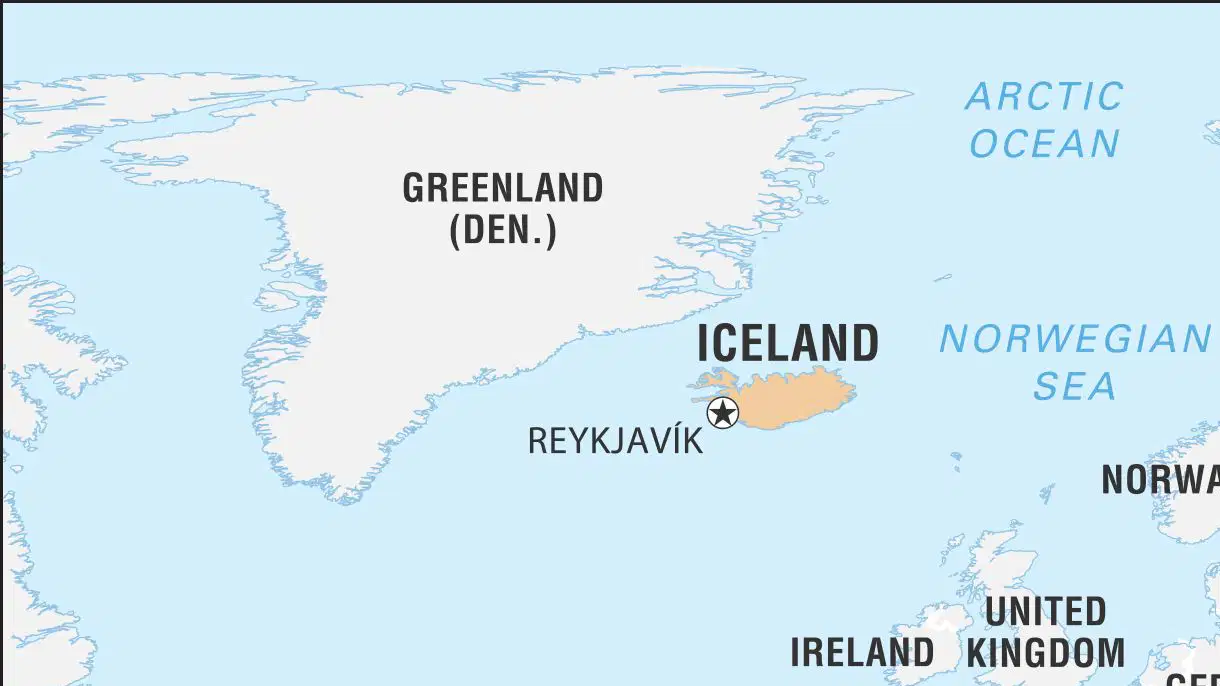
If you flew over Iceland and looked down, what would you see?
a)
mid-ocean ridge
b)
ice
c)
subduction zone
33.

The geological theory that states that pieces of Earth's lithosphere are in constant, slow motion is the theory of ___ .
a)
subduction
b)
plate tectonics
c)
deep-ocean trenches
34.
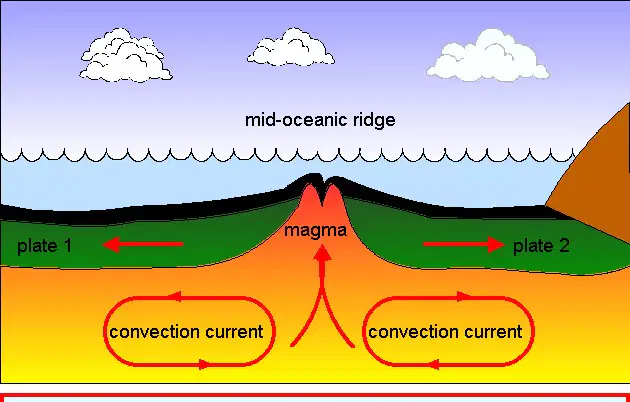
Which of the following BEST explains why rocks on the seafloor are different ages?
a)
seafloor spreading
b)
continental drift
c)
earthquakes
35.
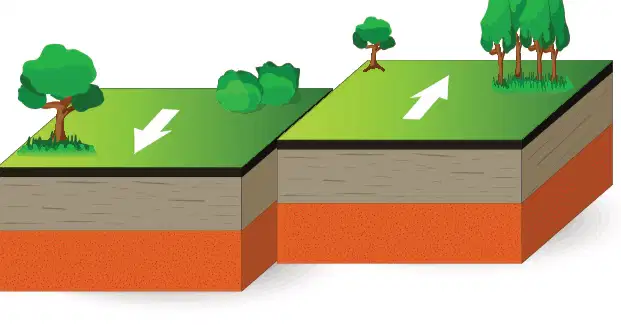
A place where two plates slide past each other, is known as a __ .
a)
transform boundary
b)
divergent boundary
c)
convergent boundary
36.
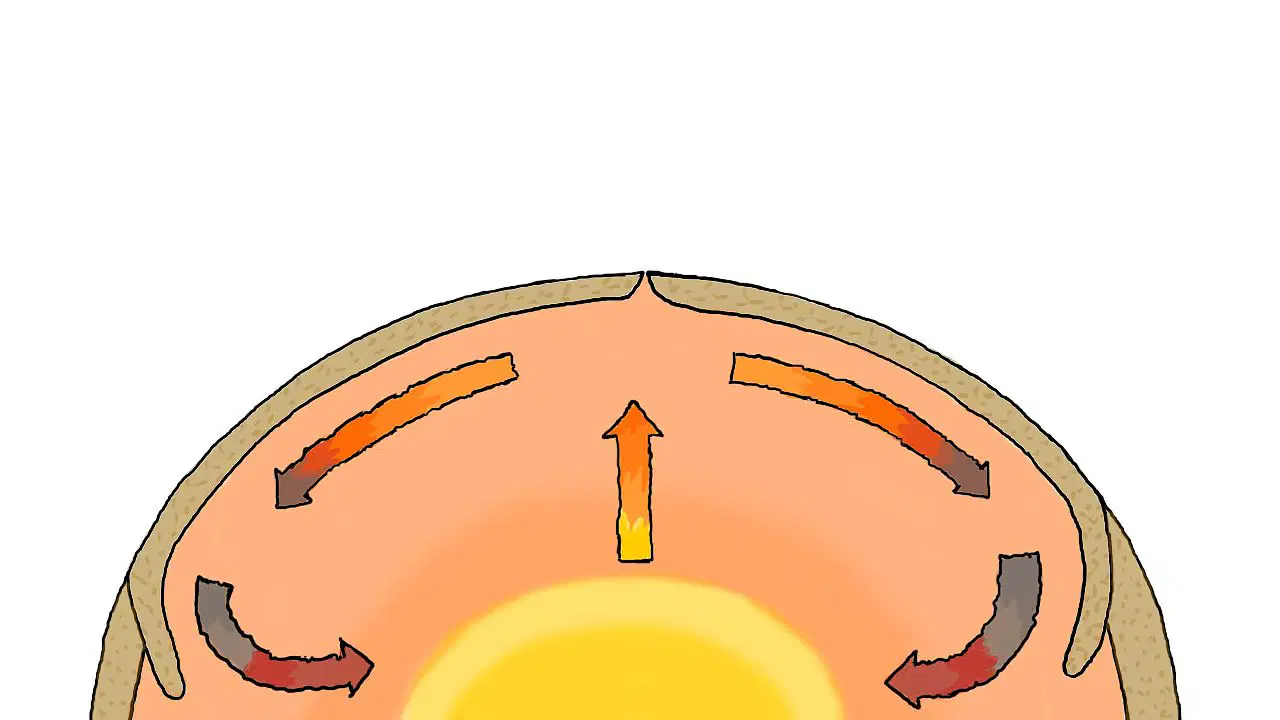
Scientists think that convection currents that flow in the outer core are responsible for the Earth's ____________ .
a)
continents
b)
magnetic field
c)
earthquakes
37.

When two pieces of continental crust divide at a divergent boundary a ___________ is formed .
a)
deep-ocean trench
b)
rift valley
c)
mountain range
38.
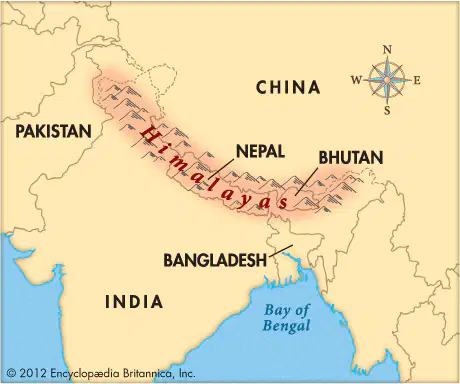
The Himalayan mountain range of India was formed at a ____.
a)
continental-continental convergent boundary
b)
oceanic-oceanic divergent boundary
c)
transform boundary
39.
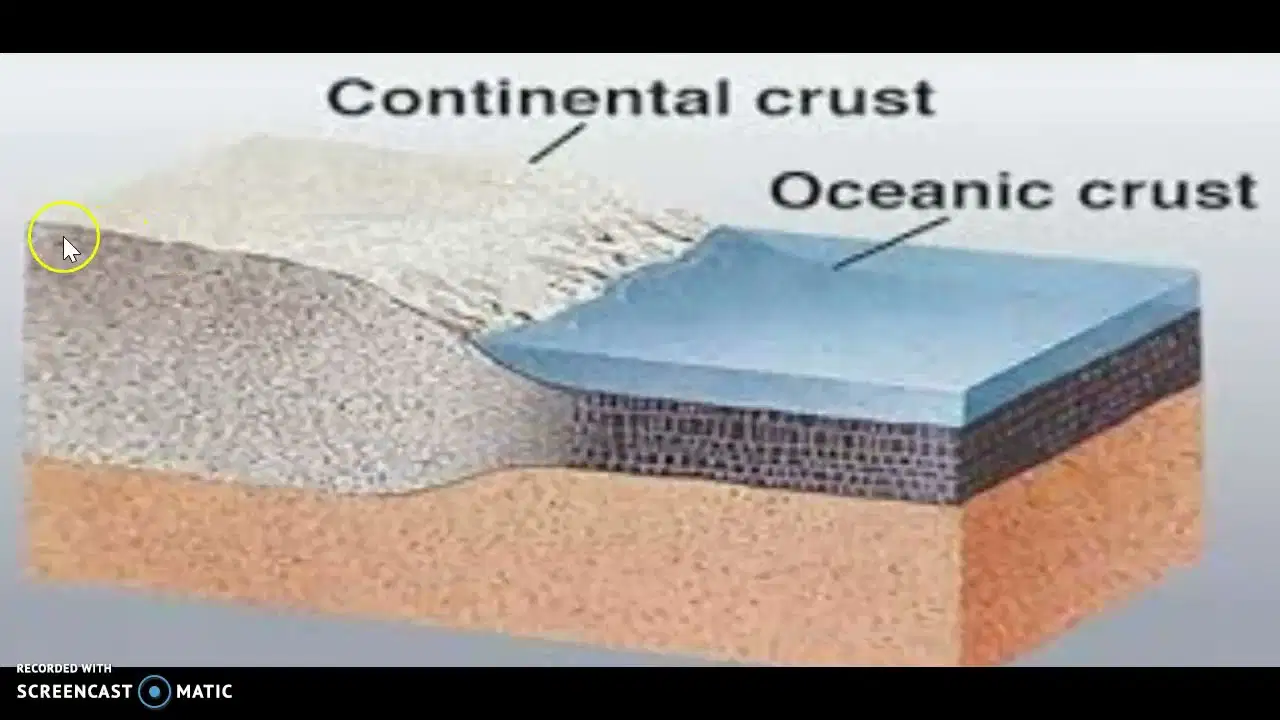
There are two types of crust: continental and oceanic. Which of the following statements is true about the crust?
a)
Continental crust is thin, but more dense
b)
Continental crust is thick, but more dense
c)
Oceanic crust is thin, but more dense
40.
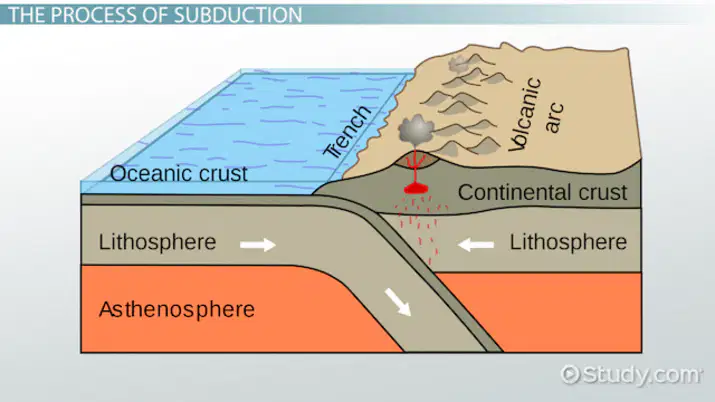
When oceanic crust and continental crust collide, the oceanic crust ______________ because it is _____________.
a)
subducts; more dense
b)
goes up; less dense
41.
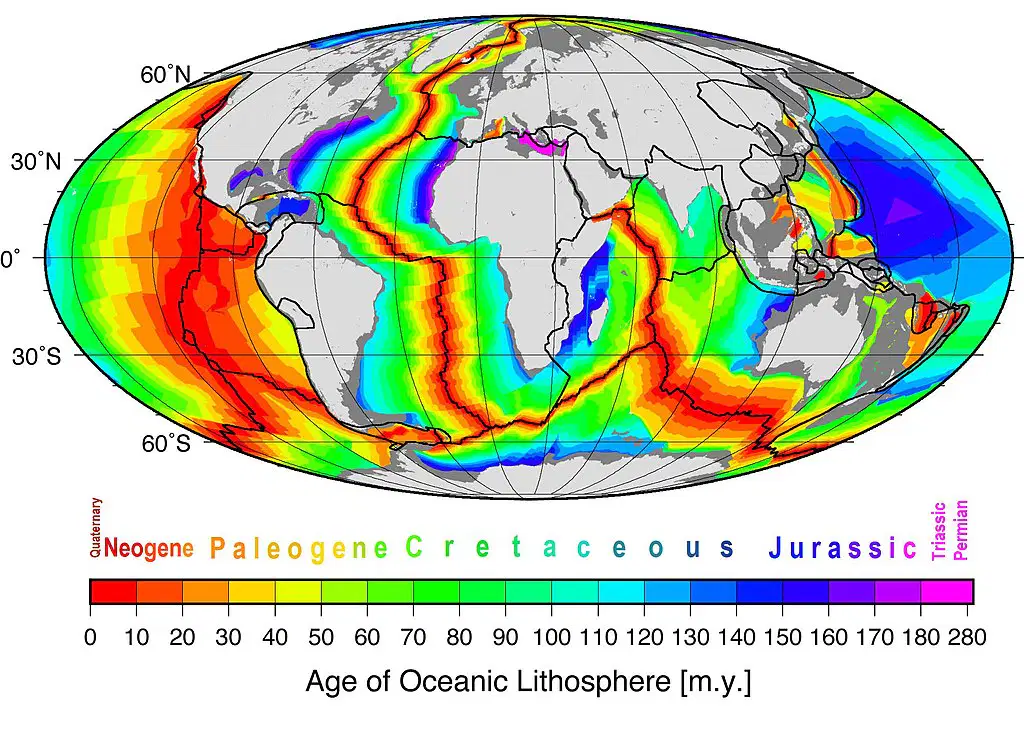
The youngest ocean rocks are found closest to _______.
a)
convergent boundaries
b)
continents
c)
mid ocean ridges
42.
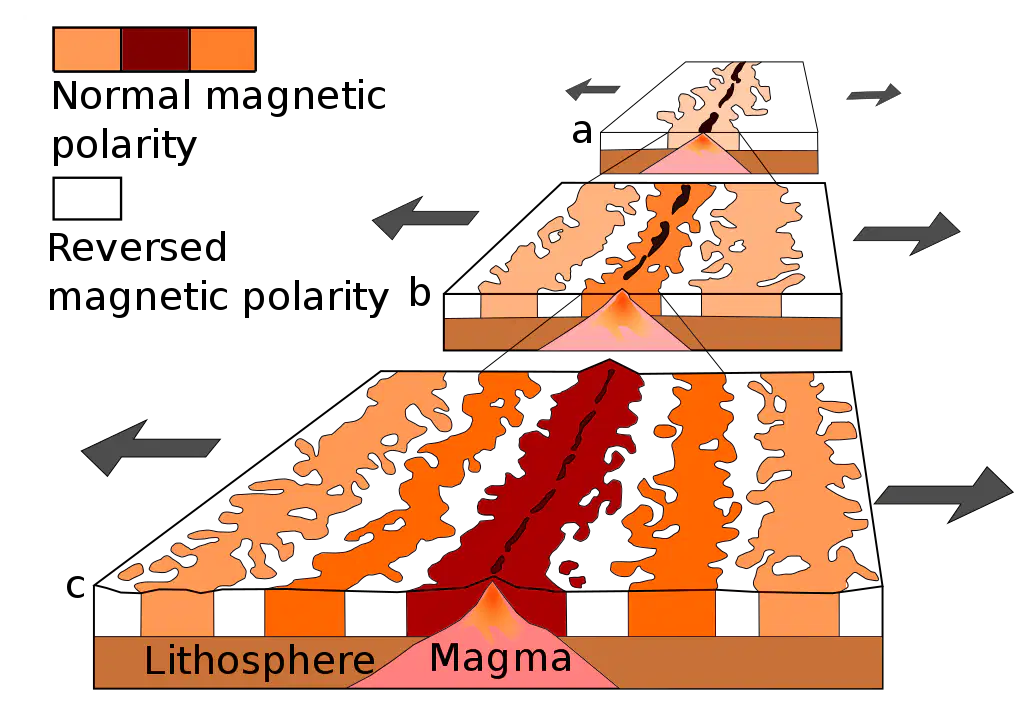
Magnetic reversals on the seafloor were caused by _______________.
a)
the Earth's magnetic field staying constant
b)
the iron aligning in the same direction in all the rocks on the seafloor
c)
the Earth's magnetic field periodically reversing polarity (N and S)
43.
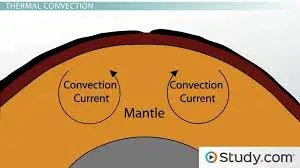
In a convection current, ______________.
a)
warmer material becomes less dense and rises
b)
warmer material becomes more dense and rises
c)
warmer material becomes more dense and sinks
44.
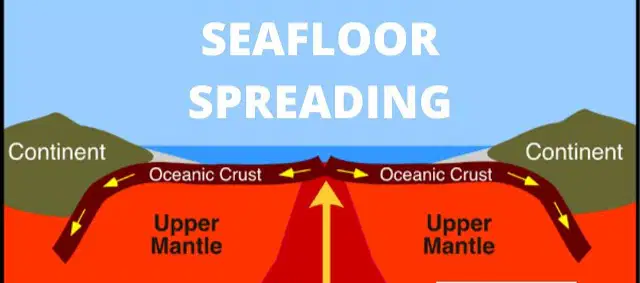
Harry Hess is known for his discovery of ___ .
a)
continental drift
b)
seafloor spreading
c)
Earth's layers
45.
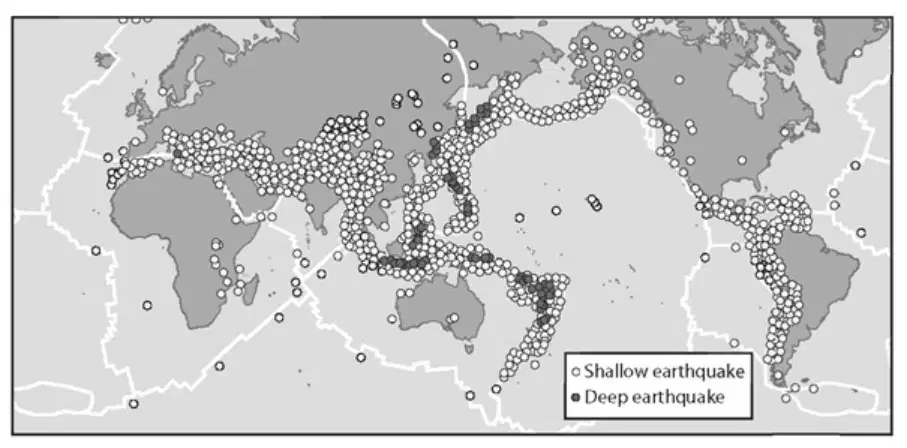
Look carefully at the figure below that shows world-wide earthquake distribution. The white lines represent plate boundaries. Which statement is true?
a)
Earthquakes most frequently occur along plate boundaries.
b)
Earthquakes rarely occur along plate boundaries.
c)
Earthquakes never occur along plate boundaries.
46.
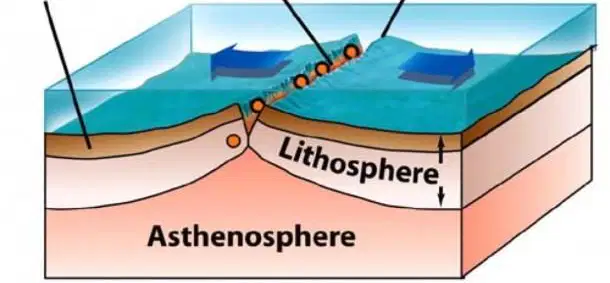
What type of plate boundary is shown below and what feature is likely to form at that type of boundary?
a)
convergent boundary; mountain
b)
divergent boundary; rift valley
c)
divergent boundary; volcano
47.

The process of ___________ continually adds new crust to the ocean floor along both sides of the mid-ocean ridge.
a)
continental drift
b)
sea-floor spreading
c)
conduction
48.
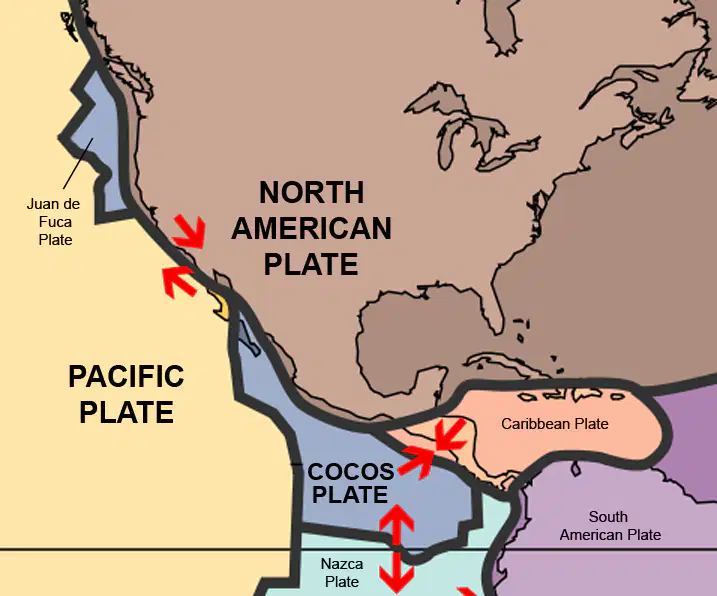
There are frequent earthquakes on the west coast of the United States. What type of plate boundary is most likely located there?
a)
divergent
b)
transform
49.
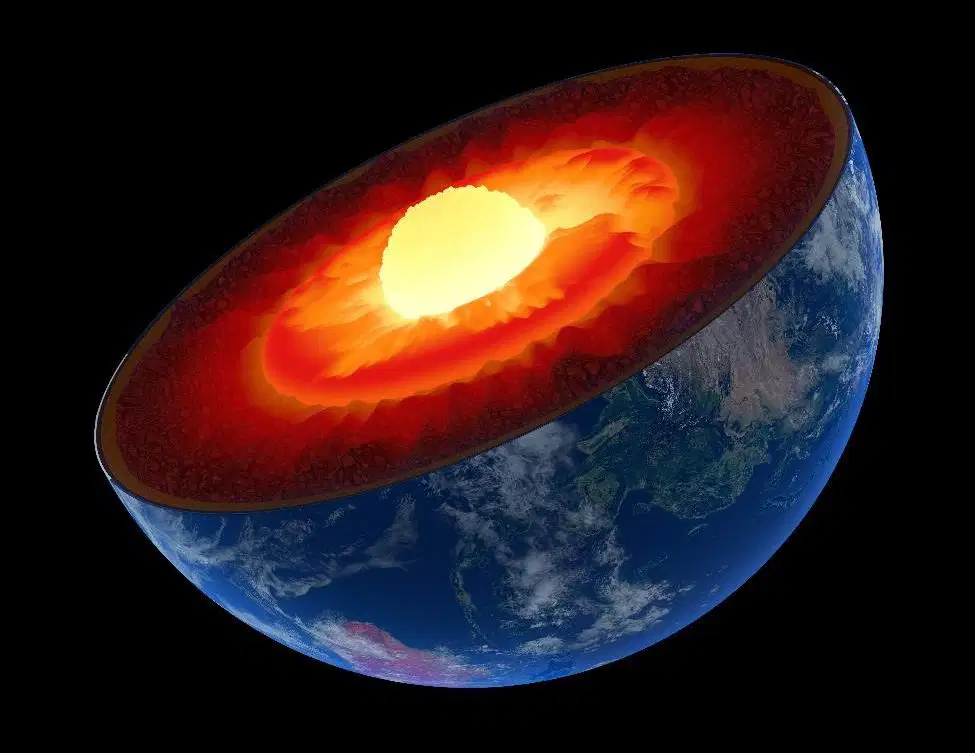
Earth's inner core is __ .
a)
a solid layer of iron and nickel
b)
a liquid layer of molten metal
c)
a layer of rock that forms Earth's outer skin
100 %

