
 Worksheets
Music Theory and Elements
Total questions: 23
Worksheet time: 32mins
What is pitch in music?
The number of instruments in a musical composition
The volume of a musical note
The duration of a musical note
Perceived frequency of a sound or note
Which element of music is concerned with the duration of sounds?
harmony
melody
pitch
rhythm
What is melody in music?
A combination of different musical instruments.
A sequence of single notes played one after the other.
The rhythm of a song.
The lyrics of a song.
What is harmony in music?
Combination of different musical notes played or sung simultaneously
The volume of a musical performance
The rhythm of a song
A type of musical instrument
What are dynamics in music?
Different genres of music.
The process of composing a song.
Varying levels of volume and intensity in a musical performance.
The study of musical instruments.
What is the difference between rhythm and melody?
Rhythm and melody are the same thing.
Rhythm refers to the pattern of sounds and beats in music, while melody refers to the sequence of musical notes that create a tune.
Rhythm is the sequence of musical notes, while melody is the pattern of sounds and beats.
Rhythm is only found in vocal music, while melody is only found in instrumental music.
How do harmony and melody work together in music?
Harmony and melody work independently of each other.
Harmony and melody compete with each other in music.
Harmony and melody have no relationship in music.
Harmony and melody work together by complementing each other.
What are the different levels of dynamics in music?
pianissimo, piano, mezzo piano, mezzo forte, forte, fortissimo, fortississimo
soft, medium, strong, very strong
quiet, moderate, loud, very loud
soft, medium, loud, very loud
What is the purpose of dynamics in music?
To add variation in volume and intensity, creating emotional impact and expression.
To provide a platform for improvisation and creativity.
To enhance the visual elements of a musical performance.
To create a sense of rhythm and tempo.
How can pitch be altered in music?
By changing the volume of the sound waves produced.
By changing the duration of the sound waves produced.
By changing the timbre of the sound waves produced.
By changing the frequency of the sound waves produced.
What is the role of rhythm in music composition?
Rhythm is solely responsible for the melody in a composition.
Rhythm provides structure, movement, and tempo to a composition.
Rhythm is only important in dance music, not other genres.
Rhythm has no impact on music composition.
What chords (in Roman Numerals) are part of an imperfect cadence?
How can dynamics be notated in sheet music?
Symbols and Italian terms
Words and sentences
Pictures and diagrams
Numbers and letters
What is the importance of melody in a song?
Melody is important because it carries the tune and creates a memorable and emotional impact on the listener.
Melody is not important in a song.
Lyrics are more important than melody in a song.
The importance of melody in a song is subjective.
What is tempo in music?
The volume of a musical note.
The duration of a musical note.
The speed or pace of a musical composition.
The perceived frequency of a sound or note.
What is timbre in music?
The combination of different musical instruments.
The rhythm of a song.
The volume of a musical performance.
The quality or tone color of a musical sound.
What is the purpose of dynamics in music?
To add variation in volume and intensity, creating emotional impact and expression.
To provide a platform for improvisation and creativity.
To enhance the visual elements of a musical performance.
To create a sense of rhythm and tempo.
What is the role of rhythm in music composition?
Rhythm is solely responsible for the melody in a composition.
Rhythm provides structure, movement, and tempo to a composition.
Rhythm is only important in dance music, not other genres.
Rhythm has no impact on music composition.
Fill in the Circle of Fifths!

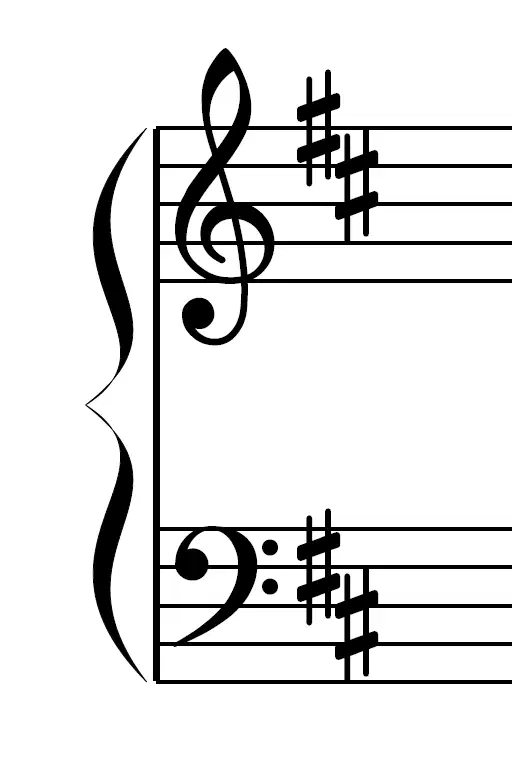
Which key has 2 sharps?
A Major
D Major
C Major
G Major
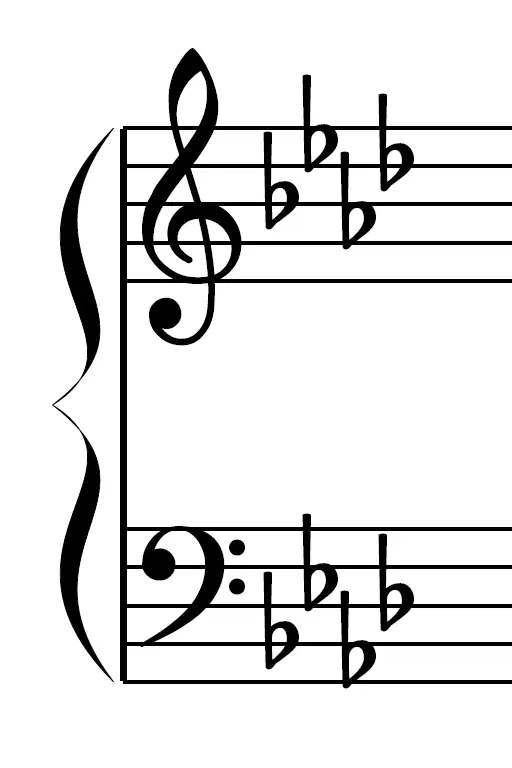
Which key has four flats?
Ab Major
Bb Major
F Major
Eb Minor
Which of the following concepts fit under Expressive Devices Element?
instrumentation, instrumental and vocal techniques, manipulation of sound quality, register
monophony, homophony, polyphony, heterophony, linear and vertical arrangement, voicing, sequencing
dynamics, contrast, instrumental and vocal techniques, articulation
beat, pulse, metre, accent, syncopation, tempo, rhythm
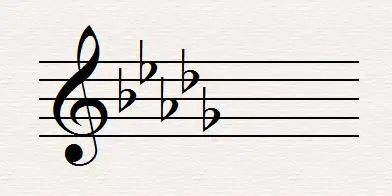
Which key is the RELATIVE MINOR to the Major key pictured?
Ab minor
Bb minor
C minor
D minor

