
 Worksheets
T3 Lesson 2 Quiz: Chemical Change
Total questions: 10
Worksheet time: 5mins
Name
Class
Date
1.
Cutting, melting, bending, or crushing are examples of what kind of change?
a)
reactant
b)
product
c)
physical
d)
chemical
2.
What kind of change is the formation of rust and ash?
a)
reactant
b)
product
c)
physical
d)
chemical
3.
Which of the following can occur when a chemical reaction takes place? Choose all that apply.
a)
New bonds form.
b)
Existing bonds break.
c)
New substances form.
d)
Changes don’t affect matter.
4.
In a chemical change, atoms and molecules rearrange to form new ones. Substances that undergo chemical changes are called __________________________.
a)
reactants
b)
products
5.
In a chemical change, atoms and molecules rearrange to form new ones. What these atoms & molecules form are called _________________________.
a)
reactants
b)
products
6.
What is the best way to be certain that a chemical reaction has occurred?
a)
Some bubbles form.
b)
A color change occurs.
c)
A new substance forms.
d)
The materials do not react.
7.
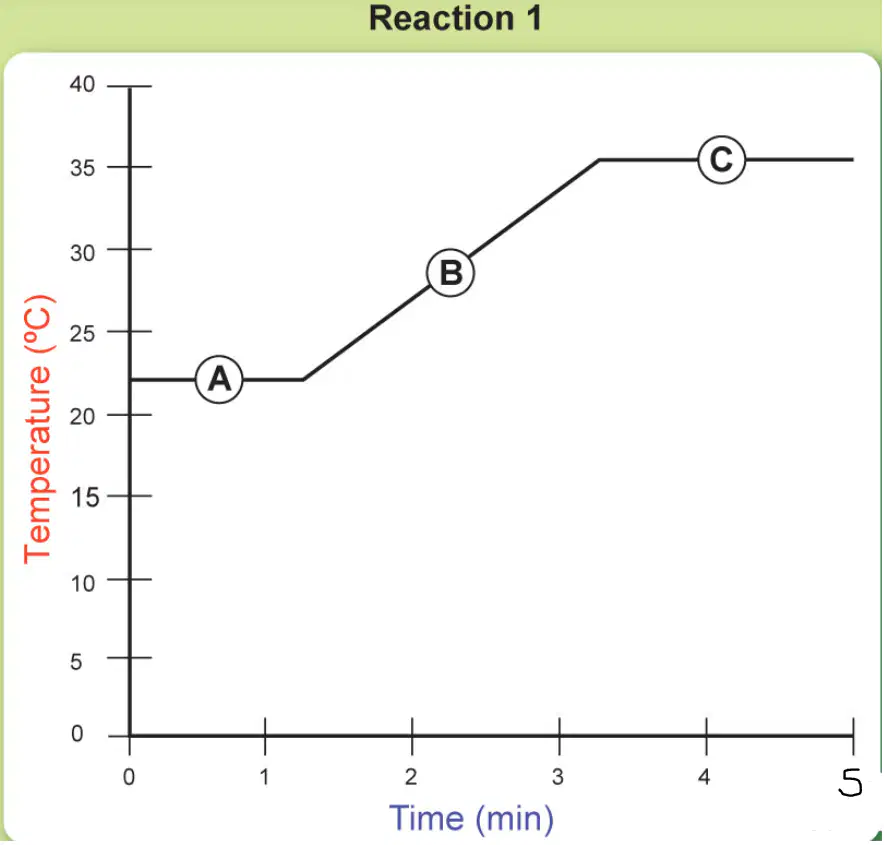
Some chemical reactions need energy in the form of heat to take place, while others give off energy.
The temperature after Reaction 1 takes place is _______________ the temperature before the reaction which means this graph represents a ________________ reaction.
a)
greater than; endothermic
b)
greater than; exothermic
c)
less than; exothermic
d)
less than; endothermic
8.
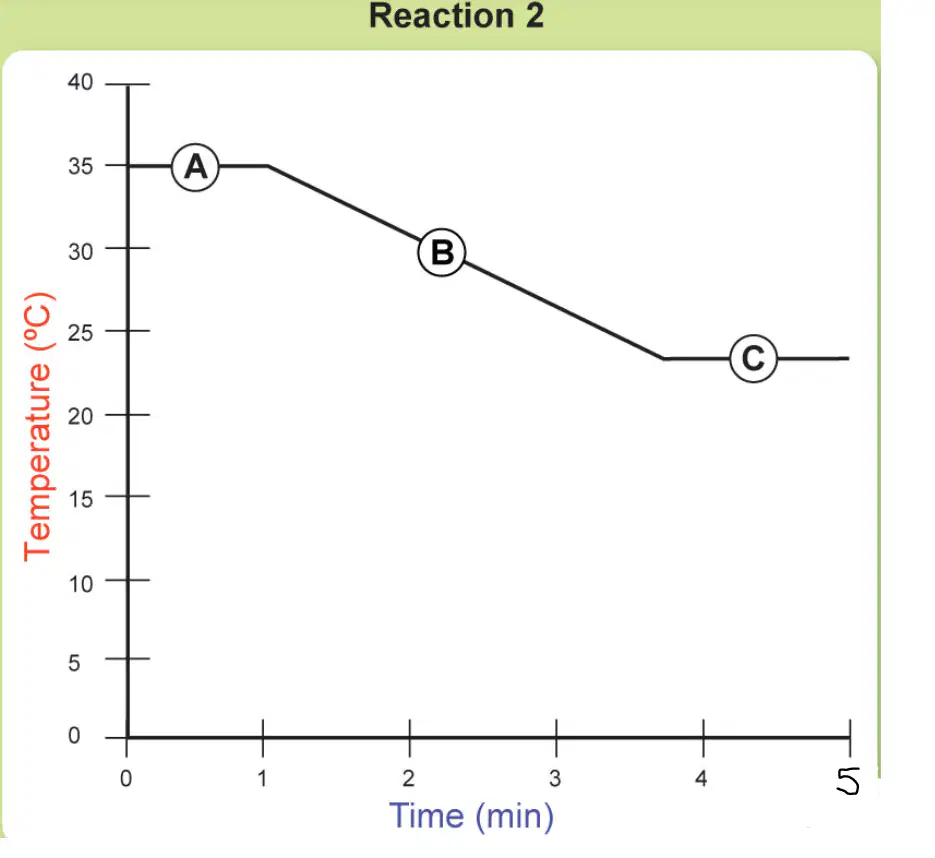
Some chemical reactions need energy in the form of heat to take place, while others give off energy.
Reaction 2 requires an endless source of energy. The temperature after the reaction is _________________ the temperature before the reaction which means Reaction 2 is an ____________________ reaction.
a)
greater than; endothermic
b)
greater than; exothermic
c)
less than; endothermic
d)
less than; exothermic
9.
Which condition(s) can affect the rate of a chemical reaction?
a)
surface area
b)
temperature
c)
concentration
d)
catalysts/inhibitors
e)
all of the answer choices affect the rate of a reaction
10.
The minimum amount of energy needed to start a chemical reaction is called ___________________________.
a)
activation energy
b)
solar energy
c)
chemical energy
d)
catalyst energy
100 %

