
Font size
 Worksheets
The Nature of Covalent Bonding
Total questions: 23
Worksheet time: 12mins
How many bonds can a carbon atom form?
1
2
3
4
A covalent bond in which one atom contributes both bonding electrons is called
a coordinate covalent bond
an ionic bond
a metallic bond
a cooperative bond
NH4+ would be classified as a
monatomic ion
polyatomic ion
ammonia
nitrogen
A shared pair of electrons creates
A triple bond
An ionic bond
A double bond
A single bond
In order to achieve noble gas configuration, what happens with the electrons in covalent bonds?
Electrons are gained or lost to create ions
Electron pairs are sharedf
Electrons are lost to space
No one is sure

What type of covalent bond is between the carbons?
(a)
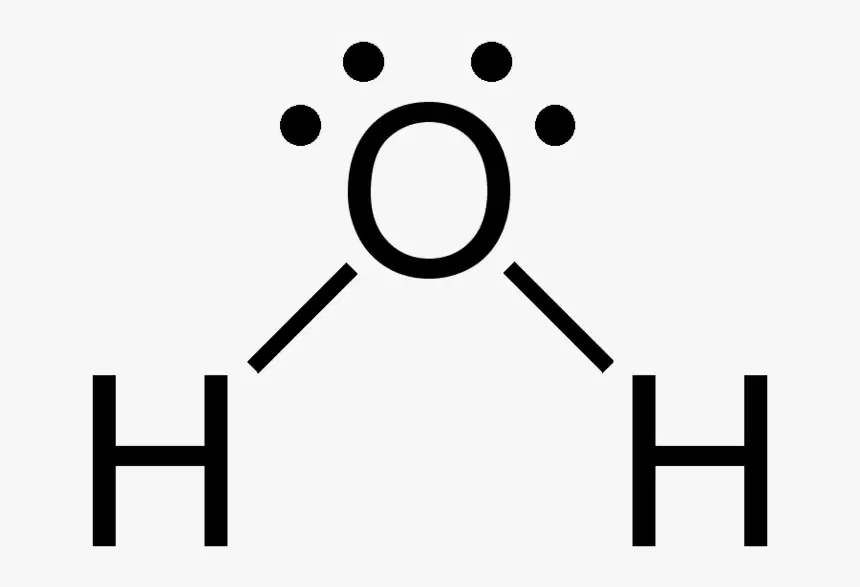
Each pair of dots on this dot structure for water represents
protons
a pair of eyes
an unshared pair
a bond
Choose the correct electron dot structure for bromine.
Br

Br2

Hydrogen peroxide, H2O2, has this dot structure:


Hydroxide has which electron dot structure:
Nitrogen dioxide (NO2), that cannot satisfy the octet rule because it has an odd number of total valence electrons, is
stable.
unstable.
impossible to form.
ionic in nature.
How many bonds does diatomic nitrogen have?
1
2
3
4
An electron dot structure such as H:H represents the _______________ of the covalent bond by two dots.
sigma bond
shared pair
order of operations
unshared electrons
What formula represents the covalent bonds by dashes and shows the arrangement of covalently bonded atoms?
unshared
ionic
molecular
structural
An unshared pair is
two noble gases
a pair of valence electrons that is shared between atoms
a pair of valence electrons that is not shared between atoms
A diatomic molecule
How many unpaired electrons does oxygen have?
1
2
3
4
Sharing two pairs of electrons to attain noble gas configuration results in
a single bond
a double bond
a triple bond
a lone pair
Choose the diatomic elements with single bonds
O2
N2
Cl2
I2
Choose the best structural formula for CO2
::O=C=O::
:O=C=O:
O=C=O
::C=O=C::
Choose the polyatomic ion
Cl-
SO4-
N3-
S2-
What is true of most polyatomic cations and ions?
they contain only coordinate covalent bonds
they contain only covalent bonds
they contain both covalent and coordinate covalent bonds.
they contain ionic bonds since they are ions
The stronger the covalent bond, the
smaller the bond dissociation energy.
larger the bond dissociation energy
more metallic in character it is.
more it attracts oxygen
The energy needed to break one mole of bonds is called the
heat of formation
heat of reaction
bond dissociation energy
enthalpy

