wayground logo

Free Printable Worksheets

Font size

S
M
L
XL
Worksheets

Unit 2 Assessment Review (Anatomy)

Total questions: 40

Worksheet time: 21mins

Name
Class
Date
1.

Which system is like the cell membrane and protects us from the outside world?

a)

Skeletal

b)

Muscular

c)

Integumentary

d)

Nervous

2.

Which system gives us shape and allows us to move?

a)

Skeletal

b)

Muscular

c)

Digestive

d)

Integumentary

3.

There are 206______ in the body.

a)

Bones

b)

Ligaments

c)

Tendons

d)

Joints

4.

Which layer of skin can we see?

a)

Epidermis

b)

Dermis

c)

Hypodermis

5.

What is the longest bone in the human body, located in the thigh?

a)

Vertebrae

b)

Femur

c)

Tibia

d)

Radius

6.

What is included in the integumentary system?


Select ALL that apply.

a)

skin

b)

hair

c)

nails

d)

bones

7.
What is the top layer of the skin called?
a)
Dermis
b)
Hypodermis
c)
Epidermis
d)
Subcutaneous
8.
Nails are made out of what?
a)
All of the Above 
b)
Terminal 
c)
 Vellus 
d)
Keratin 
9.
Which layer of the skin contains lots of adipose tissue and connects the skin to muscle?
a)
Dermis
b)
Epidermis
c)
Keratin
d)
Subcutaneous
10.
which type of gland produces oil for waterproofing the skin? 
a)
sebaceous 
b)
 apocrine 
c)
ceruminous 
d)
eccrine 
11.
Skin color is due to a pigment called
a)
Keratin
b)
Melanin
c)
Chromatin
d)
Epithelium
12.

Which skin layer is most superficial?

a)

stratum corneum

b)

stratum lucidum

c)

stratum spinosum

d)

stratum granulosum

e)

stratum basale

13.

Which of the following lists the stratum of the epidermis from superficial to deep?

a)

corneum, lucidum, granulosum, spinosum, basale

b)

basale, spinosum, granulosum,lucidum, corneum

c)

granulosum, lucidum, corneum, basale, spinosum

14.
What is another name for the hypodermis?
a)
epidermis
b)
subcutaneous layer
c)
stratum basale
15.

Which letter refers to the hypodermis?

a)

A

b)

B

c)

C

d)

D

e)

E

16.

Which letter refers to the dermis?

a)

A

b)

B

c)

C

d)

D

e)

E

17.

These cells synthesize skin pigment to give skin and hair its color; found in the deepest layer of the epidermis:

a)

keratinocytes

b)

melanocytes

c)

Langerhans' cells

d)

Merkel cells

18.
The outermost layer of the epidermis that constantly sheds. 
a)
stratum corneum
b)
stratum germinativum
19.
Which of the following is NOT part of the integumentary system?
a)
Skin
b)
Cartilage 
c)
Nails
d)
Hair
20.
What is the largest organ in the human body?
a)
Skin
b)
Hair
c)
Nails
d)
All of the Above 
21.
The structure that holds the root of the hair firmly in place.
a)
Hair follicle
b)
Hair shaft
c)
Hypodermis
d)
Sweat pore
22.
Blood cells produced from within the bone are called
a)
yellow marrow
b)
red marrow
c)
osteocytes
d)
osteon systems
23.
The cranium is made up of eight bones.
a)
True
b)
False
24.

The facial skeleton has how many bones?

a)

6

b)

8

c)

12

d)

14

25.
The uppermost and largest bone of the arm, extending from the elbow to the shoulder is the?
a)
hyoid
b)
humerus
c)
ulna
d)
carpus
26.
The bones in the fingers or digits are called?
a)
phalanges
b)
metacarpus
c)
scapula
d)
carpus
27.
The heavy, long bone that forms the leg above the knee is called the?
a)
femur
b)
tibia
c)
fibula
d)
patella
28.

What bone is the arrow pointing to?

a)

rib

b)

spine

c)

scapula

d)

clavicle

29.

What bone is the arrow pointing to (the bone closest to the thumb)?

a)

ulna

b)

humerus

c)

radius

d)

vertebrae

30.
a)
pelvis
b)
tibia
c)
sternum
d)
sacrum
31.
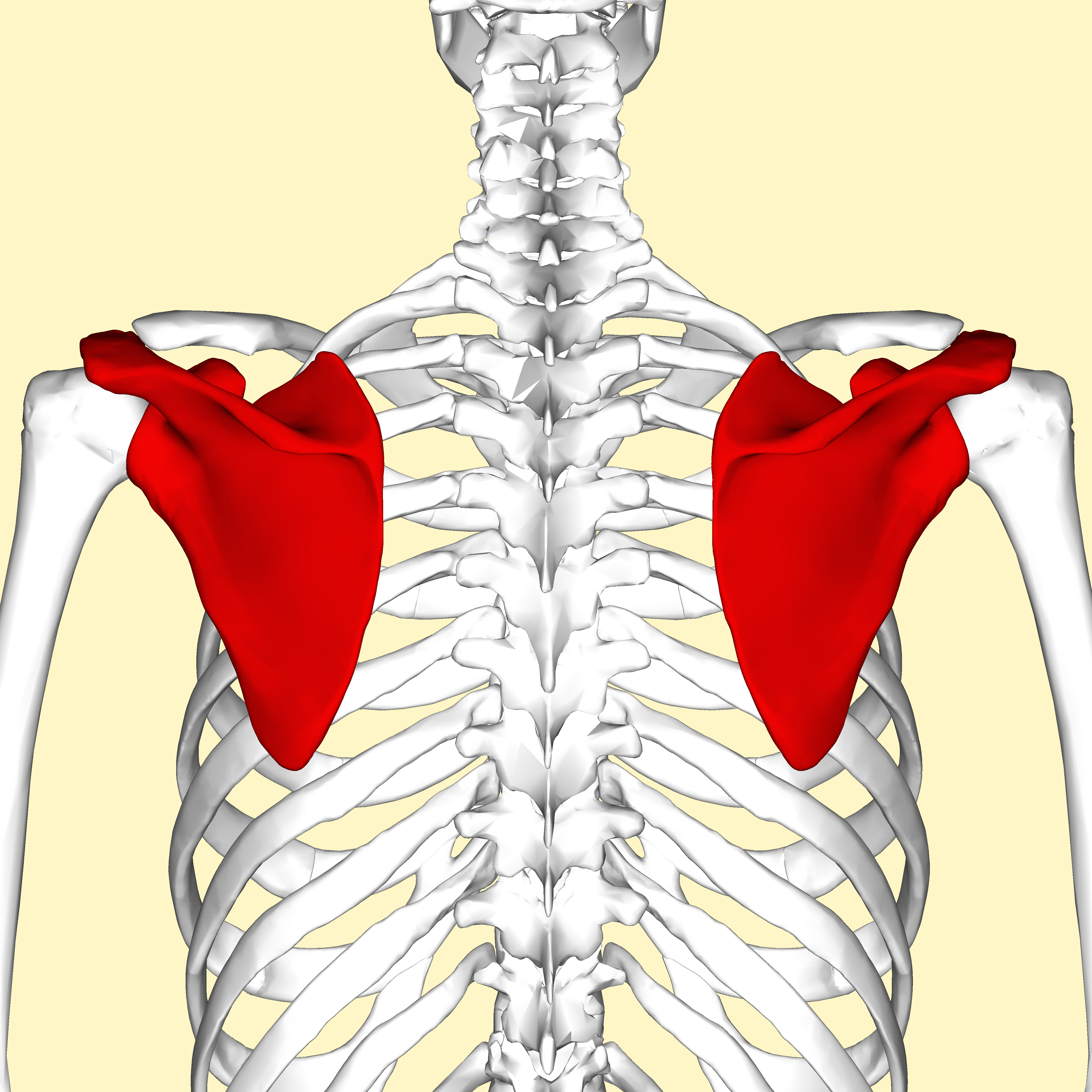
What bones is represented in the  picture?
a)
Clavicle
b)
Scapula
c)
Sternum
d)
Carpals
32.
Also known as the kneecap
a)
Patella
b)
Tibia
c)
Fibula
d)
Femur
33.
Name this bone.
a)
femur
b)
humerus
c)
tibia
34.
Name this bone.
a)
fibula
b)
tibia
c)
femur
35.
Name this bone.
a)
tibia
b)
fibula
c)
femur
36.

The blue bone(s) on the posterior end of the skull are called

a)

maxillary bones

b)

parietal bones

c)

nasal bones

d)

temporal bones

37.

The green bone(s) inferior to the parietal bones are called

a)

temporal bones

b)

frontal bones

c)

ethmoid bones

d)

sphenoid bones

38.

The large pink bone anterior to the parietal bones is called

a)

the nasal bone

b)

the temporal bone

c)

the vomer

d)

the frontal bone

39.
a)

Zygomatic

b)

Temporal

c)

Parietal

d)

Maxilla

40.

a)

Maxilla

b)

lacrimal

c)

Mandible

d)

zygomatic