
NEW
Font size
 Worksheets
Marketing Plan
Total questions: 24
Worksheet time: 12mins
•Briefly introduce your business, its mission, and its products or services.
•Provide a snapshot of your target market, competition, and your unique selling proposition (USP).
•Outline the main marketing goals and objectives.
Executive Summary
Business Analysis
Market Research
Marketing Goals and Objectives
Target Audience
•Describe your business, its history, and its current status.
•Identify your industry, market trends, and any significant factors that may impact your business.
•Define your business's strengths, weaknesses, opportunities, and threats (SWOT analysis).
Executive Summary
Business Analysis
Market Research
Marketing Goals and Objectives
Target Audience
•Provide detailed insights about your target market, including demographics, psychographics, and buying behavior.
•Analyze your competitors, their strengths and weaknesses, and market share.
•Highlight market trends, growth potential, and any emerging opportunities.
Executive Summary
Business Analysis
Market Research
Marketing Goals and Objectives
Target Audience
•Set specific, measurable, achievable, relevant, and time-bound (SMART) marketing goals.
•Align your goals with your business objectives and include a timeline for achieving them.
Executive Summary
Business Analysis
Market Research
Marketing Goals and Objectives
Target Audience
•Create detailed buyer personas for your ideal customers.
•Explain how your products or services fulfill their needs and preferences.
•Detail any segmentation strategies if applicable.
Executive Summary
Business Analysis
Market Research
Marketing Goals and Objectives
Target Audience
•Describe your main competitors and their offerings.
•Analyze their strengths and weaknesses, pricing strategies, and market positioning.
•Identify opportunities to differentiate your business.
Competitive Analysis
Unique Selling Proposition (USP)
Budget
Implementation Plan
•Clearly articulate what sets your business apart from the competition.
•Explain how your USP addresses the needs and pain points of your target audience.
Competitive Analysis
Unique Selling Proposition (USP)
Budget
Implementation Plan
•Specify your marketing budget for each strategy.
•Include a breakdown of costs for advertising, marketing tools, staff, and any other expenses.
•Calculate the expected return on investment (ROI) for each marketing channel.
Competitive Analysis
Unique Selling Proposition (USP)
Budget
Implementation Plan
•Provide a detailed timeline for executing your marketing strategies.
•Assign responsibilities to team members or external agencies.
•Include deadlines, milestones, and key performance indicators (KPIs).
•
Competitive Analysis
Unique Selling Proposition (USP)
Budget
Implementation Plan
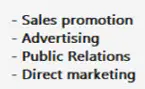
Identify the 4Ps being described in the image.
Promotion
Place
Price
Product
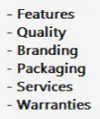
Identify the 4Ps being described in the image.
Promotion
Place
Price
Product
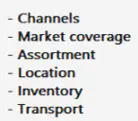
Identify the 4Ps being described in the image.
Promotion
Place
Price
Product
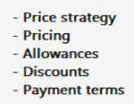
Identify the 4Ps being described in the image.
Promotion
Place
Price
Product
A marketing plan is a critical tool for any business enterprise, regardless of its size or industry. It serves as a roadmap for achieving marketing objectives and plays a pivotal role in the overall success of a business.
TRUE
FALSE
The 4 Ps of marketing, also known as the marketing mix, are a fundamental framework used to develop and execute a marketing plan. They represent the core elements that businesses need to consider when marketing their products or services
TRUE
FALSE
A marketing plan helps a business define its marketing goals and objectives.
Strategic Direction
Resource Allocation
Target Audience Focus
Competitive Analysis
Marketing Mix Development
By outlining marketing activities and budgets, a marketing plan helps allocate resources effectively.
Strategic Direction
Resource Allocation
Target Audience Focus
Competitive Analysis
Marketing Mix Development
A marketing plan identifies and defines the target audience or customer segments.
Strategic Direction
Resource Allocation
Target Audience Focus
Competitive Analysis
Marketing Mix Development
A marketing plan typically includes an analysis of the competitive landscape.
Strategic Direction
Resource Allocation
Target Audience Focus
Competitive Analysis
Marketing Mix Development
The plan outlines the marketing mix, which includes the product or service offering, pricing strategies, distribution channels, and promotional activities.
Strategic Direction
Resource Allocation
Target Audience Focus
Competitive Analysis
Marketing Mix Development
Businesses operate in dynamic environments with various risks and uncertainties.
Risk Mitigation
Long-Term Sustainability
Communication and Coordination
Adaptability
A well-developed marketing plan considers both short-term and long-term goals.
Risk Mitigation
Long-Term Sustainability
Communication and Coordination
Adaptability
The marketing plan serves as a communication tool within the organization
Risk Mitigation
Long-Term Sustainability
Communication and Coordination
Adaptability
In a rapidly changing business landscape, a marketing plan can be adjusted and adapted to respond to emerging trends, market shifts, and customer preferences.
Risk Mitigation
Long-Term Sustainability
Communication and Coordination
Adaptability

