
Font size
 Worksheets
Face Trauma 10.20.23
Total questions: 11
Worksheet time: 6mins
Which of the following interpupillary distances would you consider to be definitive telecanthus?
10mm
20mm
30mm
40mm
Match the Le Fort fracture pattern with it's unique component:
Le Fort 1
Anterolateral margin of nasal fossa
Le Fort 2
Inferior orbital rim
Le Fort 3
Zygoma
Not helpful to distinguish
Nasofrontal suture
What is the correct plane to dissect in and reach the zygoma in a Gillie's approach?
Subcutaneous
Deep to superficial temporal fascia
Deep to deep temporal fascia
Deep to temporalis
All of the following bones comprise of some part of the orbit EXCEPT:
Ethmoid
Palatine
Sphenoid
Temporal
Which approach would not give you good access to an orbital floor fracture?
Transciliary
Lateral brow
Transantral
Transconjunctival
Which of these is NOT a vertical buttress?
Nasal-maxillary
Zygomaticomaxillary
Pterygomaxillary
Pterygo-nasal
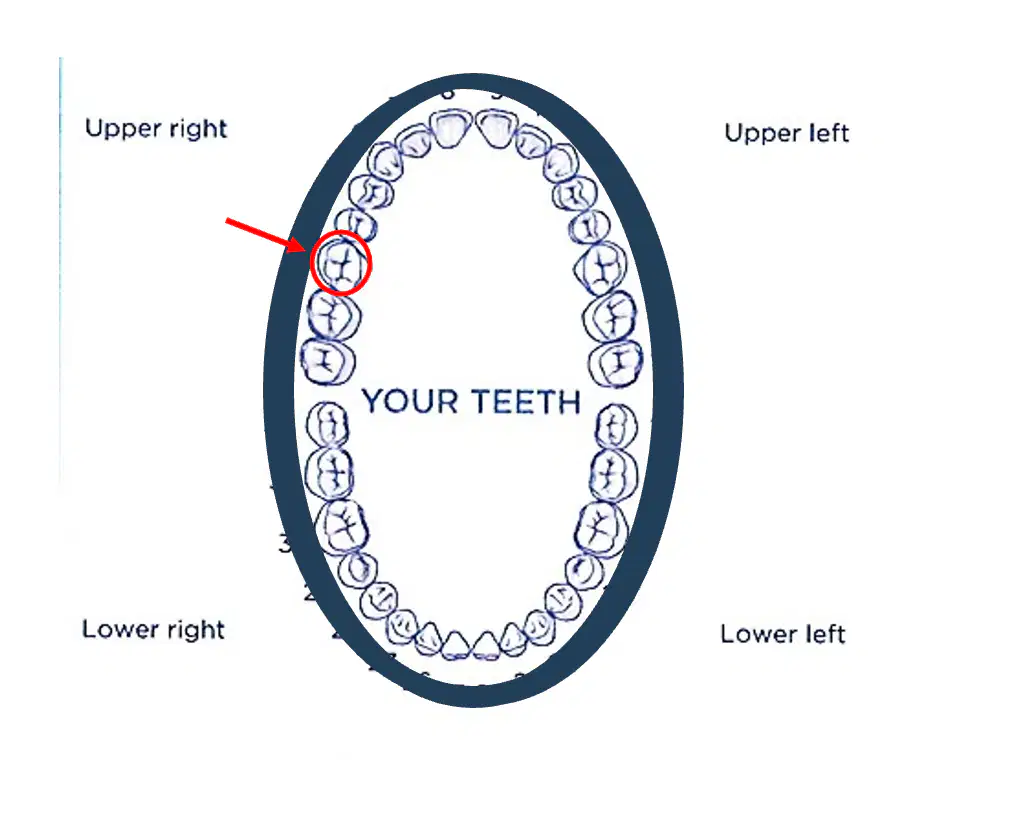
What number tooth is this?
3
14
19
30
The temporoparietal fascia is contiguous with (or the SAME as) all of the following EXCEPT:
Parotid-masseteric fascia
Superficial temporalis fascia
SMAS
Platysma
What portion of the mandible is most commonly fractured?
Angle
Symphysis
Condyle
Body
Which of the following is not an absolute indication for ORIF of condylar/subcondylar fractures?
Condyle displacement into middle cranial fossa
Bad occlusion with closed reduction
Foreign body to condylar neck
Telescoped ascending ramus causing open bite
All of the following are examples of horizontal buttreses except:
Frontal bar
Zygomatic bar and inferior orbital rim
Maxillary bar
Mandibular bar
Horizontal nasal bar

