
 Worksheets
Renaissance
Total questions: 110
Worksheet time: 2hrs 50mins
What does the word renaissance mean?
recreate
reemerge
rebirth
reinvent
When did the Renaissance occur?
1300s–1600s
1300s–1500s
1200s–1600s
none of these
Where did the Renaissance begin?
Milan
Italy
Britain
Florence
During the Renaissance, people became interested in
mathematics.
the ancient Greeks and Romans.
Petrarch.
gold.
Who is considered the father of humanism?
Petrarch
Kepler
Galileo
Gutenberg
Why were the Medicis important to the Renaissance?
The commissioned many expeditions.
They started a university in Florence.
They believed in the teachings of Luther.
They were patrons of the arts.
What invention helped to spread the ideas of the Renaissance?
the printing press
the caravel
the telescope
eyeglasses
Who was Johann Gutenberg?
the inventor of the telescope
the inventor of the printing press
the founder of the laws of planetary motion
a religious reformer
Why were Copernicus’ proposals about the solar system so unique?
People believed that Earth was the center of the universe.
People believed that the Moon was the center of the universe.
People believed that the Sun was the center of the universe.
People believed that Earth was flat.
The movement to change the church during the Renaissance was called?
Counter-Reformation
Counter- Revolution
Revolution
Reformation
People who wanted the Catholic Church reformed (changed) were called?
Lutherans
Calvinists
protesters
Protestants

Who painted the Mona Lisa?
Michelangelo
Donatello
Jan Van Eyck
Leonardo da Vinci
What were the two most famous works by Michelangelo?
The Last Supper
David
The Sistine Chapel
The Wedding
Who were the main Patron class family in Italy? (First mafia family)
Barrone
Medici
da Vinci
Marietta
What region would contribute the most to new knowledge in Europe?
China
Africa
Russia
The Middle East
What was the first book to be printed on a printing press?
Utopia
Hamlet
The Bible
The Vedas
What event killed 30 million people, or a third of Europe's population, during the late Middle Ages?
The Black Death
Hundred Years War
A Tsunami
The Renaissance
What institution did people lose faith in because of its inability to fight the Black Death?
The Monarchy
The Police
The Church
The Trade Market

What is one way that Medieval and Renaissance artists differ?
Renaissance art focuses more on religion
Medieval artists were more realistic
Renaissance artist turned to Roman and Greek works for inspiration
They are the same

Which of these famous structures did Michelangelo paint?
the Louvre
the Coliseum
the Sistine Chapel
the Eiffel Tower
Which of these statements describes a change brought about by the Renaissance?
Society was dominated by the church.
Society began to value individualism.
Society was focused on warfare.
Society was dominated by lords.

Who wrote the essay "The Prince?"
Michelangelo
Machiavelli
Erasmus
Sir Thomas More

The statue of "David" was created by _____________.
Da Vinci
Michelangelo
Erasmus
Gutenberg

Who wrote "Love SONNETS to Laura?"
Da Vinci
Ninja Turtles
Michelangelo
Petrarch

Which was not an important city state in Italy during the Renaissance?
Florence
Venice
Genoa
Constantinople
the leading English language poet and playwright of the Renaissance
Gutenberg
Shakespeare
Albrecht Durer
Thomas More
Erasmus
The northern Renaissance began in the cities of
Flanders
England
Germany
France.
Rubens, van Eyck, and Bruegel were all
Italian humanists.
northern Renaissance painters.
northern Renaissance writers.
best known for their engravings.
What were two results of an increase in the number of books in circulation?
stronger economy and more literate population
stronger economy and less people wanting books
weaker economy and more people wanting books
weaker economy and more literate population
Which of these famous structures did Michelangelo paint?
the Louvre
the Coliseum
the Sistine Chapel
the Eiffel Tower
The statue of "David" was created by _____________.
Da Vinci
Michelangelo
Erasmus
Gutenberg

What was Humanism?
a march of masses of people with the intent to visit the birthplace of Jesus Christ
a way of thinking that focuses on worldly subjects rather than on the religious issues that occupied medieval thinkers
the practice of humans devoting all of their time to the practice of their religion, at the expense of all other activities
a worldwide movement to improve people’s physical fitness during the 15th and 16th Centuries
What were some of the main goals of painters in Florence during the Renaissance Period?
painters were trying to make their subjects in the paintings look flat and unemotional.
painters were trying to make their backgrounds in the paintings look unrealistic
painters were trying to make their subjects look real, in lifelike poses, and show emotion.
none of the above
Niccolo Machiavelli was both a statesman and historian in Florence. He wrote a famous book about politics, leaders of government, and the way they led. What is the name of this book?
The Prince
All Hail the King
Romeo and Juliet
Othello
Which group served as the greatest patron of the arts during the Renaissance Period?
Fishermen
Doctor
Catholic Church
University Professor
Michelangelo spent almost four years painting what part of the Sistine Chapel?
The ceiling
Inside Walls
Outside Walls
The Floor
Most great artists of the Renaissance Period were apprentices early in their careers. What is an apprentice?
someone who studies under a master artist to learn techniques
someone who was so poor that he had to steal from an owner of a busines
someone who teaches others the finer points of a craft
someone who refuses to learn
What were Renaissance Period poet and playwright William Shakespeare said to have written?
Romeo and Juliet
Poems called sonnets
works of comedy and tragedy
all of the above
Why was the Printing press so important during the Renaissance?
It helped spread his ideas of Humanists
People began printing newspapers in America
People began writing mean articles about Kings
The bible was only printed in Latin

How did Renaissance art differ from Medieval art?
It was more godly
It was more realistic, and had three dimensions
it portrayed religious subjects
it was more biblical

What economic change occurred during the Renaissance that allowed for the flourishing of the art?
Introduction of paper money
People began to Barter again
The Governments of Europe paid to educate Artists
Growth of a wealthy Merchant Class that became patrons the Arts

Why did the Renaissance begin in Italy?
Italians were better Catholics
Italy had better means of transportation
Italy sat in the middle of the Silk Road
Extreme wealth that Italians made from trade

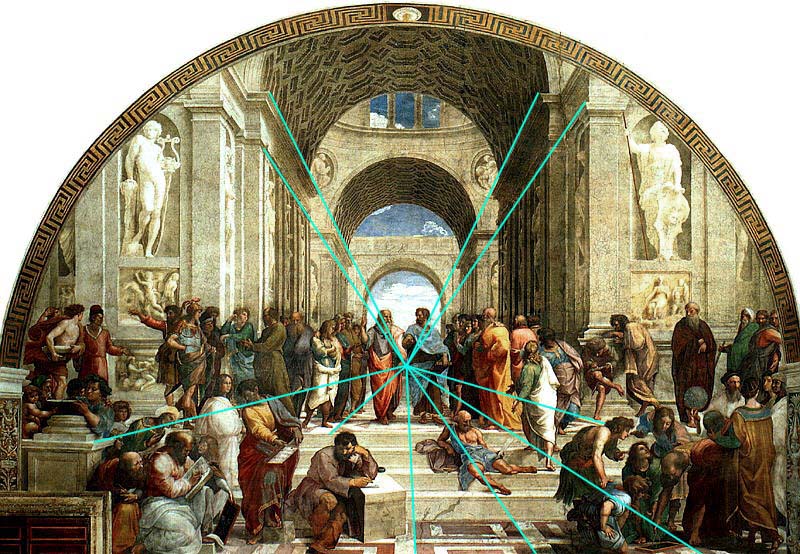
"The School of Athens" by Raphael a good example of the use of_____.
chiaroscuro (contrasting light and dark)
linear perspective
tempera paint
religious iconography
Dealing with worldly matters not religious matters
Humanism
Haiku
Indulgence
Secular

Which Islamic nation was a large part of European trade
The Ottomans
The Turks
The Arabians
The Iranians

Which two classical civilizations did the Renaissance view as worthy of study? (SELECT TWO ANSWERS)
Egypt
Mesopotamia
Greece
Sumaria
Rome

Which of the following best describes, "the spirit of the renaissance"?
"People should work hard and stick to tradition."
"People are not creative and shouldn't try new things."
"People are capable of learning and should create new things."
"knowledge is reserved only for those in positions of authority.”
What characteristic of Shakespeare's writing follows the Renaissance style?
Using classical Greek and Roman works for inspiration.
Writing poems using the vernacular.
Providing Christian lessons in each play.
Developing stories thatuse Humanism
Humanism rose from the study of which of the following?
Ideas from Classical Chineese works
Original Christian Scholarship
Medieval Scholarship
Classical Greek and Roman Culture
The Feudal system came to an end mainly because....
There weren't enough peasants to work, so they could negotiate better arrangements
Peasants took over the government
The nobles took pity on the remaining peasants
Doctors were able to advance medicine and science because...
The Church allowed it
The people wanted it
Doctors realized how little they actually knew
What caused the end of the Middle Ages?
The Plague and the Crusades
The Plague and Religious Freedom
The Crusades and Exploration
The Crusades and Chinese Trade
What were the effects (Results) of the Black Death?
New economic opportunities and the rise of Islam
New economic opportunities and a strengthened Church
The Church was weakened and new economic opportunities were created
The Church was weakened and the lords of England reasserted their authority over the people
Describe the difference between Medieval Art & Renaissance Art
Medieval Art=simple, religious, and lacks depth; Renaissance Art=has shading, depth, secular, and is realistic.
Medieval art is obsessed with humanism while Renaissance art is more focused on religion
Renaissance art emphasizes crayons and markers while Medieval art focuses on chalk as a tool
Who is King Henry VIII?
King of England during the High Middle Ages. Commonly confused with Aethelberd of Kent.
King of England during the Reformation. He proved his loyalty to the Pope and was named Holy Roman Emperor
King of England during the Protestant Reformation. He created the Church of England because the Pope wouldn’t grant him a divorce.
King of France during the Reformation. He was good friends with Luther and helped France transition from Catholicism to Lutheranism.
Martin Luther is the Father of what movement?
Reformation
Renaissance
Red Dawn
Reverberation
Please choose the correct order (earliest to latest)
- Middle Ages 2. Ancient Times 3. Reformation 4. Renaissance
- Ancient Times 2. Renaissance 3. Middle Ages 4. Reformation
- Reformation 2. Renaissance 3. Middle Ages 4. Ancient Times
- Ancient Times 2. Middle Ages 3. Renaissance 4. Reformation
Who wrote Hamlet, Romeo & Juliet, and Macbeth?
Machiavelli
Shakespeare
Virgil
Homer
What was the first full-sized book Johannes Gutenberg printed on his new invention?
the Bible
the Prince
the 95 Theses
Romeo & Juliet
English poet & playwright who wrote 37 plays between 1590-1613; his plays reflect the ideas of individualism & the unconquerable human spirit & most are still performed today
Dante Alighieri
WiIliam Shakespeare
Niccolo Machiavelli
Miguel de Cervantes
Who wrote The Praise of Folly?
Petrarch
Johann Gutenberg
Erasmus
Sir Thomas More
A Dutch priest and humanist who was the most important scholar of the age.
Leonardo da Vinci
Desiderius Erasmus
Charlemagne
Pepin the Short
A famous English poet and play write.
William Shakespeare
Henry VIII
Charles V
Martin Luther
Who was Martin Luther?
A German monk who triggered a revolt against the Catholic Church.
A German Priest of the Catholic Church
A French Artist
A Dutch painter

The School of Athens was painted by
Michelangelo
Rafael
Sir Thomas Moore

This is the
Hall of Mirrors
Sistine Chapel
Creation, painted by Raphael

The Last Supper was painted by
Raphael
de Vinci
Michelangelo
The author of Utopia was:
Sir Thomas More
Francesco Petrarch
Erasmus
Machiavelli
(1) ______ wrote The Praise of Folly in which he criticized the (2) ______.
(1) Petrarch; (2) Monarch
(1) Erasmus; (2) Church
(1) Sir Thomas More; (2) Monarch
(1) Leonardo da Vinci; (2) Church

The church claimed that you could pay for your sins and get to heaven faster if you bought these
indulgences
taxes
candy
surplus
Who started the Anglican Church? (Church of England)
King Henry VIII
King Louis XIV
King Charlies III
The ________ was the church court that was used to find heretics.
Council of Trent
Juxtaposition
Inquisition
Cheerios
Which of the following was an effect of the Reformation? (check all that apply)
Roman Catholic Church will lose power
Ended Religious unity from the Middle Ages
New Christian branches develop
Violence/Wars between Protestants and Catholics
The Reformation WEAKENED the authority of the Pope
True
False
Anyone besides the Church who interpreted the Bible were
Heretics
A Hero

Christianity was spilt into which two groups?
Protestant
Catholic
Islam
Buddha

Who was Martin Luther?
An African-American civil rights leader
An NFL quarterback for the NY Jets
A Germen priest who rebelled against the Catholic Church starting the Reformation
A dance club DJ who plays hip-hop music


