
 Worksheets
Genetics and Meiosis
Total questions: 20
Worksheet time: 11mins
Which of the following occurs ONLY in Prophase I?
tetrads form
DNA replicates
crossing-over
DNA condenses
Which of the following is NOT a true statement comparing meiosis with mitosis?
meiosis produces 4 daughter cells, mitosis produces 2
meiosis goes through two rounds of cell division, mitosis only has one round
meiosis produces gametes, mitosis produces somatic cells
meiosis follows interphase with DNA replication, mitosis does not need DNA replication
The egg and sperm fuse in the process of _________ to produce a ______.
fertilization; zygote
fertilization; gamete
meiosis; zygote
meiosis; gamete

Corn color is determined by a combination of 3 different genes, each with 2 possible alleles. This is an example of what type of inheritance?
multiple alleles
polygenic trait
incomplete dominance
codominance
The expression of one allele form completely masks the expression of the other allele form in what type of inheritance?
Incomplete Dominance
Complete (Mendelian) Dominance
Codominance
Phenotypic Plasticity
Which of the following options contribute to the diversity of gametes produced during meiosis?
DNA Replication
Segregation
Crossing Over
Independent Assortment
Eggs and sperm are examples of __________ and all other cells are called __________.
somatic; gametes
gametes; somatic
zygotes; gametes
gametes; zygotes
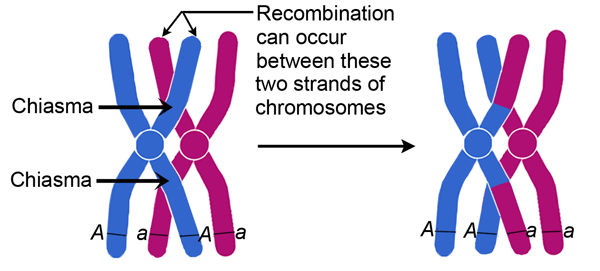
fusion of two homologous chromosomes into one
independent assortment where chromosomes randomly segregate into different gametes
DNA replication into sister chromatids
crossing - over where alleles on homologous chromosomes are exchanged

What phase of Meiosis is this?
Telophase I
Anaphase I
Anaphase II
Telophase II

What phase of Meiosis is shown here?
Prophase I
Anaphase II
The final result of meiosis is the production of ____________ daughter cells.
2 haploid
2 diploid
4 haploid
4 diploid
A diploid cell containing 20 chromosomes at the beginning of meiosis would, at its completion, produce cells containing how many chromosomes?
10
5
40
20
A breed of chicken shows codominance for feather color. One allele codes for black feathers (B), another codes for white feathers (W). The feathers of heterozygous chickens (BW) of this breed will be:
Meiosis is associated with __________ reproduction, while mitosis is associated with ___________ reproduction.
sexual; asexual
asexual; sexual
abundant; no
no; abundant
The different forms of a gene are called ________ and they are usually ________________.
chromosomes; dominant or recessive
chromosomes; homozygous or heterozygous
alleles; dominant or recessive
alleles; homozygous or heterozygous

Fur color trait in rabbits is determined by one gene with 4 possible forms (see figure). This is an example of what type of inheritance?
polygenic trait
multiple alleles
codominance
incomplete dominance
Which of the following describes a TRUE relationship?
genes are segments of DNA that can be found on chromosomes
chromosomes are segments of DNA that can be found on genes
alleles are different chromosomes that can be found on genes
genes are types of chromosomes that are found on DNA

The image shows possible genotype and phenotype ratios of a cross between two heterozygous parents. What type of inheritance is exhibited?
incomplete dominance
codominance
complete dominance
multiple alleles

The figure is showing a ________ cell. The haploid chromosome number is ___.
diploid; 2
diploid; 4
haploid; 2
haploid; 4
Matching chromosomes from mom and dad are called ______________ chromosomes, which will align next to each other to form a ___________.
homologous; tetrad
duplicated; tetrad
duplicated; set
homologous; set

