wayground logo

Free Printable Worksheets

NEW

Font size

S
M
L
XL
Worksheets

Elements of Art Quiz

Total questions: 68

Worksheet time: 40mins

Name
Class
Date
1.

Which element of art refers to the path of a moving point?

a)

Line

b)

Shape

c)

Color

d)

Texture

2.

What is the term for a two-dimensional shape that has height and width?

a)

Line

b)

Shape

c)

Color

d)

Texture

3.

Which element of art refers to the lightness and darkness of a color or tone?

a)

Value

b)

Shape

c)

Form

d)

Space

4.

What is the term for the surface quality of an artwork?

a)

Line

b)

Color

c)

Texture

d)

Shape

5.

What is the term for the positive and negative space in an artwork?

a)

Line

b)

Color

c)

Space

d)

Form

6.
Form is
a)
2 dimensional
b)
3 dimensional
c)
non-existent
7.
How many elements of art are there?
a)
5
b)
3
c)
7
8.
The elements of art can compare to...
a)
the ingredients of a recipe
b)
the song I heard this morning
c)
basketball drills
9.
Which is used to show space?
a)
Overlapping
b)
Dot making
c)
Shredding
10.
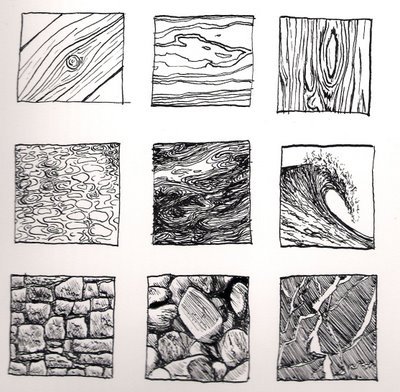
This image is an example of which texture?
a)
Real
b)
Implied
11.
Organic shape means
a)
grown without pesticides
b)
free-flowing
c)
always shaped like noodles
12.
Perspective, size, value and placement help develop which element in a piece of artwork?
a)
Line
b)
Space
c)
Form
13.
An artist must use every element of art to create a work of art.
a)
True
b)
False
14.
Geometric means
a)
having no structure
b)
having a specific structure
c)
has only straight lines
15.
This painting is an example of which perspective?
a)
One point
b)
Two point
c)
Six point
16.
Which is not an example of geometric form?
a)
circle
b)
sphere
c)
cube
17.

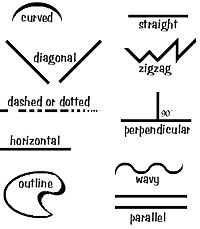
Wavy, zig zag, straight, and curved are all....

a)

Line

b)

Shape

c)

Form

d)

Color

e)

Texture

18.

Smooth, rough, hard, soft are all....

a)

Form

b)

Color

c)

Texture

d)

Space

e)

Value

19.

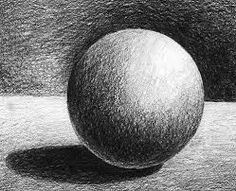
Sphere, pyramid, cube, are all....

a)

Line

b)

Shape

c)

Form

d)

Color

e)

Texture

20.

Contrast, shading, light, and dare are all part of...

a)

Form

b)

Color

c)

Texture

d)

Space

e)

Value

21.

Red, Yellow, Blue, Orange, Green, Violet are....

a)

Line

b)

Shape

c)

Form

d)

Color

e)

Texture

22.
The empty or open area between, around, above below and within objects.
a)
form
b)
balance
c)
color
d)
space
23.
Any three dimensional object that can be measured by height, width and depth.
a)
emphasis
b)
space
c)
form
d)
shape
24.

What are the primary colors?

a)

Red, yellow, blue

b)

Orange, green, purple

c)

Yellow, orange, red

d)

Green, purple, blue

25.
Colors that are directly opposite on the color wheel.  When mixed together, they makes neutral gray or brown.
a)
complementary
b)
texture
c)
analogous
d)
color
26.
Another name for related colors-have one color in common. Colors that appear next to each other on the color wheel.
a)
analogous colors
b)
shape
c)
texture
d)
color
27.
Area in a work of art that catches and holds the viewers attention.
a)
space
b)
unity
c)
emphasis
d)
balance
28.
The relation of one object to another in size,amount, number.
a)
variety
b)
monochromatic
c)
proportion
d)
triad
29.
The use of different lines shapes, textures,colors and other elements of design to create interest in a work of art.
a)
variety
b)
emphasis
c)
rhythm
d)
value
30.

Which colors are cool colors?

a)

Red, Yellow, Blue

b)

Blue, Green, Violet (Purple)

c)

Orange, Green, Violet

d)

Red, Orange, Yellow

31.
Which of the following colors can be described as "Warm" colors?
a)
Red, Orange, Yellow
b)
Blue, Green, Violet
c)
Blue, Yellow, Red
d)
Green, Orange, Violet
32.

The equal visual distribution of weight in a design.

a)

Emphasis

b)

Balance

c)

Unity

d)

Variety

33.

The repeating visual elements in a piece of art.

a)

Unity

b)

Repetition

c)

Variety

d)

Movement

34.

The relative sizes of parts in a whole.

a)

Proportion

b)

Unity

c)

Variety

d)

Emphasis

35.

The size of an object in relation to the size of another object.

a)

Unity

b)

Repetition

c)

Scale

d)

Balance

36.

The path the viewer's eye takes through a work of art because of the arrangement of elements.

a)

Scale

b)

Movement

c)

Repetition

d)

Variety

37.

The sense of harmony between all the elements in an artwork.

a)

Unity

b)

Variety

c)

Scale

d)

Proportion

38.

The use of several elements or different types of the same element to add visual interest.

a)

Scale

b)

Unity

c)

Variety

d)

Proportion

39.

Which is an example of variety

a)
b)
c)
d)
40.

Which is an example of UNITY?`

a)
b)
c)
d)
41.

Which is an example of MOVEMENT?

a)
b)
c)
d)
42.

Which is an example of SCALE?

a)
b)
c)
d)
43.

Which is an example of PROPORTION?

a)
b)
c)
d)
44.

Which of the following is an example of REPETITION?

a)
b)
c)
d)
45.

Which of the following is an example of BALANCE?

a)
b)
c)
d)
46.

Which of the following is an example of EMPHASIS?

a)
b)
c)
d)
47.
What type of Balance is demonstrated when the visual weight is even on both sides?
a)
Symmetric Balance
b)
No Balance
c)
Asymmetric Balance
d)
Radial Balance
48.
What type of Balance is demonstrated when the visual weight is heavier on one side than the other?
a)
Symmetric Balance
b)
Radial Balance
c)
No Balance
d)
Asymmetric Balance
49.
What type of Balance is demonstrated when the visual weight is distributed from the center-outward.
a)
Symmetric Balance
b)
Radial Balance
c)
No Balance
d)
Asymmetric Balance
50.
Which Principle of Design fits this definition?
"The path in which the viewer's eye travels across the work of art."
a)
Movement
b)
Emphasis
c)
Pattern
d)
Unity
51.
Which Principle of Design fits this definition?
"The repeating of an object or symbol."
a)
Variety
b)
Repetition
c)
Emphasis
d)
Pattern
52.
Which Principle of Design fits this definition?
"A visual element that catches the viewer's attention."
a)
Variety
b)
Proportion
c)
Emphasis
d)
Unity
53.
Which Principle of Design fits this definition?
"The feeling of unity when all parts relate well to each other."
a)
Balance
b)
The Rule of Thirds
c)
Variety
d)
Proportion
54.
Which Principle of Design fits this definition?
"Using multiple principles of design to hold the viewer's attention."
a)
Balance
b)
Pattern
c)
Variety
d)
Proportion
55.
Which Principle of Design fits this definition?
"Works with pattern; Repeated elements do not have to be identical to each other." 
a)
Balance
b)
Repetition
c)
Pattern
d)
Variety
56.
Which Principle of Design fits this definition?
"The feeling of harmony between all parts of the art piece."
a)
Unity
b)
Variety
c)
Repetition
d)
Emphasis
57.

What principle does this image demonstrate?

a)

Pop Art

b)

Variety in shape and color

c)

Flowers make good subjects in art

58.
This painting shows which principle?
a)
Emphasis
b)
Symmetry
c)
Movement/Rhythm
59.
This painting by Wayne Thiebaud demonstrates which principle?
a)
Emphasis
b)
Harmony
c)
Movement
60.
This painting by Vincent Van Gogh demonstrates which principle?
a)
Movement/Rhythm
b)
Symmetry
61.
What is the emphasis of this photograph?
a)
The green apples around the pepper
b)
The red pepper in the center
c)
The little man peeking through the apples
62.
Did this architect use pattern for this design?
a)
yes
b)
no
63.
Is this portrait by Chuck Close symmetrical or asymmetrical?
a)
Asymmetrical
b)
Symmetrical
64.
This painting by Eleni Pratsi is a good example of using different what?
a)
Textures
b)
Sizes
c)
Forms
65.
Which principles did Andy Warhol use in his screen print of Marilyn Monroe?
a)
Emphasis
b)
 Color
c)
Variety & Repetition
66.

What type of balance is seen in this image?

a)

Symmetrical

b)

Asymmetrical

c)

Radial

d)

Formal

67.

Choose the image associated with pattern.

a)
b)
c)
d)
68.

A definition of The Principles of Design in art is

a)

the relationships that are created as the elements of art work together

b)

similar (harmonious) elements are arranged into a composition

c)

a variety of elements arranged to create visual interest

d)

an element of design becomes the center of interest or focal point