
 Worksheets
CI knowledge game
Total questions: 20
Worksheet time: 15mins

The origins of continuous improvement can be traced back to the lean manufacturing techniques developed by Fujifilm in the 1950s.
True
False
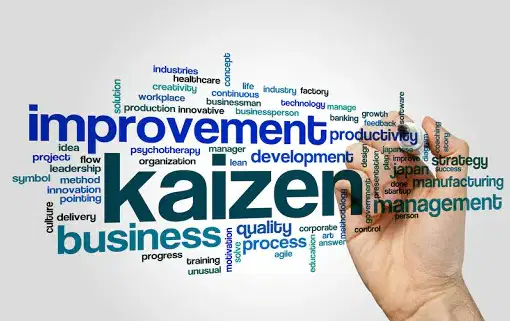
What is the literal meaning of word Kaizen?
(a)

In CI culture, Kaizen started to mean...
a concept/approach referring to activities that continuously improve all functions and involve all employees starting from CEO to specialists. It involves making small, incremental changes to achieve significant improvements over time.
an activity of raising ideas forced by managers to employees
a concept/approach referring to activities that continuously improve raw production only
a concept/approach referring to activities that continuously improve all functions, but involve only high levels of organization
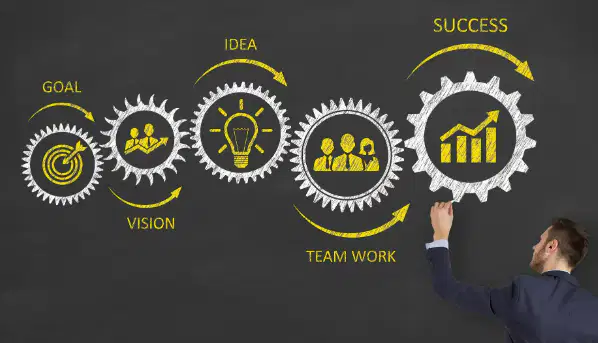
One of the main focus of Continuous Improvement is to eliminate...
Waste
Employees
Controls
Processes

Which of the following is not one of the 7 + 1 commonly recognized "wastes" that organizations aim to eliminate in their pursuit of continuous improvement?
Overproduction
Motion
Transportation
Instructions
A software development team completes a project, but upon testing, they discover numerous programming bugs and issues. These defects require additional time and effort to fix, delaying the project's release. Which type of waste does this scenario represent?
(a)

It refers to any redundant effort in production or communication that does not add value to a product or service. It includes endless product or process refinement, excessive information, redundant reviews and approvals, not knowing if they are really needed.
Which type of waste is it?
Waiting
Over-processing
Over production
Defects

A corporation produces monthly financial reports that include numerous data points and analytics. However, most of the reports are never reviewed or utilized by decision-makers. These reports consume significant time and resources to create but do not contribute to better financial decision-making or analysis.
Which type of waste does this situation represent?
Overproduction
Waiting
Transportation
Defects

Some types of process steps might be considered excessive and at first seem like waste.
However, they cannot be eliminated and should remain as a part of process.
Such step can be...
Waiting for confirmation
Follow up emails
Additional manual input due to missing info in the system
Extra control for audit purposes

Thinking about the cycle of an idea, what does PDCA mean?
Progressive Development and Continuous Assessment
Pick, Decide, Control, Achieve
Plan, Do, Check, Act
Process Design and Continuous Adjustment

It is one of the main tools of Continuous Improvement means "real place" or "being here and now".
What is this tool?
(a)

The purpose of Gemba is...
To learn and retake the process as it is
To spend some fun time with colleagues
To observe how the actual process is performed and identify any areas for improvement
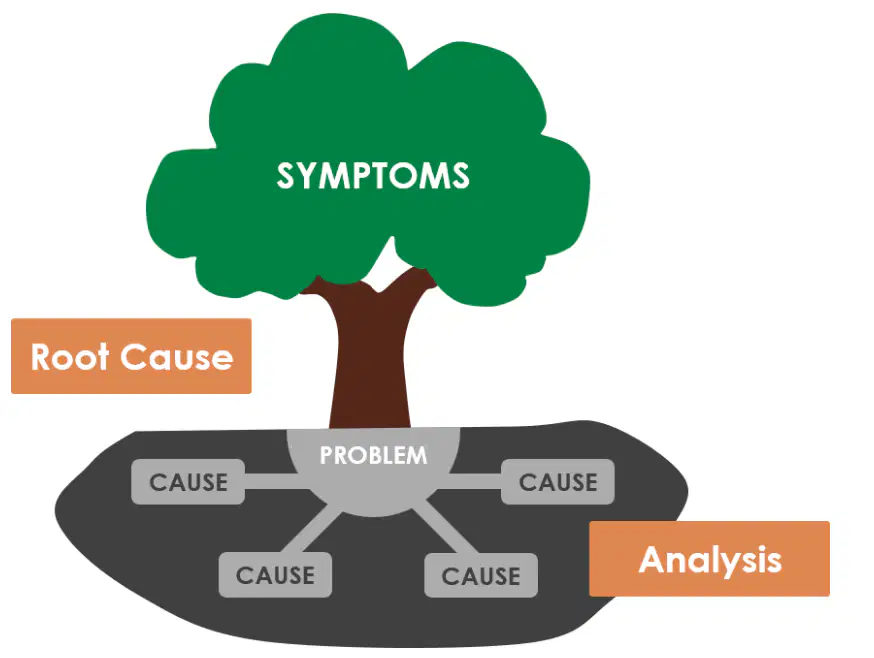
The 5 "W" considered during root cause analysis are...
Who, What, When, Where and Why
Wisdom, Worth, Wonder, Willingness and Winning
Why, Why, Why, Why and Why
Who, Who, Who, Who and Who
In order to successfully conduct 5 why root cause analysis, it is important to...
Suggest solutions instantly
Define problem statement
Ask no less than 5 questions
Not stop when you don't know

In the context of continuous improvement, what is the purpose of "5S" method?
To ask questions for finding solution to the problem
To organize a work space for efficiency and effectiveness by identifying and storing the items used, structuring, maintaining the area and items.
To review a process
To better manage a project

It makes improvements sustainable, gives expected results, enables continuous improvement instead of improving the same over and over again.
Without it, big improvements becomes small after some time.
What is it?
(a)

Software technology that makes it easy to build, deploy, and manage software robots that emulate humans actions is called...
Robotic Problem Analysis
Robotic Process Automation
Robotic Planning and Analysis
Microsoft Macros

A free and open-source custom scripting language for Microsoft Windows, initially aimed at providing easy keyboard shortcuts and software automation that allows users of most levels of computer skill to automate repetitive tasks in any Windows application is...
(a)

How RPA is different from AHK?
Is rule based
No end-user interaction is needed
Runs in the background
All correct

Which one of below is NOT a Dana value?
Win together
Drive innovation
Educating customers
Grow responsibly
Value others

