
 Worksheets
Lecture-10/31
Total questions: 11
Worksheet time: 9mins
1. Which of the following statements accurately describe the role of contrast in art? (Select all that apply)
(a)
(b)
(c)
. In a black-and-white photograph, what type of contrast is typically present? (Select one)
• Color contrast
• Tonal contrast
• Shape contrast
• Texture contrast
• Line contrast
(a)
Which of the following can be elements of contrast in art? (Select all that apply)
• Light and dark values
• Similar shapes
• Complementary colors
• Uniform texture
• Strong lines
• Repetition of patterns
• Light and dark values
• Complementary colors
• Strong lines
• Repetition of patterns
• Similar shapes
How does contrast contribute to the visual impact of a composition? (Select all that apply)
• It adds depth and dimension to the artwork.
• It creates a sense of drama and excitement.
• It simplifies the composition.
• It can guide the viewer’s eye within the artwork.
• It establishes a hierarchy of importance within the composition.
• It adds depth and dimension to the artwork.
• It creates a sense of drama and excitement.
• It simplifies the composition.
• It can guide the viewer’s eye within the artwork.
• It establishes a hierarchy of importance within the composition.
Emphasis in art serves which of the following purposes? (Select all that apply)
• To highlight a specific focal point
• To draw the viewer’s attention
• To create uniformity throughout the composition
• To convey the main message or theme
• To eliminate the need for a focal point
• To highlight a specific focal point
• To draw the viewer’s attention
• To create uniformity throughout the composition
• To convey the main message or theme
• To eliminate the need for a focal point
Which of the following can be used to create emphasis in an artwork? (Select all that apply)
• Contrast
• Color
• Scale
• Placement
• Repetition
• Contrast
• Color
• Scale
• Placement
• Repetition
What are the main types of balance in art? (Select all that apply)
• Symmetrical Balance
• Linear Balance
• Asymmetrical Balance
• Radial Balance
• Color Balance
Which of the following is an example of asymmetrical balance in an artwork? (Select all that apply)
• A symmetrical design with identical elements on both sides.
• A composition with a large object on one side and several smaller objects on the other.
• A circular arrangement of elements with a central focal point.
• A composition with a dominant element on one side and minimal elements on the other.
• A symmetrical design with identical elements on both sides.
• A composition with a large object on one side and several smaller objects on the other.
• A circular arrangement of elements with a central focal point.
• A composition with a dominant element on one side and minimal elements on the other.
What role does contrast play in achieving balance in art?
• Contrast can help distribute visual weight to create balance.
• Contrast can emphasize certain elements within the composition.
• Contrast is not relevant to achieving balance.
• Contrast can help distribute visual weight to create balance.
• Contrast can emphasize certain elements within the composition.
• Contrast is not relevant to achieving balance.
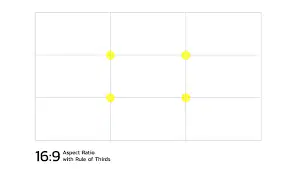
How can artists use the rule of thirds to achieve balance? (Select all that apply)
• By placing important elements at the intersections or along the lines of the grid.
• By emphasizing the central area of the composition.
• By disregarding the positioning of elements within the composition.
• By creating a balanced and dynamic composition.
What is the purpose of balancing visual weight in an artwork? (Select all that apply)
• To create a sense of equilibrium and harmony.
• To make all elements in the composition the same size.
• To guide the viewer’s eye smoothly through the artwork.
• To ensure that no single element dominates the composition.

