Worksheets
9th icse chemistry SA 2
Total questions: 110
Worksheet time: 2hrs 50mins
A group of atoms having negative or positive charge is called ______.
ion
molecule
atom
radical
What are the constituent elements of aluminium phosphate?
Phosphorus
Oxygen
Aluminium
All of the above
The correct symbol for copper is ______.
Co
Cl
Cr
Cu
Which of the following forms an electropositive trivalent ion?
Aluminium
Lithium
Nickel
Cobalt
The symbol of ammonium radical is ______.


How many electrons are present in a nitride ion?
6
5
8
10
What is the formula of the compound formed between calcium and oxygen?


The correct symbol of Chlorate is...
ClO2−
ClO−
ClO3−
ClO4−
What is the symbol of Magnesium?
Mn
Mg
Me
Ma
A positive radical is also called (a) .
Relative molecular mass(RMM) of an element/......... is the ........ of times one....... of the substance is heavier than ....... the mass of an atom of carbon.(C12).
symbol,number,
atom,1/14
compound,number,molecule,1/10
compound,number,molecule,1/12
compound,number,atom,1/12
Relative atomic mass(RAM) of an element is the ............of times one ....... of an element is ......... than 1/12 the mass of an atom of carbon(C12).
number,atom,
heavier
number,molecule,
heavier
number,molecule,
lighter
number,atom,
lighter
What are the limitations of chemical equations?
(You can select more than 1 option for this question.)
It does not tells us about the concentration of both reactants and products.
It does not tell us the chemical nature of reactants and products.
It does not provide information about the speed of the reaction.
It does not tells us the direction of the reaction.
What is the chemical name of MgSO4.7H2O ?
Washing soda
Epsom Salt
Glauber's salt
Rock salt
What is the valency of Calcium and Aluminium?
Valency of Calcium is 2+ and Aluminium is 4+
Valency of Calcium is 2- and Aluminium is 1+
Valency of Calcium is 2+ and Aluminium is 3+
Valency of Calcium is 3+ and Aluminium is 2+
The valency of all metals and hydrogen is considered
Negative
Positive
Zero
None of the options
It represents a specific element or one atom of an element.
Symbol
Valency
Compound
None of the options
The oxidation number of 'S' in H2SO4 is............
[ Hint: oxidation number of H = +1 ; O = − 2 ]
+ 2
+3
+6
− 6
When dilute hydrochloric acid is added to sodium thiosulphate and heated, ................... is formed.
a white precipitate
a yellow precipitate
a brown precipitate
a yellow coloured gas
Mg ribbon, Mg powder, marble pieces, marble powder, dilute HCl, and conc: HCl are given to you. Which materials will you select to get more CO2 gas in less time?
Magnesium powder and Conc. HCl
Magnesium pieces and Conc. HCl
Marble powder and dilute HCl
Marble powder and Conc. HCl
In the decomposition reaction of H2O2(Hydrogen peroxide), the negative catalyst used is
Sulphuric acid
Manganese dioxide
Phosphoric acid
Spongy iron
2Na + Cl2 --> 2NaCl . Here Chlorine is the
Oxidised atom
Oxidising agent
Reducing agent
None of these
xAl + yO2 --> 2Al2O3 is a balanced equation. Then the values of x and y are
x = 2 and y = 4
x = 4 and y = 3
x = 3 and y = 4
x = 2 and y - 2
The valency of an element Y is 2 and the formula of the compound is X2Y3. What is the valency of X?
2
1
3
0
The type of chemical bond in a nitrogen molecule is
Ionic bond
Triple covalent bond
Double covalent bond
Single covalent bond
Which of the following is not a property of ionic bonding?
Found only in the solid state.
Conducts electricity in molten and aqueous states
Soluble in organic solvents
High melting and boiling points
Which of the following electronic configurations is a stable structure?
2, 8, 6
2, 8, 8
2, 8, 7
2. 7
The mass number of an element is the number of
Electrons and neutrons
Protons
Protons and electrons
Protons and neutrons
An atom is electrically neutral because of the presence of equal number of
Protons and neutrons
Protons and electrons
Electrons and neutrons
All of these
The atomic number of an element is 17 and its mass number is 35,
it has 18 protons
has 17 neutrons
has 18 neutrons
has 18 electrons
CaCl2 is an example of what type of bond?
Covalent
Metallic
Ionic
What category of element usually forms a positive ion?
Metals
Nonmetals
metalloids
Noble gases
Which is the correct Lewis Structure for oxygen?

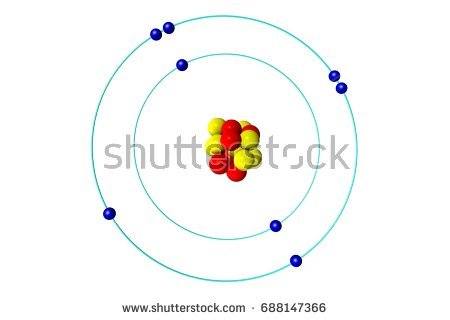
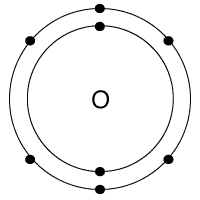
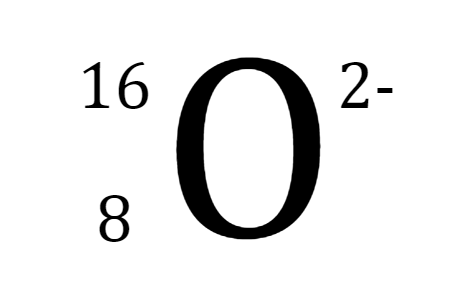
What do positive ions tend to do?
lose electrons
gain electrons
lose protons
gain protons
What happens when magnesium loses 2 electrons?
It stabilizes to a net charge of 0
It turns into an atom
It becomes negatively charged
It becomes positively charged
Predict the bond between Mg and Cl
covalent
ionic
metallic
none of the above
What is the name of Group 1?
Halogens
Noble gases
Alkali metals
Alkali earth metals
What is the biggest group on the periodic table
metals
non metals
metalloids
halogens
How many rows on the periodic table?
6
7
8
9

Which is NOT a change that has been made to this table to form the modern periodic table?
The noble gases have been added to the modern periodic table.
The elements in the modern table are now arranged by atomic mass.
The elements in the modern periodic table are now arranged by number of protons.
The gaps in Mendeleev’s periodic table have been filled as elements have been discovered.

Which statement correctly describes an element based on its position in the periodic table?
Element X is a halogen that will form a negative anion by losing electrons.
Element Y is a noble gas that will form positively charged ions called cations.
Element Z is an alkali metal that is very reactive.
Element W is a noble gas that does not readily bond with other elements.

Silicon is a metalloid that is a key ingredient of computer chips. What property of silicon makes it essential for computers?
Silicon conducts heat extremely well.
Silicon is highly reactive with other elements.
Silicon does not react at all with other elements.
Silicon conducts electricity, but not as well as metals.

Halogens are in column 17 (VIIA) of the periodic table. What property do they share?
each element has seven protons
each element has seven electrons
each element has seven valence electrons
each element has an atomic mass of seven
What property do the alkali metals share?
Each element has one proton.
Each element has one electron.
Each element has one valence electron.
Each element has an atomic mass of one.
The element placed below hydrogen in group 1
Na
Li
K
F
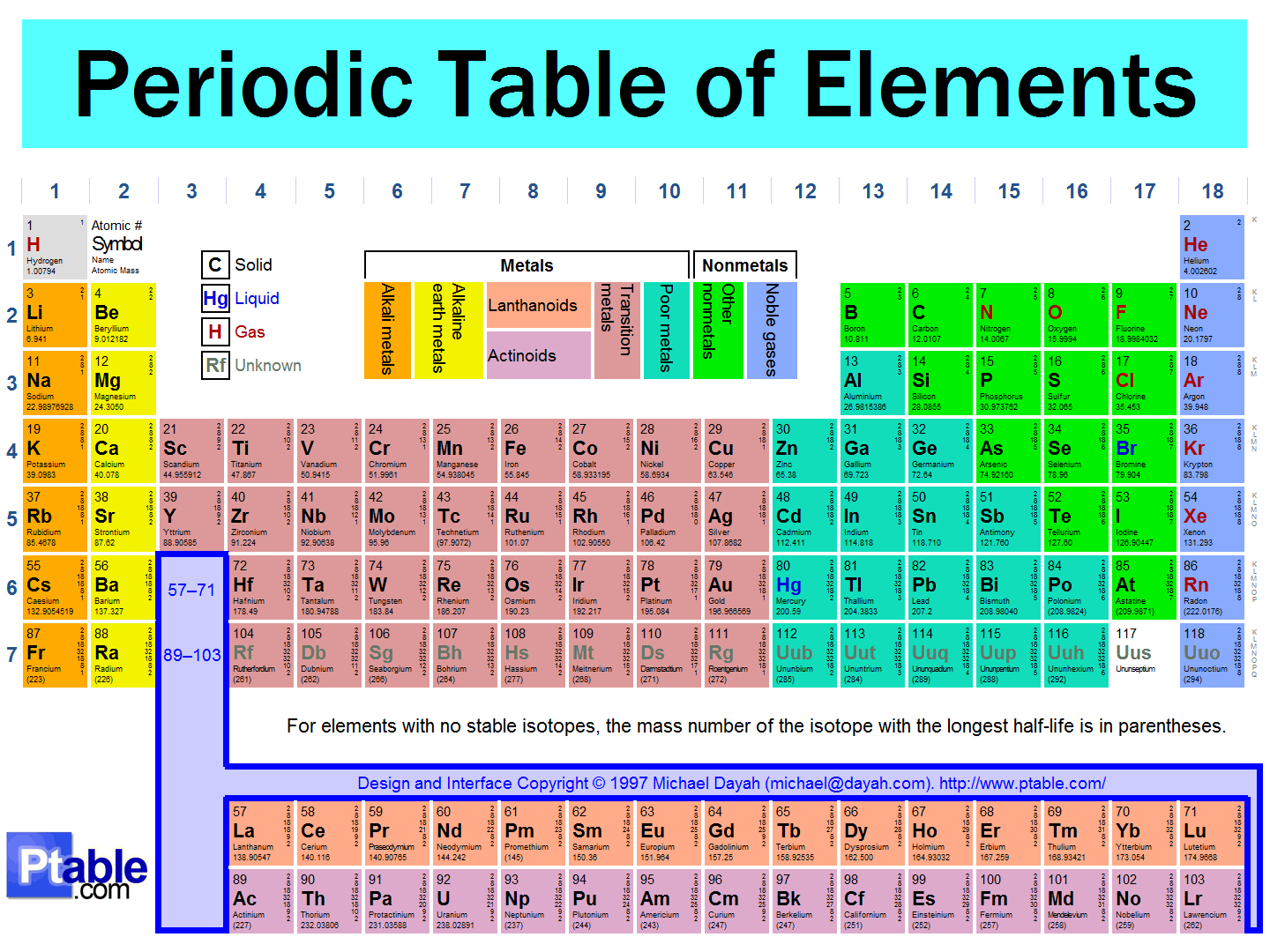
These elements located on the "stair-step" line are sometimes called "semiconductors."
Metals
Nonmetals
Metalloids
Groups


Mendeleev realized that chemical characteristics repeated _____
at odd numbered intervals
every seven elements
every eight elements
every nine elements
Each column (Vertical) is called
Period
Column
Group
Cohort
Each row (Horizontal) is called _______
Column
Family
Semi-colon
Period
Which type of elements are NOT solid at room temperature?
Metals
Non-metals
Metalloids
All of them
Which elements are GREAT conductors of electricity?
Metals
Non-metals
Metalloids
None of them
Elements are organized by similar _________.
Looks
Proportions
Properties
Interests
What are the three types of elements?
Metals
Plastics
Non-Metals
Metalloids
As you move from left to right and top to bottom, atomic mass ________
Increases
Decreases
Stays the same


Convert 275K into celcius
(a)
Assertion: Zinc reacts with sulphuric acid to form zinc sulphate and hydrogen gas and it is a displacement reaction.
Reason: Zinc reacts with oxygen to form zinc oxide.
Both the Assertion and the Reason are correct and the Reason is the correct explanation of the Assertion.
Both the Assertion and the Reason are correct and the Reason is the correct explanation of the Assertion.
Assertion is true but the reason is false.
The statement of the Assertion is false but the Reason is true.
CaO + H2O --> Ca(OH)2
This is an example of
Combination reaction
Decomposition reaction
Displacement reaction
None of the above
(a) of electrons is oxidation.
The oxidizing agent in the following reaction is (a)
CuO + H2 -->Cu + H2O
Which of the following is an element?
potassium chloride (KCl)
water (H2O)
carbon (C)
calcium carbonate (CaCO3)
Identify the following chemical reaction.
Pb + FeSO4 ----> PbSO4 + Fe
Synthesis (or combination)
Decomposition
Single displacement
Double displacement
What type of reaction is the following:
Zn + 2HCl −> ZnCl2+H2
Combination
Decomposition
Single Replacement
Double Replacement
Combustion

The diagram shows
a chemical change
a physical change
none of the above

The equation is balanced...
True
False

Balance and determine the coefficients
1, 1, 1, 1
2, 1, 2, 1
1, 2, 1, 2
2, 2, 2, 2

Balance the equation and determine the coefficients
2, 2, 2, 1
2, 3, 4, 2
3, 1, 1, 2
2, 1, 1, 2
Coefficients apply to...
Nothing
The entire molecule
Ionic
Covalent
Subscripts apply to what they…
Follow
The entire molecule
Nothing
Ionic
The LEFT side of a chemical reaction is called……
Reactants
Products
Chemical Reaction
What Chemical Reaction is the process of 1 element replacing another element in a compound to create a new compound?
Double Replacement
Single Replacement
Synthesis
Decomposition
Carbon has a atomic number of 6. Calculate the number neutrons in C-14.
WhIch sub atomic particle vary between isotopes of an element?
protons, electrons, and atomic mass
protons, electrons, and atomic number
neutrons and electrons
neutrons only
Chlorine has a atomic number of 17. This means it will have:
7 valence electrons and a valency of 1
1 valence electrons and a valency of 7


The image shows the scientific notation of sodium. What is the atomic mass of Na?
11
12
23
34
The atomic number of Sulphur (S) is 16. Identify the number of electrons in each shell of Sulphur.
2, 8, 6
2, 8, 8
2, 2, 8, 4
2, 4, 8, 2
The atomic number of sodium (Na) is 11. How many valence electrons does sodium
have?
1
2
7
8
What is the lightest subatomic particle?
atom
electron
proton
neutron
Ag-110 and Ag-112 are two forms of silver with different mass, so they are:
The intermixing of gaseous molecule is refereed as
Diffusion
Derivation
Deviation
None of above
The density of gases is least when compared with solid as well as gas due to
least mass per unit volume
Largest mass per unit volume
No mass per unit volume
No mass and no volume
Following is true for gaseous state of matter
It has definite volume and definite shape
It has definite volume but no definite shape
It has neither definite shape nor definite volume
None of above
Gases can be squeezed to smaller volume because
As molecules are closer to each other
As molecules are farther away from each other
As molecules are stationary
None of above
Gaseous molecule exert pressure in all direction due to
Due to its random motion
Due to its ordered and regular motion
Due to no motion
Due to linear motion