
 Worksheets
Properties of Water
Total questions: 17
Worksheet time: 11mins
A hydrogen bond is ...
a bond between 2 hydrogen atoms
a bond between a hydrogen atom and another atom
a bond between a partially (-) H atom on one molecule and a (+) atom on another molecule
a bond between a partially (+) H atom on one molecule and a (-) atom on another molecule
Water is polar because ...
the oxygen can pull harder on the shared electrons than the hydrogen can
the hydrogen can pull harder on the shared electrons than the oxygen can
the oxygen atom exchanges electrons with the 2 hydrogen atoms
hydrogen atoms can pull harder on protons than oxygen atoms can
Alcohol is a very polar molecule.
True
False
Polar molecules are molecules that ...
have positive and negative charges
are neutral (no charges)
have opposite charges on opposite ends
have an even distribution of charge
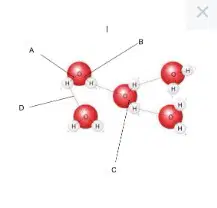
The line that indicates where a hydrogen bond is line ...
A
B
C
D
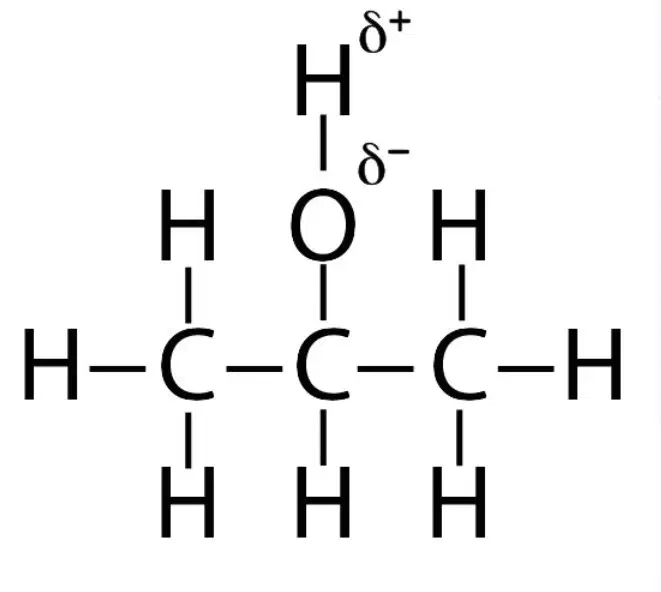
This molecule is __________ because ____________.
polar; it has charged areas
not polar; the charges aren't on opposite sides
polar; the charges are opposite
not polar; it doesn't have like charges
Because water has a high heat capacity it ...
moderates our climate
allows fish and amphibians to live at the bottom of a lake or stream in the winter
allows water to move up to the top of a tree
dissolves charged particles well
A water molecule has ...
a partially (-) O and 2 partially (+) H's
2 partially (+) O's and 1 partially (-) H
1 partially (+) O and 2 partially (-) H's
2 fully charged (-) H's and 1 fully (+) O
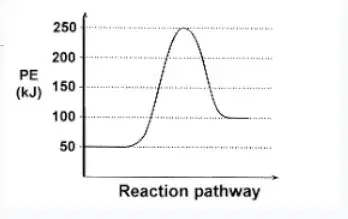
This reaction would be _____________ because ______________.
endergonic; activation energy is high
exergonic; activation energy is low
endergonic; ∇G is positive
exergonic; ∇G is negative
Water striders (small bugs) can walk across the surface of calm water. Their feet push the surface of the water down slightly, but they do not break the surface. Why?

What word describes the ability of a substance to be attracted to a different substance?

How many hydrogen atoms are in a water molecule?
5
1
2
0
The bond that holds the Oxygen and Hydrogen atoms together in a water molecule is a ________ bond.
ionic
Hydrogen
Covalent
Weak

