
Font size
 Worksheets
Sensation Review (student version)
Total questions: 14
Worksheet time: 8mins
Maria visits her eye doctor because she’s experiencing blurred vision in her peripheral view. After examining her eyes, the doctor explains that there may be damage to the part of her eye responsible for processing light and sending visual information to her brain. Which part of Maria's eye is most likely affected?
Cornea
Iris
Retina
Lens
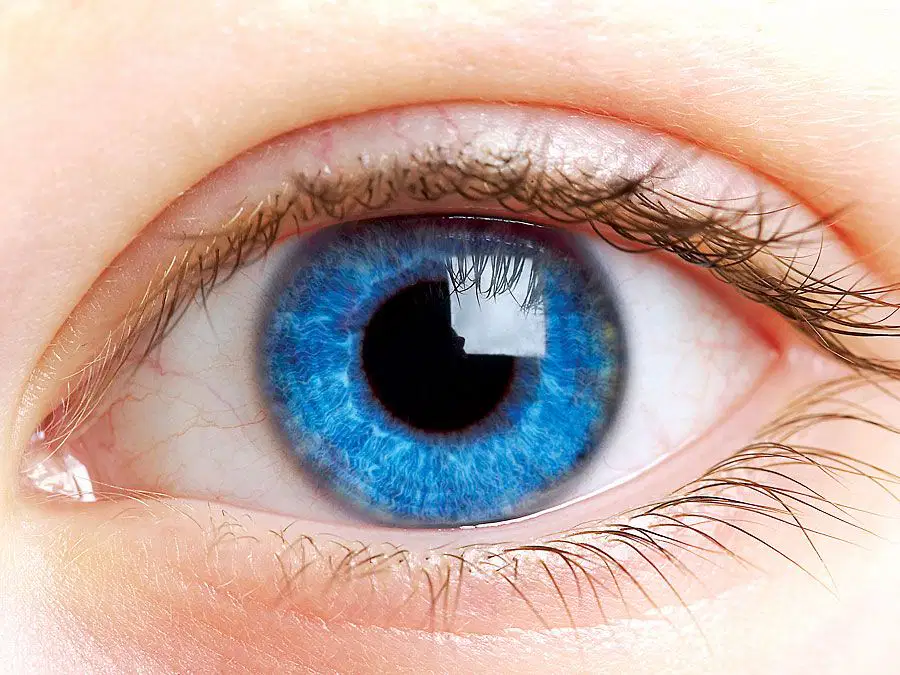
Which part of the eye focuses light on the retina?
pupil
iris
lens
optic nerve

Sensitive to dim light
High concentration found in the fovea (center of retina)
Mainly located in the periphery of the retina
Low color sensitivity
Not very sensitive to detail
Low sensitivity to dim light
Sensitive to color
Sensitive to detail
While reading a book up close, John notices that he can see the words clearly. However, when he quickly shifts his gaze to a clock across the room, he initially sees it as blurry until it becomes clear after a moment.
Which process is responsible for allowing John's lens to change shape & thickness to see the clock clearly after initially seeing it as blurry?
Depth perception
Sensory interaction
Accommodation
Pupil dilation

After staring at a bright blue circle for an extended period, Sophia looks at a white wall and sees a yellow circle instead. (a) is the theory that best explains why Sophia experiences this (b)
The opponent process theory and trichromatic theory work together to explain color vision.
True
False
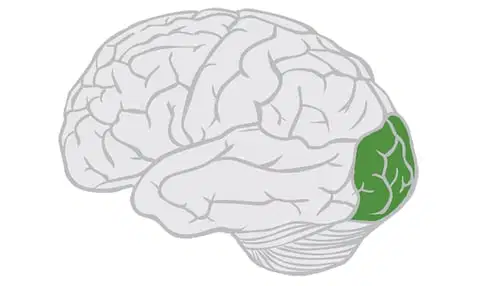
Damage to which brain region is commonly associated with difficulties in facial recognition and visual perception?
frontal lobe
cerebellum
parietal lobe
occipital lobe

In which part of the inner ear do hair cells bend in response to vibrations in the outer and middle ear?
ossicles (bones of middle ear)
auditory cortex
cochlea (basilar membrane to be specific)
eardrum

Which of the following statements best describes the difference between frequency theory and place theory in pitch perception?
Frequency theory suggests that pitch is determined by the location of hair cells activated in the cochlea, while place theory proposes that the frequency of nerve impulses corresponds to the pitch of the sound.
Frequency theory suggests that the rate of nerve impulses in the auditory nerve matches the frequency of the sound wave, while place theory states that different frequencies activate different locations of the cochlea.
Frequency theory is primarily associated with high-frequency sounds, whereas place theory applies to low-frequency sounds.
A 70-year-old woman is experiencing hearing difficulties and visits an audiologist for an evaluation. After testing, she is diagnosed with conduction deafness. In a separate case, a 25-year-old man who has been exposed to loud music frequently is diagnosed with nerve deafness.
Which of the following statements accurately contrasts conduction deafness and nerve deafness?
Conduction deafness results from damage to the inner ear structures, while nerve deafness occurs due to problems in the outer or middle ear.
Conduction deafness is caused by obstructions or damage in the ear canal, eardrum, or bones of the middle ear, while nerve deafness results from damage to the auditory nerve or hair cells in the cochlea.
Compared to nerve deafness, conduction hearing loss is a more common form of hearing loss
Visual transduction takes place in the ___________, whereas auditory transduction takes place in the ______________.
retina; ossicles (bones of the middle ear)
cochlea; retina
retina; cochlea
thalamus; cochlea
optic nerve; eardrum

According to the gate-control theory of pain, when one massages a sore muscle, they are activating (a) fibers in the (b) that close the "gate", preventing signals from going to the (c) .
Phantom limb sensations are evidence of (more than one answer applies)...
neuroplasticity
how pain is processed in the brain
accommodation
sensory interaction

Activating skin receptors for cold and warmth produces a (a) sensation.

