
 Worksheets
Renaissance - Enlightenment World History Quiz
Total questions: 57
Worksheet time: 31mins
What change happened in Europe as a result of Gutenberg’s innovation?
Far more books became readily available.
Processing metal became far more efficient.
Scholarship became concentrated in monasteries.
Latin became the common language of the people.
The Renaissance artist most famous for his painting the “Mona Lisa” was
Michelangelo.
Bruegel.
Leonardo da Vinci.
Raphael.
Indulgences were considered a sign of church corruption because they were
privileges given to priests.
pardons that people could buy.
violations of the vow of poverty.
arguments against church teachings.
Which reformer said that any Christian could read the Bible and understand God’s message?
Martin Luther
John Calvin
King Henry VIII
Desiderius Erasmus
The Council of Trent was part of the
Reformation.
Scientific Revolution.
Renaissance.
Counter-Reformation.
When sea voyages began to require sailing out of sight of land, this encouraged a growing interest in
chemistry of salt water.
biology for deep-sea fishing.
astronomy for navigation.
physics of ocean currents.
Galileo Galilei added support for the heliocentric theory by
making mathematical calculations.
retracing his views under pressure.
observing the sky through a telescope.
formulating laws of gravity and moon.
What were the salons of French Enlightenment thinkers?
secular university classes
lectures open to the public
gatherings in private homes
stores where books were sold
The Enlightenment overall promoted an attItude of
Piety.
Anger.
Cynicism.
Optimism.
What is one reason some Italian city-states like Venice, Milan, and Florence grew into major commercial centers in the 13th and 14th centuries
Geographic location
Artistic achievements
Mineral resources
Use of vernacular language
How did the Protestant Reformation contribute to the development of the Scientific Revolution?
The Reformation discouraged the use of the printing press
The Reformation made people uneasy with religion
The Reformation raised a lot of money
The Reformation encouraged free thought in religion which encouraged asking questions
What was the effect of Copernicus’s theory that the universe was heliocentric?
Challenged Newton’s theory of gravity
Supported Galileo’s pursuit of chemistry
Challenged the Catholic Church’s stance that the earth was at the center
Supported medieval scholars who wanted to prove the work of the church
How did the Catholic Church respond to the Protestant Reformation?
The Anglican Church was founded as an alternative to the Protestant Church
The Council of Trent abolished all new Catholic laws
Church leaders ended the inquisition
The Council of Trent ended abuses in the Catholic church to solidify their faith
Which practice was condemned by the leaders of the Protestant Reformation?
Reading the Bible
Indulgences
Prayer
Communion
Why did Henry VIII break with the Catholic church?
He was unable to pay the Pope
He needed a male heir/wanted a divorce
He wanted to explore Mormonism
He was tired of going to confession
17th-century scholars Nicolaus Copernicus and Galileo Galilei faced serious challenges to their scientific theories because their ideas
were based on the Bible
contradicted traditional medieval Christian beliefs
relied only on teachings from non-Christian cultures
were not supported by scientific investigations
The Heliocentric Model is the idea that...
Earth rotates on axis and orbits around the sun
Earth is center of universe
There is no center of universe
There are no other planets than planet Earth

What country is best known for starting the Renaissance?
Spain
France
Italy
Germany

Patronage during the Renaissance was most closely aligned with
Leaders granting loyal supporters lucrative government jobs
Wealthy families hiring artists to create paintings, sculptures, etc. in exchange for money, food, shelter, etc.
The concept of frequenting the same shop or business so you are loyal to an individual and/or their products
Governments assisting mariners in funding overseas voyages to further expand trade


An intellectual movement that focused on the study of worldly subjects and on human potential and achievements
Humanism
Secularism
Guilds
Enlightenment
Dealing with worldly matters not religious matters
Humanism
Haiku
Indulgence
Secular
An invention used to copy text and distribute information
fax machine
twitter press
printing press
iron press

Enlightenment thinker who was a pioneer for women's rights and education.
Mary Wollstonecraft
Voltaire
Thomas Hobbes
A place where Enlightenment thinkers got together to discuss Enlightenment ideas
divine right
salon
laissez-faire
bourgeoisie
Term for the agreement between rulers and the people to cooperate in pursuit of a better society
divine right
free enterprise
laissez-faire
social contract
In Rousseau's The Social Contract, he expressed his belief that
a child was a small adult with all the same abilities and obligations.
the individual's will is the most important.
government was necessary to protect the rights of its citizens, but may be overthrown.
government was an evil that should be totally eliminated.

British monarch who dismissed the authority of the Pope and started the Anglican Church.
Queen Elizabeth
Martin Luther
John Calvin
Henry VIII
the Bible
the Pope

In his attempt to reform the Catholic Church, Martin Luther ....

Francis Bacon ultimately lost his life from an experiment involving a chicken, what he was trying to learn was...
Johannes Kepler said that the planets rotated around the sun in what shape?
Oval
Circle
Square
Pentagon
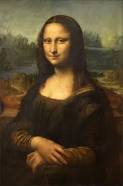
Which was a key intellectual movement or philosophy of the Renaissance?
Humanism
City State
Cultural relativism
Behavioralism
In which Italian city-state do historians generally agree the Renaissance began?
Milan
Venice
Florence
Paris

Which of these famous structures did Michelangelo paint?
the Louvre
the Coliseum
the Sistine Chapel
the Eiffel Tower
What family was known to be patrons of the arts in Florence?
The Capulets
The Montague
The Medici
The Sopranos

The Enlightenment overall promoted an attItude of
piety.
anger.
cynicism.
optimism.
The Council of Trent was part of the
Reformation.
Scientific Revolution.
Renaissance.
Counter-Reformation.
Indulgences were considered a sign of church corruption because they were
privileges given to priests.
pardons that people could buy.
violations of the vow of poverty.
arguments against church teachings.
The Renaissance artist most famous for his painting the “Mona Lisa” was
Michelangelo.
Bruegel.
Leonardo da Vinci.
Raphael.
Money to support the arts in Renaissance Italy came primarily from
industry.
commerce.
agriculture.
construction.

What was the significance of the printing press?
the production of written work was slower, therefore written works were not available to everyone.
there is no significance
the production of written work was faster, however not everyone was able to read.
the production of written work was faster, therefore written works were available to everyone.

