
 Worksheets
Chapter 5 Test
Total questions: 88
Worksheet time: 49mins
(a) is the protein material responsible for preventing fluid loss through the skin.
The (a) gland produces a thick, organic secretion that is broken down by bacteria to produce body odor; it opens into a hair follicle.
The layer of the epidermis present only in thick skin is called (a) .
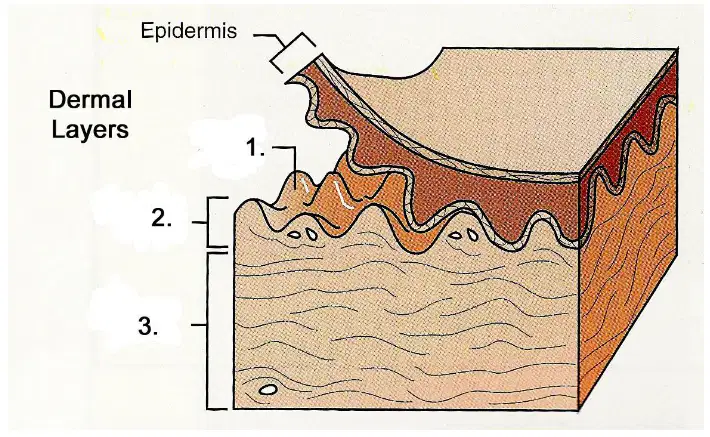
What is #1 referring to?
(a)
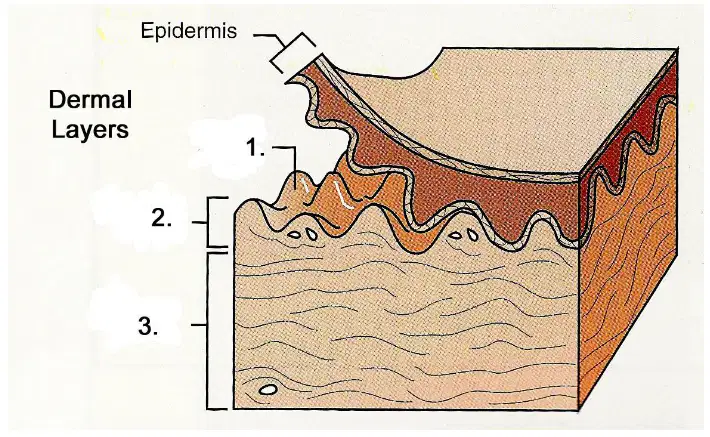
What is #2 referring to?
(a)
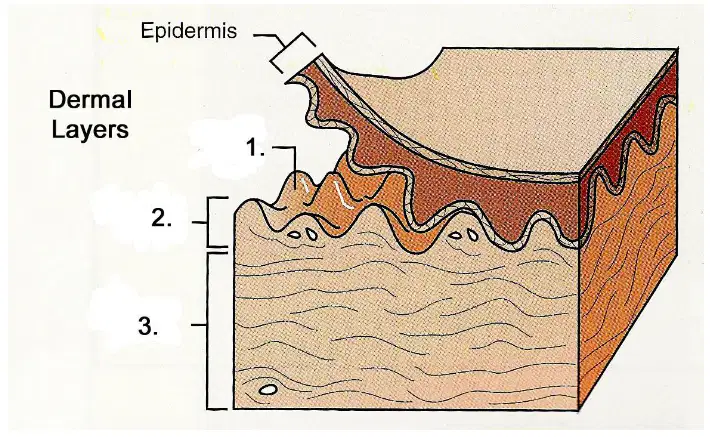
What is #3 referring to?
(a)
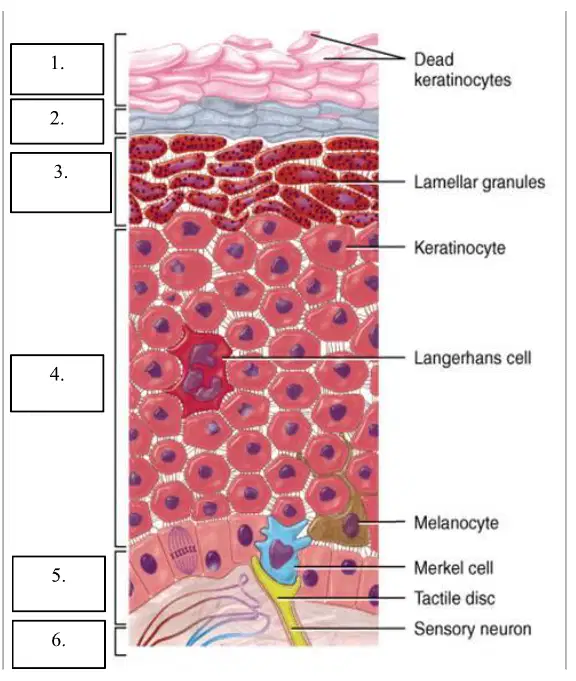
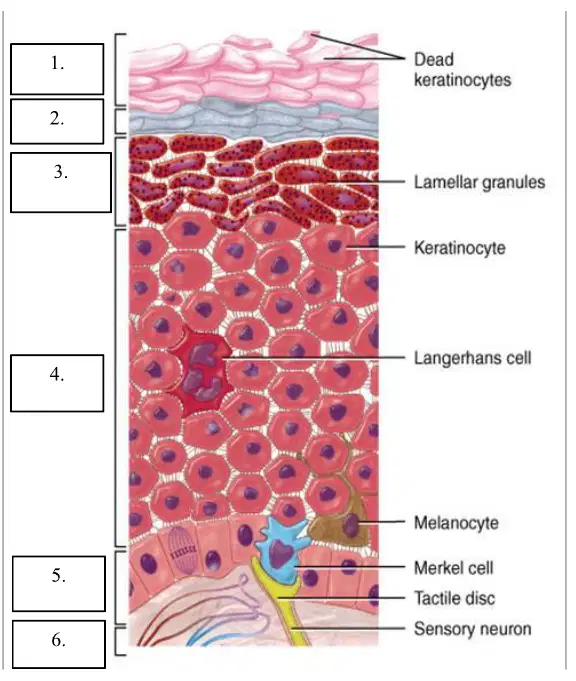
What is #1 referring to?
(a)
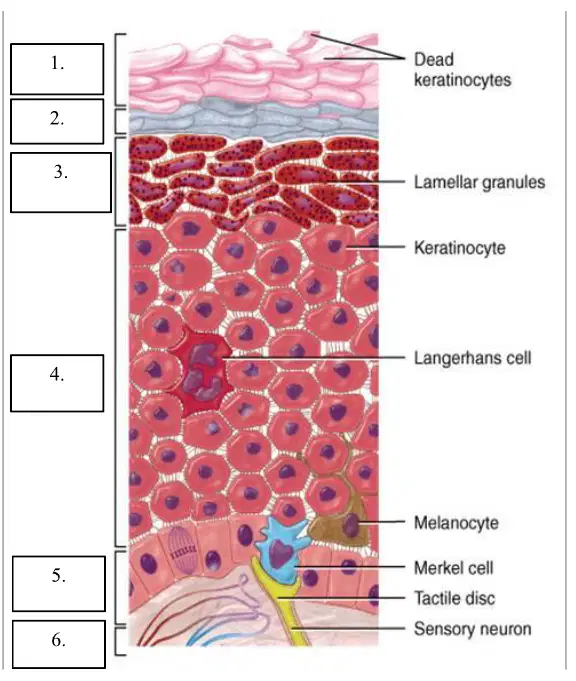
What is #2 referring to?
(a)
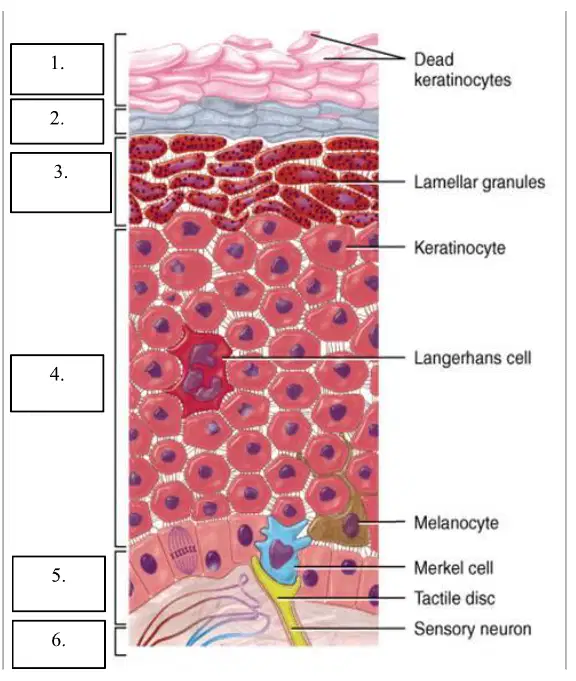
What is #3 referring to?
(a)
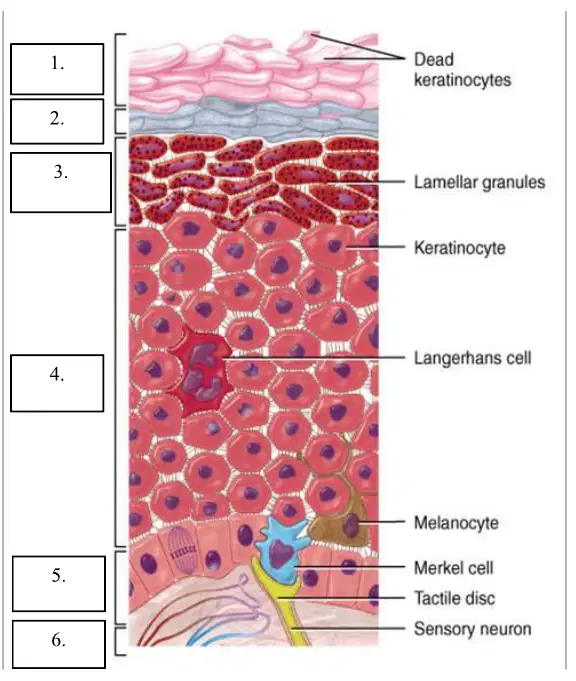
What is #4 referring to?
(a)
What is #5 referring to?
(a)
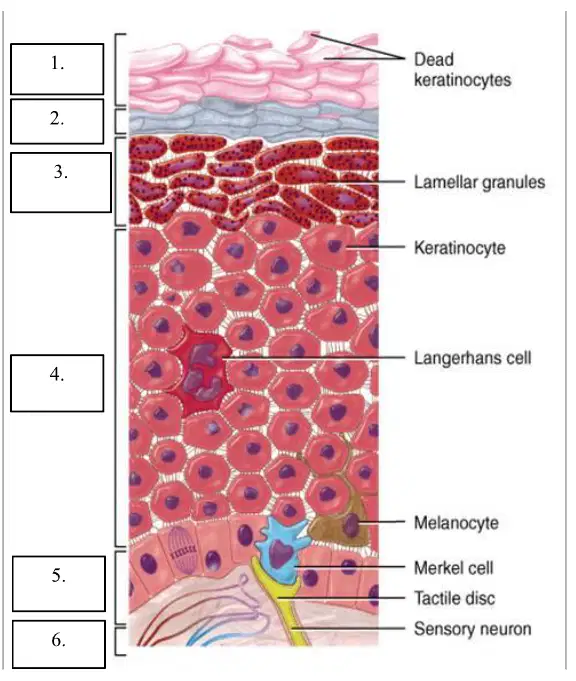
What is #6 referring to?
(a)
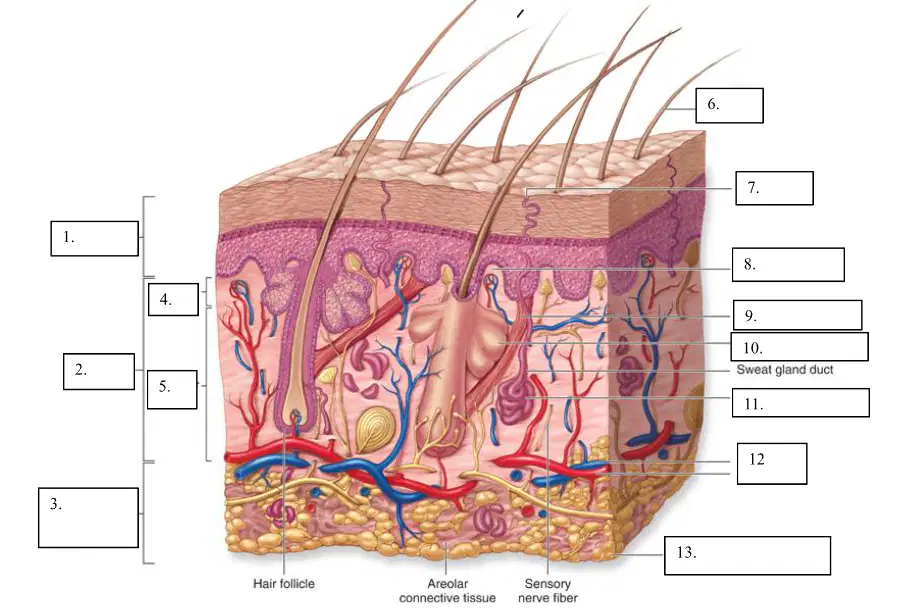
What is #1 referring to?
(a)
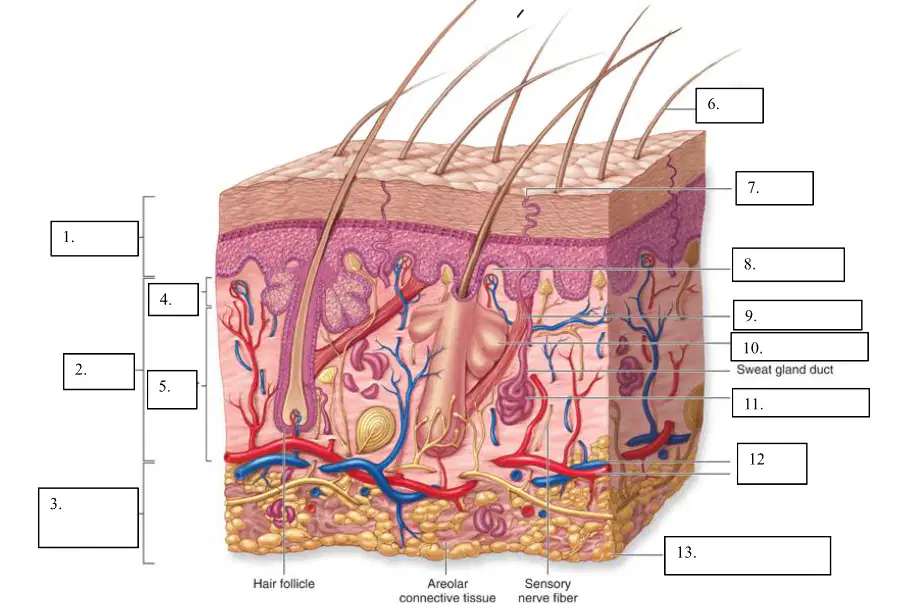
What is #2 referring to?
(a)
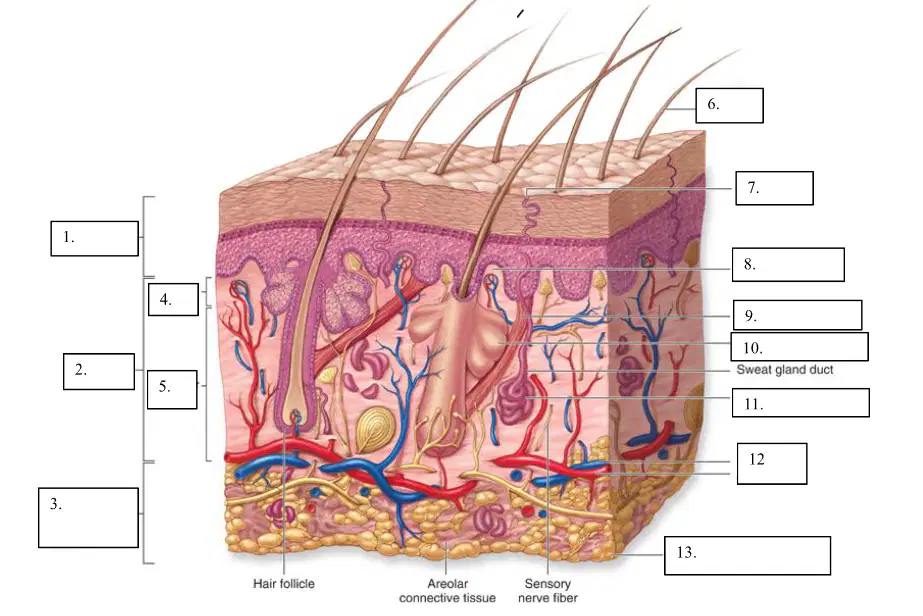
What is #3 referring to?
(a)
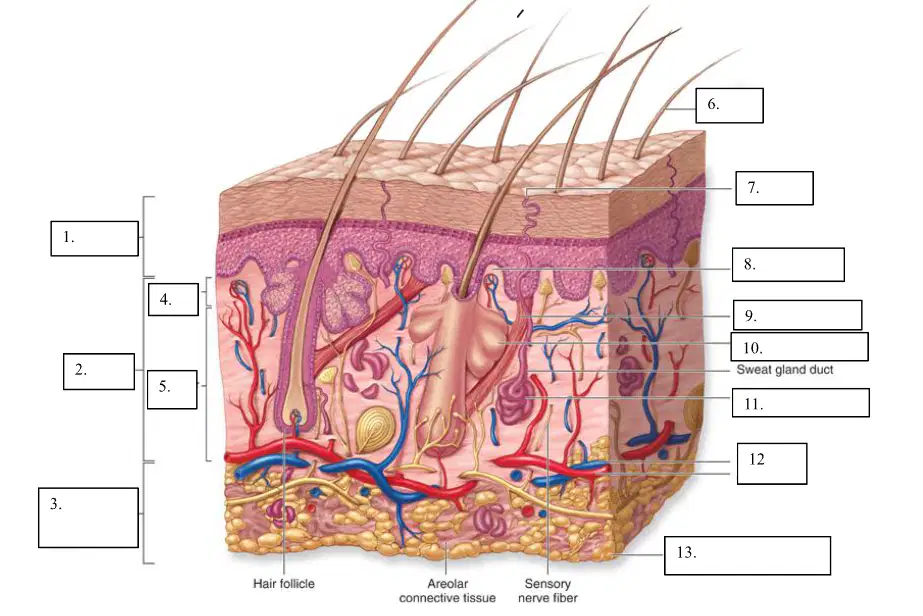
What is #4 referring to?
(a)
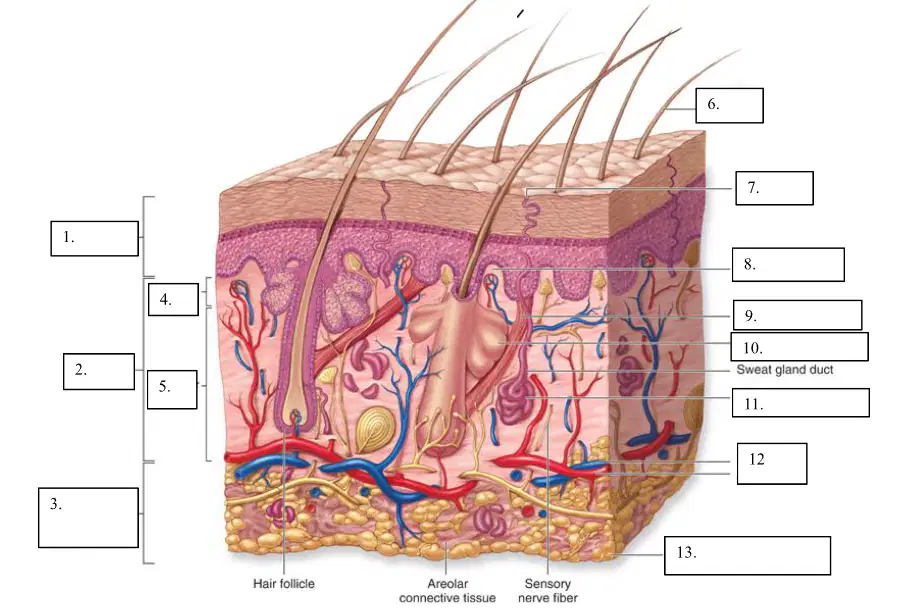
What is #5 referring to?
(a)
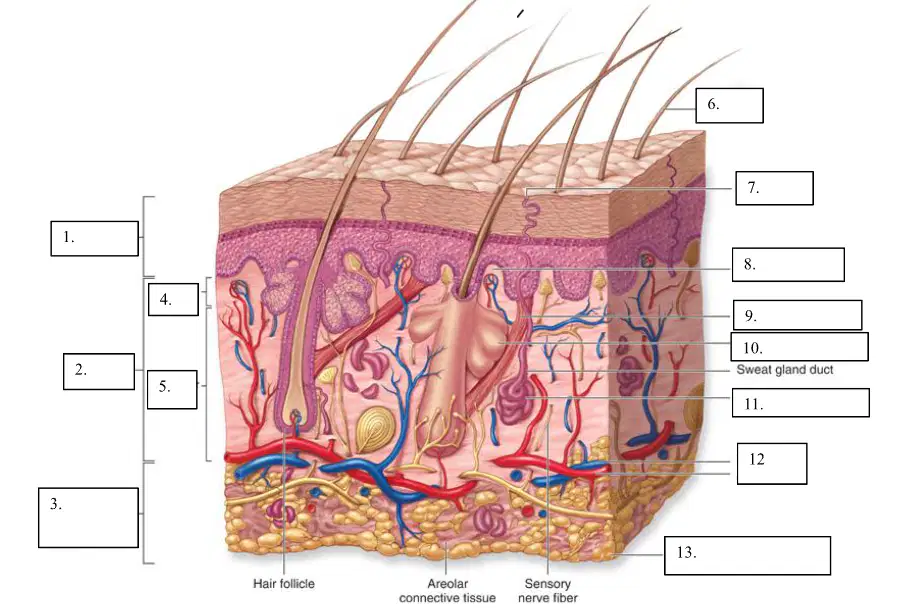
What is #6 referring to?
(a)
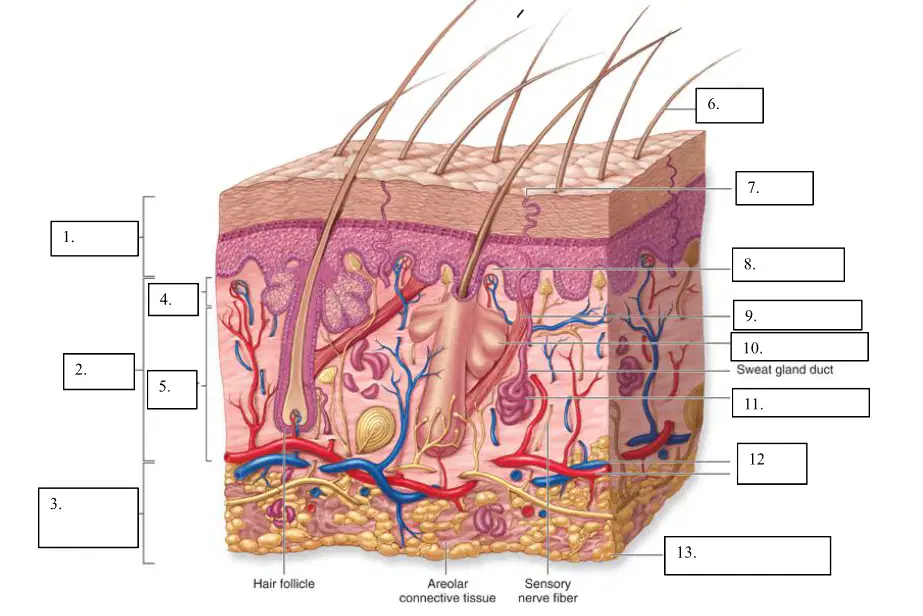
What is #7 referring to?
(a)
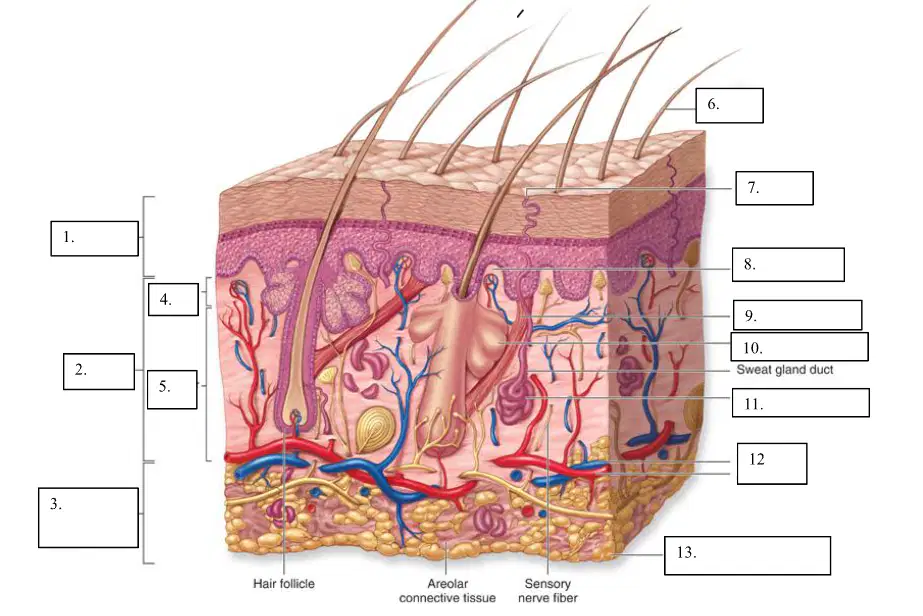
What is #8 referring to?
(a)
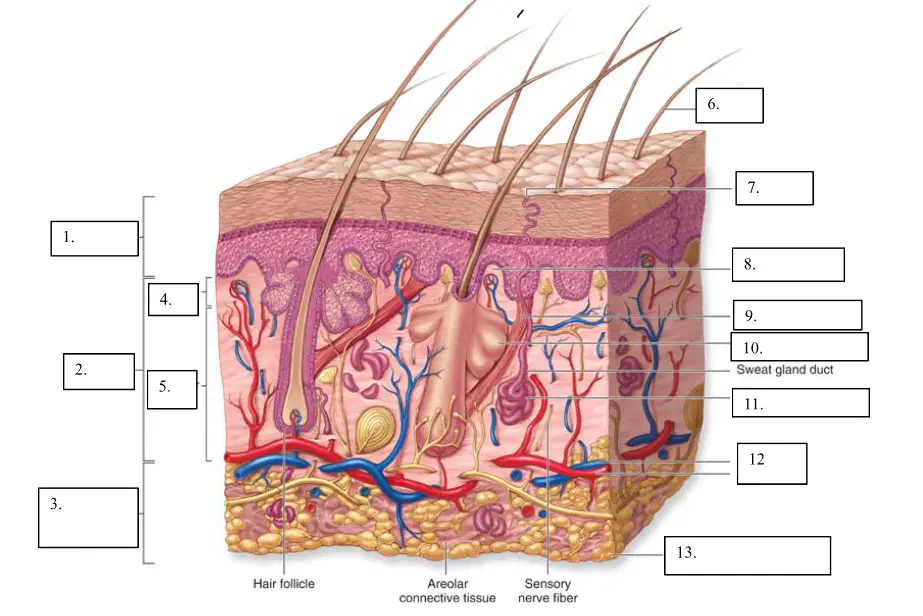
What is #9 referring to?
(a)
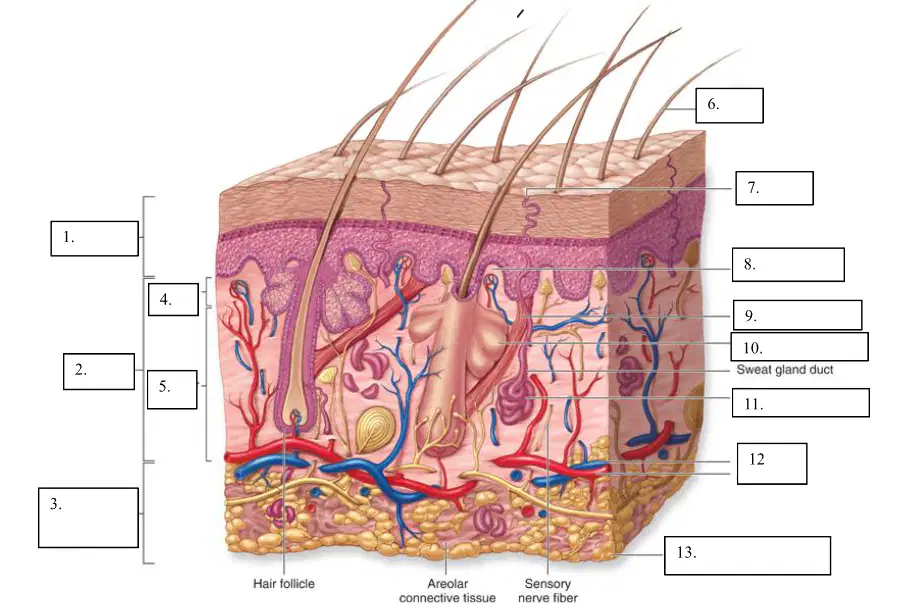
What is #10 referring to?
(a)
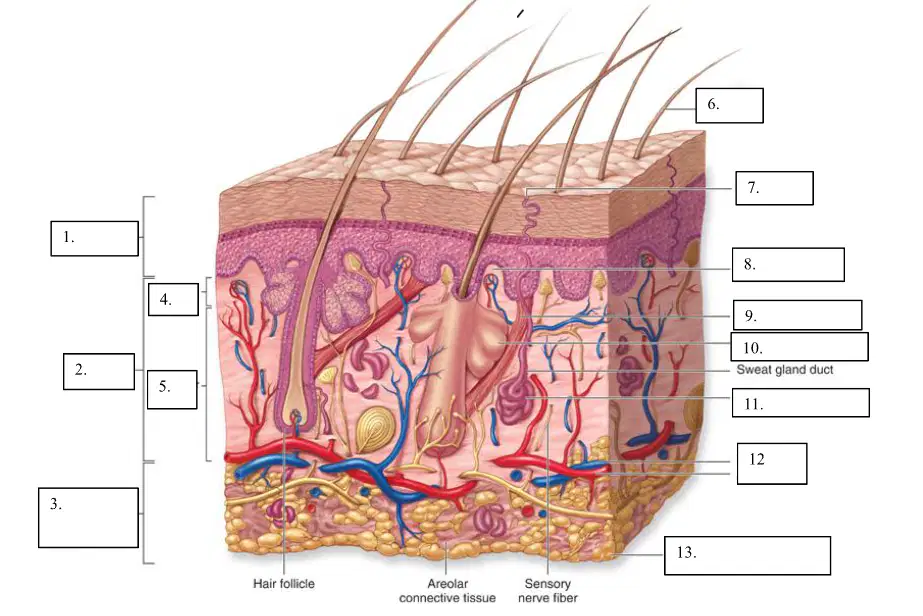
What is #11 referring to?
(a)
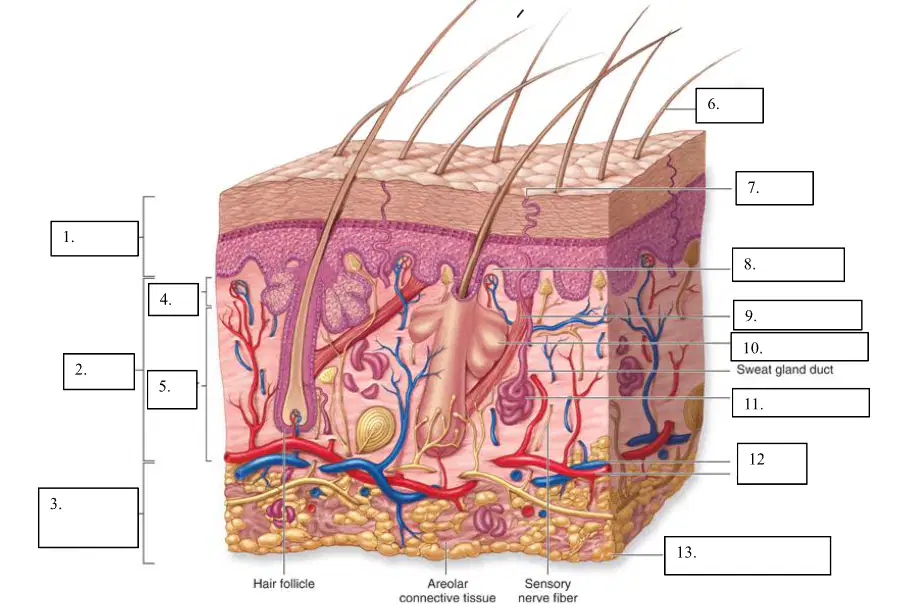
What is #12 referring to?
(a)
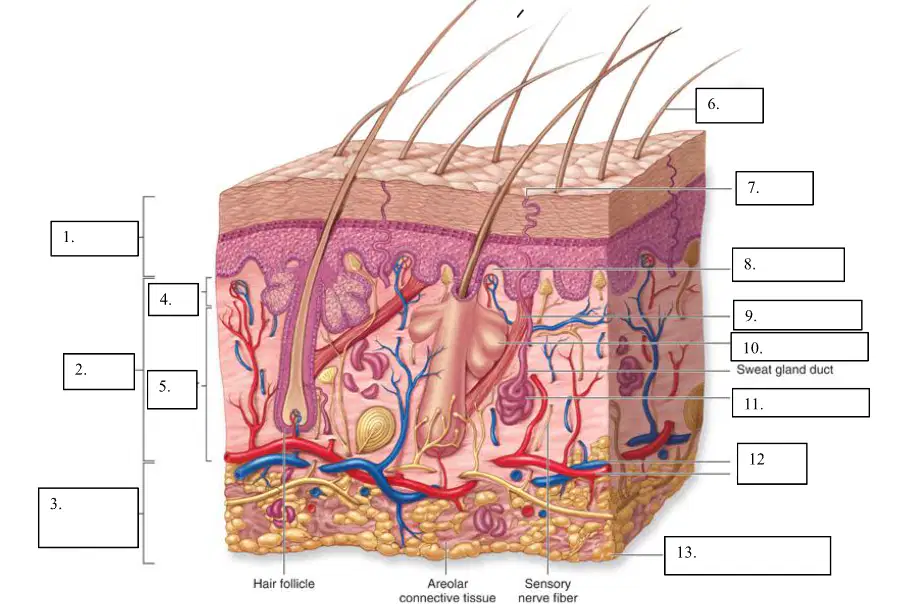
What is #13 referring to?
(a)
Which of the following layers of the skin is primarily responsible for providing strength and elasticity?
Stratum corneum
Dermis
Hypodermis
Stratum basale
Which cell type in the epidermis is most directly involved in the immune defense of the skin?
Merkel cells
Keratinocytes
Langerhans cells
Melanocytes
A person with a deficiency in sebum production would most likely experience:
Enhanced sweating
Increased hair growth
Dry and cracked skin
Oily skin
Label the structures of the skin.
Arrector pili muscle
Hair follicle
Epidermis
Dermis
Hypodermis
Sudoriferous gland
Sebaceous gland
Label the Skin- One option will not be used
Sebaceous Gland
Apocrine Sweat Gland
Eccrine Sweat Gland
Hair Follicle
Label the sudoriferous eccrine gland
Label the sebaceous gland
Match the function of the skin with its description
Physical barrier against injury.
Protection
Capillaries dilate when your hot and constrict when you are cold.
Temperature control
Metabolized by sunlight, necessary for bone growth.
Vitamin D synthesis
Removes wastes products and produces sweat.
Excretion and secretion
Detect touch, pressure, heat, cold, pain, etc.
Sensation
Match the following
Found between dermis and epidermis
Dermal Papillae
Dilate to regulate temperature
Blood Vessels
AKA the subcutaneous layer
Hypodermis
Numerous on scalp and face
Sebaceous Glands
Produce dermicidin
Suderiferous Glands
What happens as the skin on top of a wound heals?
The wound gets larger.
The wound stays the same size.
New skin cells form from existing skin cells, causing the wound to get smaller.
The wound disappears immediately.
Select the Adipose.
Identify the Stratum Corneum
Select the Hypodermis.
Select the Dermis.
Select the Sweat duct.
Select the Reticular Layer.
Select the Papillary Layer.
Identify the Stratum Basale
Identify the Dermal Papilla
Identify the Stratum Lucidum
Identify the Stratum Spinosum

Match the Layer to the correct letter
Stratum Corneum
A
Stratum Basale
E
stratum spinosum
D
stratum granulosum
C
stratum lucidum
B

Match the Letter of the Image to the correct term.
A
Epidermis
B
Dermis
C
Papillary Layer
D
Reticular Layer
E
Hypodermis
Tap the button indicating the stratum basale.
Which type of gland secretes smelly, yellowish fluid into the armpits?
Sebaceous glands
Apocrine sweat glands
Eccrine sweat glands
T/F: Your normal body temperature maintains 98.6 all day long and does not fluctuate unless you are sick.
True
False