
 Worksheets
Bio168 Review - Anyjia J
Total questions: 21
Worksheet time: 21mins
Name
Class
Date
1.
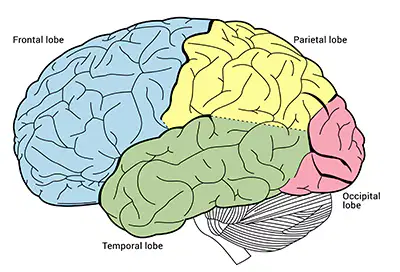
which lobe of the brain is responsible for vision
a)
Occipital Lobe
b)
Frontal Lobe
c)
Temporal Lobe
d)
Parietal Lobe
2.
Which statement(s) are true about myelin?
a)
Myelin has a high lipid content which gives the area a white appearance.
b)
Myelin surrounds axons and insulates them.
c)
Myelin is formed by the membranes of oligodendrocytes (CNS)and Schwann cells (PNS)
d)
Myelin slows the transmission of the action potential.
3.
Which is an example of a bone that would be found in the AXIAL skeleton?
a)
Femur
b)
Phalanges
c)
Humerus
d)
Ribs
4.
This type of muscle tissue is found only in the heart
a)
Skeletal
b)
Cardiac
c)
Smooth
5.
This type of muscle tissue is found in the walls of hollow organs such as the stomach
a)
Skeletal
b)
Cardiac
c)
Smooth
6.
This type of muscle tissue is attached to bones wand helps control voluntary movement
a)
Skeletal
b)
Cardiac
c)
Smooth
7.
What are the 3 types of muscle tissue?
a)
Thigh, Calf, & Shoulder
b)
Traps, Forearm, & Abs
c)
Hamstring, Biceps, & Triceps
d)
Smooth Muscle, Cardiac Muscle, & Skeletal Muscle
8.
Which muscles are involuntary?
a)
skeletal
b)
cardiac
c)
smooth
d)
smooth and cardiac
9.

Name this tissue
a)
Skeletal
b)
Cardiac
c)
Smooth
10.
Which types of muscle tissue are voluntary
a)
Cardiac Muscle
b)
Smooth Muscle
c)
Skeletal Muscle
d)
Skeletal Muscle and Smooth Muscle
11.

What is this?
a)
Blood
b)
Bone
c)
Neuron
d)
Adipose
12.

Name this tissue
a)
Skeltal
b)
Cardiac
c)
Smooth
13.
What is the gab between neurons called?
a)
Axon
b)
Dendrites
c)
Synapse
d)
Myelin sheath
14.

Which parts of your eye are transparent?
a)
retina
b)
optic nerve
c)
cornea and lens
d)
iris
15.

What is letter B
a)
Optic nerve
b)
Lens
c)
Cornea
d)
Retina
16.

What is letter F?
a)
Retina
b)
Pupil
c)
Vitreous humor
d)
Iris
17.

What is letter I?
a)
Cornea
b)
Lens
c)
Vitreous humor
d)
Optic nerve
18.

a)
Zygomatic
b)
Temporal
c)
Parietal
d)
Maxilla
19.

a)
Mandible
b)
Zygomatic
c)
Temporal
d)
Maxilla
20.

a)
Maxilla
b)
lacrimal
c)
Mandible
d)
zygomatic
21.

a)
Zygomatic
b)
Vomer
c)
Ethmoid
d)
Lacrimal
100 %

