
 Worksheets
CHAP 2 SS &Elas OCT 23 19/11/ GRP a
Total questions: 81
Worksheet time: 50mins


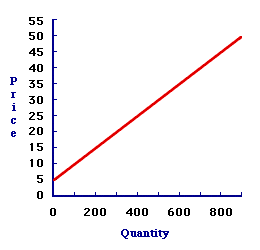
When producers offer more of a good as its price increases and less as its price falls, this defines the
law of demand
law of supply
change in demand
change in supply
When producers offer more of a good as its price increases and less as its price falls, this defines the
law of demand
law of supply
change in demand
change in supply
The willingness and ability of a producer to make a product is referred to as
quantity supplied
quantity demanded
supply
demand
Movement along a supply curve demonstrates
a change in quantity supplied
a change in quantity demanded
a change in supply
a change in demand
A shift in a supply curve demonstrates
a change in quantity supplied
a change in quantity demanded
a change in supply
a change in demand
A shift in a supply curve demonstrates
a change in quantity supplied
a change in quantity demanded
a change in supply
a change in demand
Which of these demonstrates an example of a supply curve? (More than one answer)


Which of the following supply curves demonstrates a decrease in the quantity supplied?
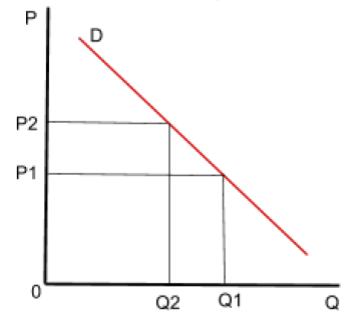


A decrease in supply is demonstrated by which of the following?


The prices for houses steadily increase, causing more people to want to sell their homes. Which of these demonstrates this concept?


A popular musical act announces a concert at a 10,000 seat venue. Prices for tickets skyrocket so the venue announces that there will be 500 standing room only tickets offered. What concept does this demonstrate?
elastic supply
inelastic supply
change in supply
change in quantity supplied
When producers offer more of a good as its price increases and less as its price falls, this defines the
law of demand
law of supply
change in demand
change in supply
The willingness and ability of a producer to make a product is referred to as
quantity supplied
quantity demanded
supply
demand
Movement along a supply curve demonstrates
a change in quantity supplied
a change in quantity demanded
a change in supply
a change in demand
A shift in a supply curve demonstrates
a change in quantity supplied
a change in quantity demanded
a change in supply
a change in demand
Which of the following supply curves demonstrates a decrease in the quantity supplied?
A decrease in supply is demonstrated by which of the following?
A hurricane wipes out an orange crop in Florida, sharply affecting the supply of oranges. Which chart demonstrates this concept?


The prices for houses steadily increase, causing more people to want to sell their homes. Which of these demonstrates this concept?

Which of the following leads to an decrease in supply?
an increase in the cost of raw materials
diminishing marginal returns
a decrease in the cost of raw materials
a change in the law of supply
Which of these do the producers of an item hope to achieve when adopting new technology?
a shift of the supply curve for that item to the left
repeal of the subsidy for that item
inelasticity of supply of that item
a shift of the supply curve for that item to the right
What affect do excise taxes on production usually have on the supply curve?
decreases supply, supply curve shifts left
increases supply, supply curve shifts left
decreases supply, supply curve shifts right
increases supply, supply curve shifts right
Which of the following leads to an increase in supply?
Gallery Furniture will raise prices on all wood furniture
six new companies begin producing smart phones
price of a complementary good goes down
increased cyclical employment
If I make Jordans for $50 and sell them for $100. I will make $50. This is an example of...
quantity supplied
demand
supply
profit
Which of these would most likely increase the
supply of soccer balls?
a transportation strike
a government excise tax
a decrease in the price of raw materials
an increase in the supply of tennis balls
What does it mean?
Ed = 0
Perfectly inelastic demand
Inelastic demand
Unitarily elastic demand
Elastic demand
Perfectly elastic demand
What does it mean?
Ed = 1
Perfectly inelastic demand
Inelastic demand
Unitarily elastic demand
Elastic demand
Perfectly elastic demand
What does it mean?
Ed = ∞
Perfectly inelastic demand
Inelastic demand
Unitarily elastic demand
Elastic demand
Perfectly elastic demand
What does it mean?
Ed > 1
Perfectly inelastic demand
Inelastic demand
Unitarily elastic demand
Elastic demand
Perfectly elastic demand
What does it mean?
Ed < 1
Perfectly inelastic demand
Inelastic demand
Unitarily elastic demand
Elastic demand
Perfectly elastic demand
What does it mean?
% change in Qd = % change in P
Perfectly inelastic demand
Inelastic demand
Unitarily elastic demand
Elastic demand
Perfectly elastic demand
Describe your demand for a product if you buy the same amount of it or just a small amount less after a large price increase.
elastic
unitary elastic
inelastic
hyperelastic
Define Income Elasticity of Demand
YED measures the degree of responsiveness of quantity demanded for a good to a change in consumer's income, ceteris paribus
YED measures the degree of responsiveness of demand for a good to a change in consumer's income, ceteris paribus
YED measures the degree of responsiveness of consumer's income to a change in quantity demanded for a good, ceteris paribus
YED measures the degree of responsiveness of consumer's income to a change in demand for a good, ceteris paribus
If the income elasticity of market demand is negative, most consumers view the good as:
a luxury good
having many imperfect substitutes.
an inferior good.
a normal good.
Which one is the correct formula for Income Elasticity of demand?
Percentage change in income / Percentage change in quantity demand for a good
Percentage change in quantity demand for a good / Percentage change in income
Percentage change in supplied for a good / Percentage change in income
Percentage change in quantity demand for a good / Percentage change in its price
YED = 0 is referring to
Normal Goods
Inferior Goods
Luxury Goods
Necessity Goods
When YED value is positive and the value is 0.5
Normal Good
Inferior Good
Luxury Good
Necessity Goods
How many categories of YED exits?
Five
Three
One
Four
Income elasticity is can be measured by
comparing the percentage change in demanded with the percentage change in income
comparing the percentage change in quantity demanded with the percentage change in price
comparing the percentage change in quantity demanded with the percentage change in income
comparing the percentage change in quantity supply with the percentage change in income
The cross elasticity of demand for substitutes will always be negative because the when the price of product A increases the quantity demanded of product B also increases
TRUE
FALSE
If the cross-price elasticity between two commodities is 1.5,
the two goods are luxury goods.
the two goods are complements.
the two goods are substitutes.
the two goods are normal goods.
It is reasonable to expect the cross price elasticity of demand for golf clubs and golf balls to be positive
True
False
Uncertain
If two goods have negative price cross‑elasticities of demand, the goods are:
inferior goods.
luxury goods.
complementary goods:
substitute goods.
The cross elasticity of demand for substitutes will always be negative because the when the price of product A increases the quantity demanded of product B also increases
TRUE
FALSE
1. A 5% rise the price of beef decreased quantity of beef demanded by 10% and increase the quantity demanded of chicken by 15%
(i) Calculate the cross elasticity of demand between beef and chicken
1/3
3
2
1/2
If the cross elasticity of demand for product A is zero then product A and Product B are complements
TRUE
FALSE
If the cross-price elasticity between two commodities is 1.5,
the two goods are luxury goods.
the two goods are complements.
the two goods are substitutes.
the two goods are normal goods.
It is reasonable to expect the cross price elasticity of demand for golf clubs and golf balls to be positive
True
False
Uncertain
Why does demand generally become more elastic over time?
People don't change their shopping behavior over time.
Few substitutes become available.
People buy more products over time.
People have time to find substitutes and change behaviors.
If two goods have negative price cross‑elasticities of demand, the goods are:
inferior goods.
luxury goods.
complementary goods:
substitute goods.
A 2% price cut for GOOD A causes GOOD B sales to fall by 3%. The price cross elasticity of demand between these goods is roughly _____ and these goods are _____.
‑2/3, substitutes.
1.5, substitutes.
2/3, complements.
‑1.5, complements.
What is the relationship between two good if Ex = -2
Substitutes
No relationship
Complements
Complementary goods have:
the same elasticities of demand.
very low price elasticities of demand.
negative cross price elasticities of demand with respect to each other.
positive cross elasticities of demand.with respect to each other
What does cross elasticity measure?
Measures responsiveness of changes in quantity demanded to changes in price.
Measures the responsiveness of the quantity demanded of
a good or service to a change in income.
Measures the responsiveness of the quantity demanded of one good to changes in price of another good.
What is the relationship between two good if Ex = -2
Substitutes
No relationship
Complements
Complementary goods have:
the same elasticities of demand.
very low price elasticities of demand.
negative cross price elasticities of demand with respect to each other.
positive cross elasticities of demand.with respect to each other
What does cross elasticity measure?
Measures responsiveness of changes in quantity demanded to changes in price.
Measures the responsiveness of the quantity demanded of
a good or service to a change in income.
Measures the responsiveness of the quantity demanded of one good to changes in price of another good.
Price elasticity of supply is the responsiveness of
demand to a change in price.
price to a change in supply.
quantity supplied to a change in price.
price to a change in supply.
If the supply curve of a product is vertical, PES is equal to
0.
1.
-1.
infinity.
If the price elasticity of supply for a good is 10, then supply is
elastic
inelastic
perfectly inelastic
perfectly elastic

