
NEW
Font size
 Worksheets
Early River Valley Civilization
Total questions: 35
Worksheet time: 9hrs 45mins
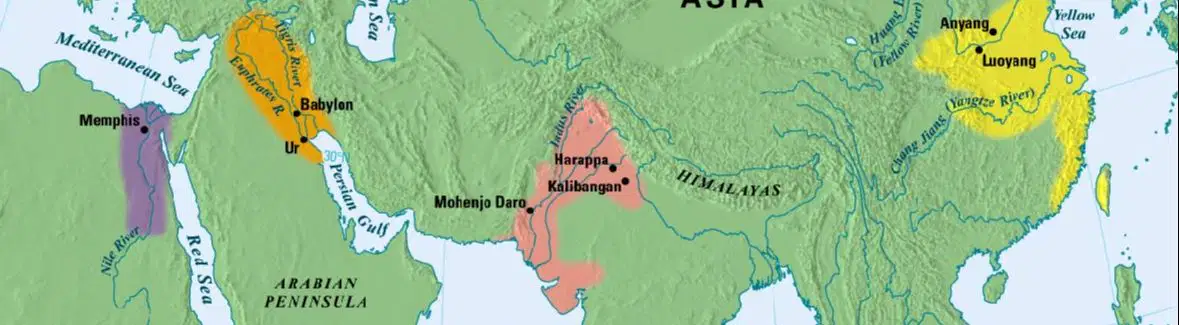
Name the River Valley Civilization shaded in purple on the map
Egypt
Mesopotamia
India
China
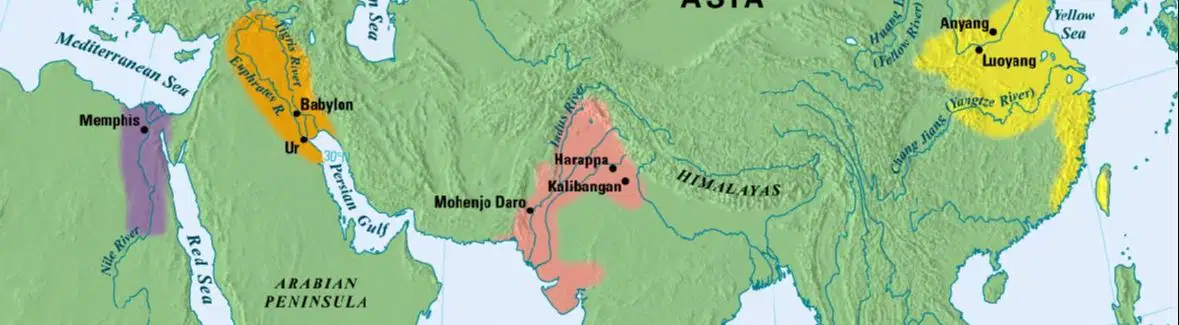
Mesopotamia
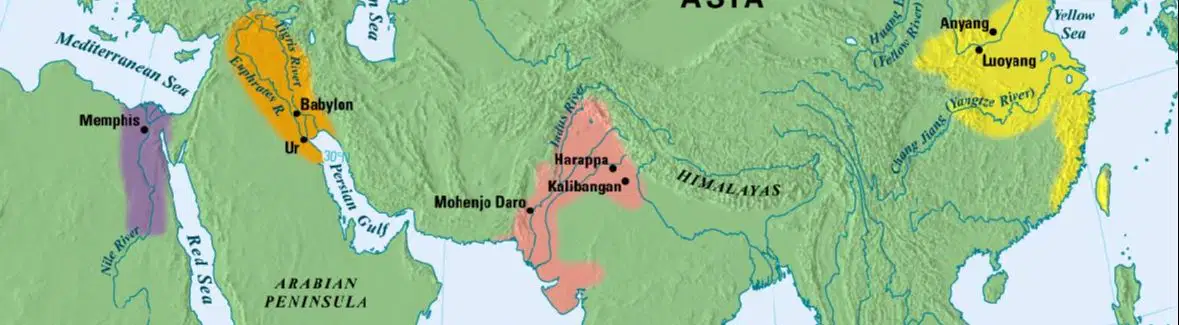
Name the River Valley Civilization shaded in yellow on the map
Egypt
Mesopotamia
India
China
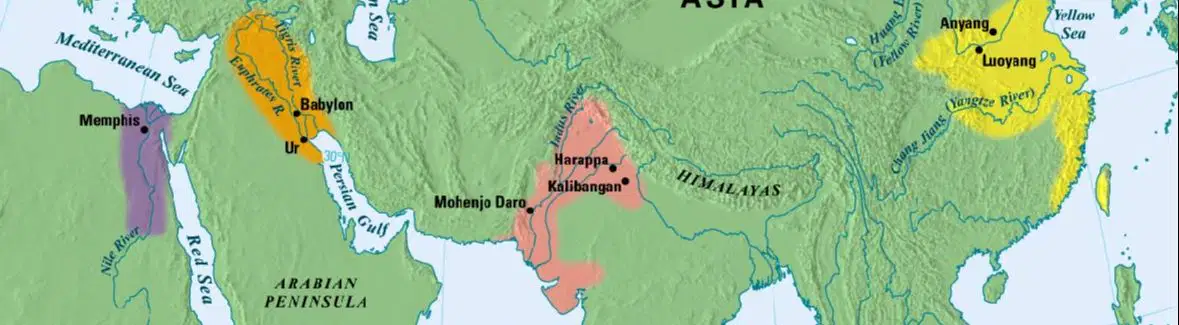
Mesopotamia
- Nile River
- Hieroglyphics
- Pyramids
Mesopotamia
- Tigris and Euphrates
- Cuneiform
- City-States
Mesopotamia
- Huang He (Yellow) River
- Calligraphy writing
- Paper and Silk
Mesopotamia
The ancient civilizations of Mesopotamia and Egypt were similar in that both cultures
established trade routes to China
used the ziggurat form for their temples
developed along rivers
used a hieroglyphic writing system
The first river valley civilization was the Mesopotamians.
True
False
Boot shaped peninsula south of France and Germany. Also located above the Medierranean Sea
France
Iberian Peninsula
Florida
Italy
Great Britain and Japan were able to become great powers because of THIS feature protecting them.
Mountains
Rivers
Plains
Oceans
One way that farming changed the way people lived was____________________.
They no longer were nomads
Life expectancy was shorter
They had to move around to new farms
What was the greatest benefit to people when early farmers began to raise plants and animals?
Easy travel
They kept pets
Shared most work
Stable food supply
What is the term that describes the discovery of farming?
domesticated
paleolithic age
neolithic age
agricultural revolution
A system to bring water to crops
migration
agricultural revolution
irrigation
nomad

How did peoples' dwellings change after the Agricultural Revolution (in Neolithic times)?
They became larger, and more stable and permanent.
They didn't - people mainly still lived in huts and caves.
They became smaller and more mobile.
All of the following were tools/inventions created in Neolithic times (after the Agricultural Revolution) EXCEPT:
plow
wheel
calendar
tractor
What is silt
the government of Mesopotamia
a shrine
tame
rich soil
Where was Mesopotamia located?
Iraq
United States
Egypt
Italy
1900B.C, 2022AD, 2023B.C
1700A.D, 1701B.C, 321B.C
1600B.C, 409B.C, 410A.D
The period of time before there were written records
A(n) _______________ is a human made object such as a tool, button, or old vase.
artifact
secondary source
bias
question
A document or record of past events created by people who were present at that time is called ____________.
Secondary Source
Primary Source
Corroboration
Sourcing
A ________________ is written after the time period by an expert or historian and can include books, magazines, and short articles.
primary Source
secondary Source
bias
artifact
On a timeline, B.C. is represented
B.C. is never on a timeline
On a timeline, A.D is represented
A.D is never on a timeline

