
 Worksheets
AI Revision
Total questions: 50
Worksheet time: 50mins
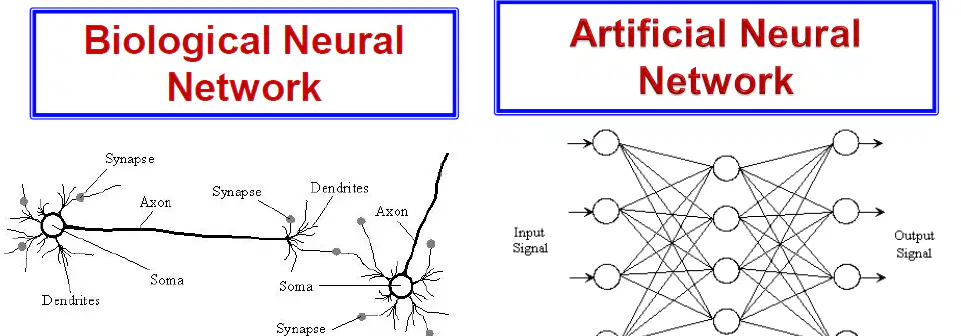
From the shown diagram, which analogy is correct?
Soma --> Input
Axon --> Input
Dendrite --> Input
Synapse --> Input
Which statement is correct?
Output
layer: the layer that makes a prediction
Input
layer: take input from another layer and pass output
to another layer
Hidden
layers: directly connect to input data or produce outputs
Input
layer: has highest neuron than other layer
Which transfer function is always used in ANNs (Artificial Neural Networks)?
i. hard-limiter
ii. trigonometry
iii. polynomial
iv. sigmoid
All above
i, ii and iv
i, ii and iii
i and iv
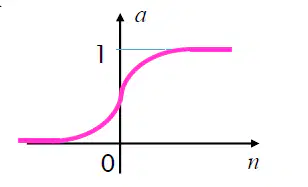
What type of transfer function is shown?
Linear
Hard-limiter
Sigmoid
Hyperbolic Tangent
Which statement is correct?
ALL
HIDDEN LAYERS typically use the different transfer function
The
transfer functions that can be used for HIDDEN LAYERS is polynomial
Selection
of transfer function in the HIDDEN LAYER will control how
well the neural network learns the training data
The HIDDEN LAYERS should use only linear activation function
What is the purpose of input data during the TESTING phase of an Artificial Neural Network (ANN)?
To fine-tune the ANN's weight and bias values.
To produce the predicted output during ANN simulation.
To verify the initial settings of the ANN.
To ensure that the ANN training data is reused for testing.
How is the success of testing an artificial neural network typically determined?
Testing is considered successful if the network's error rate is close to 0.
Testing is said to be successful if the network's output closely matches the target values.
Testing is successful if the correlation coefficient (r) is close to 1.
Testing is deemed successful if the network has a large number of hidden layers.
_________ type of model, the algorithm learns from a dataset which is labelled, and the algorithm uses the answer keys to evaluate its accuracy on the training data.
Supervised learning
Unsupervised learning
Reinforcement learning
In this type of model, the algorithms work towards accomplishing the goal or try to improve the performance in a particular task. This is used in gaming.
Reinforcement learning
Supervised Learning
Unsupervised Learning
•In this type of model, the algorithm learns and makes sense by extracting features/patterns from the unlabelled dataset provided (The system will evaluate by itself)
Unsupervised learning
supervised learning
Reinforcement learning
Information flows from
Input layer -> Hidden Layer-> Output layer
Feedforward Network
Backpropagation
Every Artificial Neural must have at least ______
two layers.
three layers.
four layers.
The neurons in the human brain regularly change their threshold.
True
False
The current Artificial Neural Networks are part of _____.
Weak Al systems.
Strong Al systems.
Future Al systems.
How many output layers are required for constructing an Artificial Neural Network?
1
3
2
The most suitable activation function for hidden layer
Sigmoid
ReLu
Softmax
tanh
The number of batches needed to complete one epoch
Iterations
Epochs
Batch
When an ENTIRE dataset is passed forward and backward through the neural network only ONCE
One epoch
One batch
One iteration

How many hidden layers have the following Neural network
4
5
6
7

How many input layers have the following Neural network
1
2
3
4
What is a cost function?
function describes how computationally expensive is a neural network
an algorithm used to find the minimum of a function
different name for activation function
a way to determine how well the machine learning model has performed given the different values of each parameter

How many output layers have the following Neural network?
1
2
3
4
What is activation function?
a way to determine how well the machine learning model has performed given the different values of each parameter
an optimization algorithm used to find the values of parameters (coefficients) of a function (f) that minimizes a cost function (cost)
function describes how computationally expensive is a neural network
function used to enable Neural Network to solve non-linear problems
What if the learning rate is too high?
Model is difficult to converge
Model consumes more computational resources
Model takes longer time to converge
Model is difficult to generalize
__________________________ is a branch of machine learning that uses data, loads and loads of data, to teach computers how to do things only humans were capable of before.
Supervised Learning
Deep Learning
Unsupervised Learning
What is the purpose of Computer Vision?
Trains computers to understand human language
Trains computers to identify objects visually like a human
Trains computers as a substitute for human eyes
Trains computers to understand human emotion
Which of the following is NOT the possible applications of Computer Vision?
Detect the edges of an object
Interpret typed or handwritten text
Identify the sentiment of a sentence
Facial recognition
The first step in the Computer Vision process involves acquiring an image. Which of the following is NOT the possible source of images?
Human eyes
Videos
Photos
3D Technology
The second step in the Computer Vision process involves processing the images and train the model. Which of the following tasks is NOT part of this step?
Convert the images to a suitable representation
Evaluate the model's accuracy
Select the suitable Deep Learning algorithm
Fit the model with relevant images and their labels
The third step of Computer Vision involves testing whether the trained model is able to identify the objects. Why is this step important?
To ensure the model is able to run
To ensure the model is able to identify the objects
To allow the model to learn about the objects
To ensure the model is able to identify the objects accurately
3. The input and output of image processing are?
Signal and Image
Signal Only
Image Only
Neither Image nor signal
4. Which of the following is an Applications of Computer Vision?
Robotics
Medicine
Security
Industrial Automation
6. Pixel is an _________.
element of analog image
element of digital image
cluster of analog image
cluster of digital image
9. The quality of an image is dependent on ___________.
Resolution of the screen
Quality of Camera with which image was captured
Color Depth
Interlacing
10. In mean filter, the value of the current pixel is replaced with
mean value of pixels of the image
mean value of neighbours
mean value of the neighbours and current pixel
None of the above
system that mimic the expertise of an expert is known as
Information System
Computer System
Expert System
Super System
All Information systems are Expert system but no expert system is information system
True
False
Parts of expert system
Knowledge Base
Inference Engine
Rule base
Database
Website
What is an advantages of an expert system?
its very expensive to use
errors in the rule base can lead to incorrect decisions being made
it very quick and efficient to use
its more accurate the real thing
What is a disadvantage of expert systems
Expert systems require too much computing power for most modern computers to output causing the operating system to crash.
Expert systems use a different kernel than standard application software which can cause errors
They cannot automatically adapt to changing environments so the knowledge base has to be changed.
Some Expert systems incorrectly prioritize information based on the primary key causing innacuaracy.
What does the interface engine do?
the 'brain' of the system, it uses the Knowledge base and the rules base and links them with the answers from the user interface to come up with a solution or to find a completely new solution
the 'heart' of the system, it uses the Knowledge base and the rules base and links them with the answers from the user interface to come up with a solution or to find a completely new solution
to use the Knowledge base and the Rules base to come up with answers
The Step The Kernel takes in Convolution process is
Padding
Strides
Learning Rate
The Added Black Contour to the image is called
Padding
Filter
Convolution
Layer that transforms 2D Matrices to 1D Matrix
Flatten Layer
Convolution Layer
Pooling Layer
Padding and Strides can affect the
Convolved Image Size
Input Image Size
Filter Size
The main application of convolutional neural networks is?
Image recognition
Finding local maximum
weather predictions
Image classification
Convolution layer is...
applying a filter to an input
merging similar pixels
using SoftMax function on an input
flattening the image
Pooling layer is...
applying a filter to an input
merging similar pixels
using SoftMax function on an input
flattening the image

