
 Worksheets
Covalent Bonds and Types of Reactions (Q2W4)
Total questions: 10
Worksheet time: 6mins
What is the definition of a covalent bond?
A covalent bond is a chemical bond that involves the repulsion of like charges between atoms.
A covalent bond is a chemical bond that involves the attraction of opposite charges between atoms.
A covalent bond is a chemical bond that involves the transfer of electron pairs between atoms.
A covalent bond is a chemical bond that involves the sharing of electron pairs between atoms.
What is the difference between a polar and nonpolar covalent bond?
The difference lies in the formation of ionic bonds.
The difference lies in the equal sharing of electrons.
The difference lies in the unequal sharing of electrons.
The difference lies in the transfer of electrons.
Give an example of a polar covalent bond.
NaCl
H2O
O2
CO2
What are the four main types of chemical reactions?
oxidation, reduction, combustion, and neutralization
ionization, dissociation, precipitation, and neutralization
evaporation, condensation, sublimation, and deposition
synthesis, decomposition, single displacement, and double displacement
What is a synthesis reaction?
A synthesis reaction is a type of chemical reaction in which two or more complex substances combine to form a simpler substance.
A synthesis reaction is a type of chemical reaction in which two or more substances combine to form a substance with the same properties as the original substances.
A synthesis reaction is a type of chemical reaction in which two or more simple substances combine to form a more complex substance.
A synthesis reaction is a type of chemical reaction in which two or more substances break down into simpler substances.
What is a decomposition reaction?
A decomposition reaction is a type of chemical reaction where a compound releases energy in the form of heat and light.
A decomposition reaction is a type of chemical reaction where a compound breaks down into simpler substances or elements.
A decomposition reaction is a type of chemical reaction where a compound combines with other substances to form a more complex compound.
A decomposition reaction is a type of chemical reaction where a compound undergoes a phase change from solid to liquid.
What is a double replacement reaction?
A double replacement reaction is a chemical reaction where two compounds exchange atoms to form two new compounds.
A double replacement reaction is a chemical reaction where two compounds break down into multiple compounds.
A double replacement reaction is a chemical reaction where two compounds combine to form a single compound.
A double replacement reaction is a chemical reaction where two compounds exchange ions to form two new compounds.
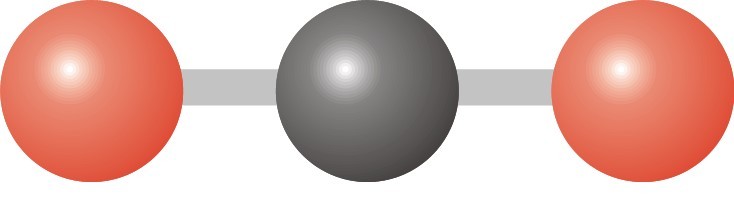
Which of the following molecular shapes describes a molecule that has 1 lone pair and 4 atoms bonded to a central atom?
Linear
Trigonal Planar
Sawhouse
T-Shaped
Square Planar

