
 Worksheets
Review - Units 1-2
Total questions: 100
Worksheet time: 3580secs
2. The last MAJOR battle of the American Revolution was the __________.
Battle of Bunker Hill
Battle of Trenton
Battle of Yorktown
Battle of Lexington
- What is considered the first battle of the American Revolution?
Lexington and Concord
Trenton
Bunker Hill
Yorktown
Who was the main author of the Declaration of Independence?
Thomas Jefferson
George Washington
Ben Franklin
John Adams
This treaty formally ended the American Revolution
Treaty of Ghent
Treaty of Boston
Treaty of Paris of 1783
What was one purpose of the Declaration of Independence?
to establish a framework for government
to express reasons for limiting immigration
to state the reasons for the colonies to separate from England
to list arguments for women’s suffrage
The Battle of Saratoga was significant in the Revolutionary War because it
ended the British threat to the South
convinced the French to support the Americans
guaranteed Canadian help for the colonists
forced the British to withdraw from North America
This American victory was the turning point in the war.
Saratoga
Bunker Hill
Yorktown
Lexington and Concord

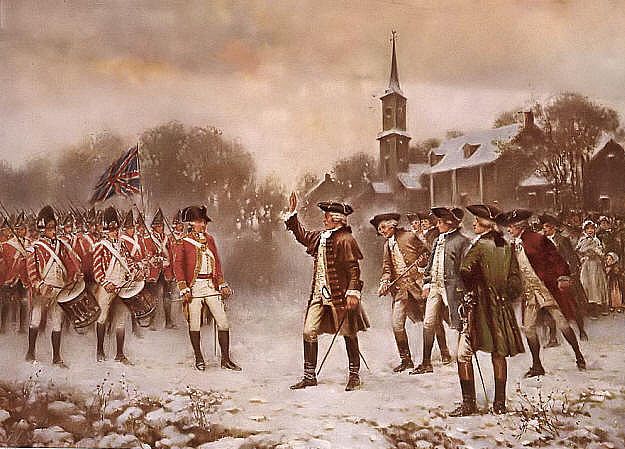
What event is depicted in this image?
Battle of Bunker Hill
Boston Massacre
Boston Tea Party
Lexington and Concord

Samuel Adams and Paul Revere led members of the Sons of Liberty in this protest against taxes.
First Continental Congress
Boston Massacre
Boston Tea Party
Stamp Act Congress
The U.S. was founded on July 4, 1776, by the approval of this document.
the Treaty of Paris
the Declaration of Independence
the Constitution
the Virginia Charter
What are unalienable rights?
rights given by the president
rights the government can't take away from you
rights given by congress
What is a grievance?
Compliment
Complaint
Criticism
Which document would you find a grievance?
Constitution
Fundamental Orders of Connecticut
Bill of Rights
Declaration of Independence
At the Battle of Yorktown...
The British won
The British surrendered
The French joined the war

To refuse to buy or use certain goods or services
siege
prohibit
boycott
traitor
A war that took place from 1754-1763 that led Great Britain to start taxing the Colonists (to pay them back for the war expenses)
The Civil War
Revolutionary War
French and Indian War
The French Revolution
A colonist of the American revolutionary period who supported the King and the British (England's) cause.
Loyalist
Patriot
Englishman
Traitor
A colonist who favored independence from Great Britain and war against Britain
Patriot
Loyalist
Ally
War Hawk
Why did the British put a tax on paper materials in the colonies? (The Stamp Act)
The British did not like the colonists
The British would use that money to buy weapons
King George needed money to pay the soldiers
The British were in debt because of the French/Indian war
What was the name of the group of protesters that formed in Boston in response to the Stamp Act (and sometimes threatened violence to frighten tax collectors)?
The Tea Tax
Patrick Henry
The Sons of Liberty
The British Parliament

What was the name of the event in Boston on December 1773, where people dumped chests of tea into the Boston Harbor in protest?
The Stamp Act
The Boston Tea Party
The Revolutionary War
The battle of Bunker Hill

He was the King of England during the American Revolution. He was often blamed for being a tyrant.
King Phillip
King Charles
George Washington
King George III
What was the name of the new laws that the British imposed on the colonies, as a result of The Boston Tea Party?
The Intolerable Acts
The Townshend Act
The Boston Tea Party
The First Continental Congress
What was the name of the Intolerable Act that declared the colonists to provide shelter, food, and weapons to the British soldiers?
The Quartering Act
The Massachusetts Government Act
The Administration of Justice Act
The Boston Port Act
What was the name of the event when 12 out of 13 colonies sent representatives to a meeting in Philadelphia because they were alarmed at what was happening in Boston, Massachusetts?
First Continental Congress
Virginia Representatives
The Boston Tea Party
The Midnight Ride

What was the name of the pamphlet written by Thomas Paine that contained propaganda encouraging men to join in the Revolution.
Common Sense
Declaration of Independence
The Scoop
Treaty of Paris
A nation that works with another nation for a common purpose
ally
friend
enemy
partner
The shutting of a port to keep people or supplies from moving in or out
cancel
blockade
boycott
siege
The refusal to obey unjust laws using nonviolent means
siege
boycott
blockade
civil disobedience
A type of warfare in which small, informal military groups use surprise attacks and hit-and-run tactics
siege
mercenary
total war
guerrilla warfare
A soldier who fights for pay, often for a foreign country
militiaman
mercenary
Continental soldier
sniper
An army of citizens who serve as soldiers during an emergency
volunteer unit
mercenaries
militia
Continental Army
Colonial militia volunteers who were prepared to fight at a minute's notice
mercenaries
allies
Patriots
minutemen
A formal written request to someone in authority that is signed by a group of people
letter
petition
application
proposal
A person who betrays his or her country
Patriot
Loyalist
Traitor
Mercenary

What was the famous quote of the colonists when protesting the British?
No taxation without representation
No representation without taxation
No taxation on tea without cream and sugar
No taxation without illumination

Allegations or statements spread deliberately to further a cause or damage an opposing cause
Propaganda
Bias
slogan
Name-calling
An economic concept where it was believed that colonies existed to contribute to the wealth and power of the mother country
Coercion
Socialism
Capitalism
Mercantilism
An act of Parliament in 1765 which levied a direct tax on almost all paper items in the colonies including legal documents, pamphlets and playing cards
Stamp Act
Sugar Act
Quartering Act
Tea Act

Tax on British goods such as paint, glass, lead, paper, and tea.
Quartering Act
Townshend Acts
Tea Act
Proclamation of 1763
George is friends with both the Patriots and Loyalists because he does business with both. He is a...
Patriot
Loyalist
Neutralist

Led by _________, this group led boycotts and protests against the British Parliament.
Samuel Adams
John Adams
George Washington
Michael Jordan
Smuggling is defined as _______
paying for goods
sneaking goods in and out
stealing money
throwing away pineapple pizza
What was the British policy of ‘salutary neglect towards their colonies?
A system of high taxes on nearly all goods to enrich the British monarch
A system where the British mostly ignored their colonies and let them rule themselves
A policy of severe punishment for anyone not following British laws or not paying taxes
The granting of independence to anyone who wants it
a proposal by Ben Franklin to create a united government for the British colonies
Patriot
Loyalists
Albany Plan of Union
Writ of Assistance


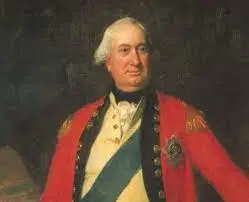
Who am I?
British General
Surrendered at Battle of Yorktown
King George III
General Cornwallis
George Washington
Thomas Jefferson

German that trained the American Army at Valley Forge
George Rogers Clark
Benedict Arnold
Cornwallis
Baron Von Stueben
German (Prussian soldier) who trained Continental troops at Valley Forge
Marquis de Lafayette
Friedrich von Steuban
Bernardo Galvez
Nathan Hale
This religious revival swept through the colonies and it inspired religious freedom and led to the creation of new types of churches.
Great Awakening
Westward Movement
Ten Percent Plan
Industrial Revolution
This was a pattern of trade between the Americas, Africa, and Europe.
Underground Railroad
Triangular Trade
Trade Union
Tenant Trade Route
The main reason for the settlement of Jamestown for for __________________.
economic opportunity
religious freedom
the first colony in the U.S.; set up
in 1607 along the James River in Virginia
(1620) a document
written by the Pilgrims establishing
themselves as a political society and setting
guidelines for self-government
the Age of Reason; movement
that began in Europe in the 1700s as people
began examining the natural world, society,
and government
Why did Europe colonize North America?
To win wars against other european nations
To expand in africa
For trade and new resources
To spread political ideas
Why was Maryland established?
For debtors
For catholics
For quakers
For puritans
The Northern Colonies economy was primarily -
Industrial
Agricultural
Plantation Farming
Slave Labor
The Southern Colonies economy was primarily -
Industrial
Agricultural
Subsistance Farming
Wage Labor
Which European country ruled the 13 colonies?
Spain
France
Britain
the Netherlands
Which region was established primarily for religious freedom and relied on fishing and shipbuilding?
Southern Colonies
New England Colonies
Middle Colonies
Which region established plantations and made money off cash crops and slave labor?
Southern Colonies
New England Colonies
Middle Colonies
What year was the first permanent English settlement established?
1492
1776
1607
1706

Who benefits most from mercantilism?
The Colonies
The Mother Country
Cotton was a cash crop in which region?
New England
Middle
Southern
Why are the Middle Colonies know as the breadbasket?
they eat a lot of bread there
most wicker baskets are made there
People get punched in the stomach all the time there
Lots of grains like wheat and rye are the grown there
An agreement between indviduals that created a government that would provide order and protect the rights of the colonists; written by a group of English Puritans in Massachusetts in 1620.
English Bill of Rights
Mayflower Compact
Magna Carta
Cato's Letters


After many weaknesses were realized in America's first written plan of government, Articles of Confederation, which document was written and ratified (approved) to become the supreme law of the U.S.?
Treaty of Paris 1783
The Declaration of Independence
The U.S. Constitution

