
Font size
 Worksheets
6 History IA #1 Review
Total questions: 23
Worksheet time: 12mins
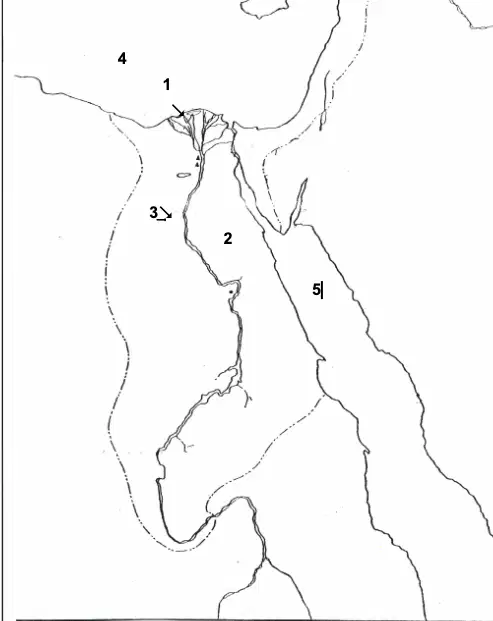
Looking at the map of Egypt, what is number #1 represents?
Nile River
Lower Egypt
Red Sea
Upper Egypt
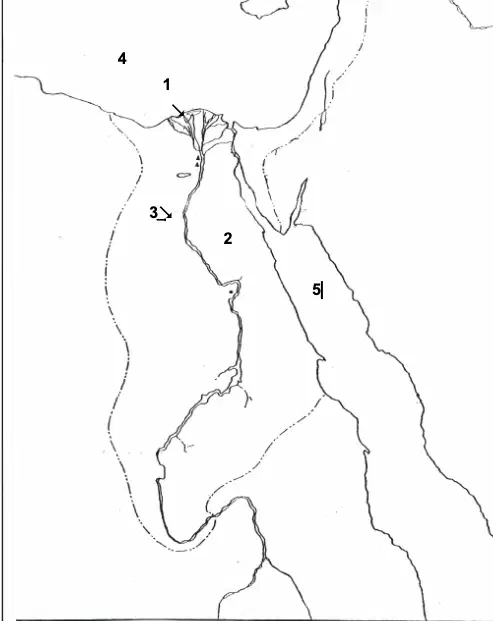
Looking at the map of Egypt, what is number #2 represents?
Upper Egypt
Mediterranean Sea
Nile River
Lower Egypt
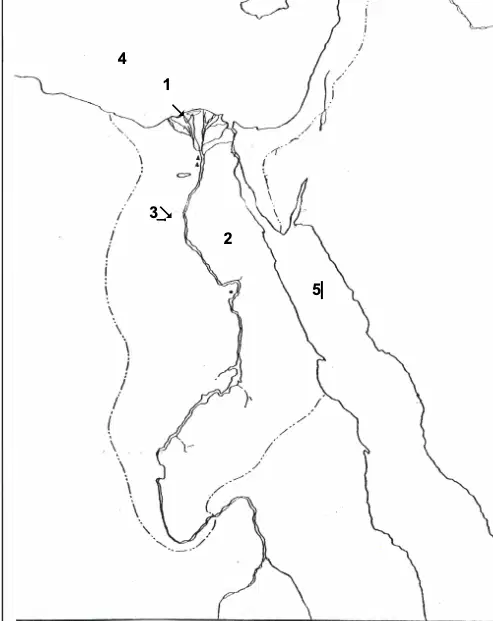
what is the natural feature that #3 represent?
Mediterrranean Sea
Red Sea
Nile River
Upper Egypt
What is the purpose of a physical Map
It shows certain theme like population of an area, or literary rate of a country.
It shows natural feature like rivers, ocean, sea, mountains, forests, & deserts.
It shows the the size & boundaryof cities, states, counties, country.
What is the purpose of a thematic Map
It shows certain theme or information like population of an area, or literary rate of a country.
It shows natural feature like rivers, ocean, sea, mountains, forests, & deserts.
It shows the the size & boundaryof cities, states, counties, country.
What is prehistory? How do we study it?
Time before written language, study with fossil, artifacts & oral stories.
Time before human, study with Fossil, artifacts & oral stories.
Time before dinosaurs, study with primary & secondary sources
Time before Lucy, study with website & podcast.
What were the effects of Neolithic Revolution?
the food surplus was created
People took different jobs based on their skills.
the development of human settlementhuman learned.
human learned how to farm.
The Fertile Crescent is located between which features?
The Nile River and Red Sea
The Tigris and Euphrates Rivers
The Arabian Desert and the Tigris River
Who or which ruler created the world’s first empire?
King Nebuchadnezzar
King Sargon
King Hammurabi
Queen Hatshetsput
Why do historians study epics poem?
It showed who was the best kings or queens.
It shows why drama was important to ancient civilzation
It shows what values did ancient civilization view important
It shows what ancient civilization was good at.
What was the Sumerian form (Mesopotamian) of writing called?
Cuneiform
Pictographs
Epics poem
Hieroglyphics
Why was Hammurabi’s Code significant to world history?
He traveled the world in 80 days.
He build the first empire that we know of.
He was the first to codified system of laws.
He build a green garden for his queen.
In what direction does the Nile River flow?
North
South into
East Into
West Into
How did the flooding of the Nile differ from the flooding of the Tigris and Euphrates?
The Nile River had salt water only.
The Nile River was not able to bring natural resource for the Egyptians.
The Nile River was able easy to be navigate for travel.
Beside flooding, Egyptians were storing the water use for their dry season.
Who was the leader that first conquered and united Upper and Lower Egypt?
Queen Hatshepsut
Pharaoh Menes
Pharaoh Akhenatan
King Sargon
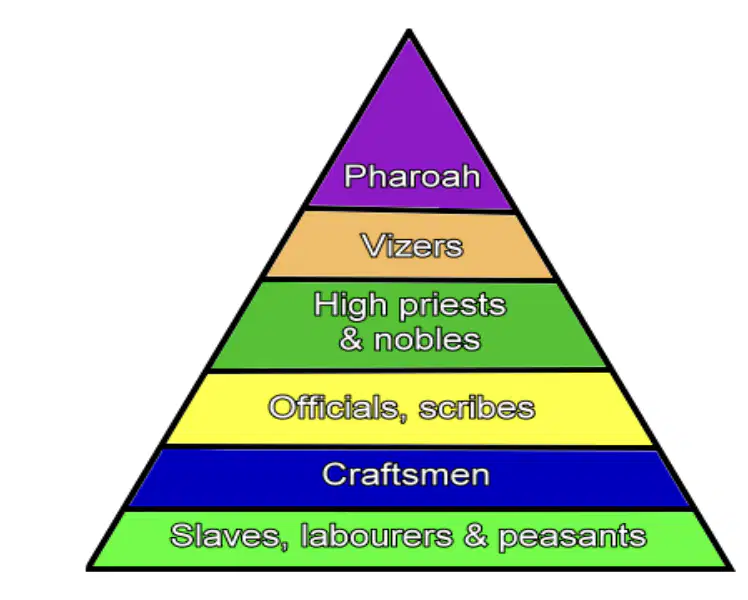
What does the diagram above demonstrate about Egyptian society?
There were fewer nobles than there were slaves in the population.
The Vizier was the pharaoh’s closest advisor.
There was little social mobility in Egypt, esp. for those at the bottom.
Slaves and craftsmen were the largest proportion of the population.
How did divine kingship prevent Egyptians from removing power from the pharaoh?
The belief stated that pharaohs were awesome celebrities.
It stated that pharaohs should be treated as normal people.
The belief stated pharaohs were half gods & half humans.
How did Egyptians ensure the Ka would not suffer in the afterlife?
They build pyramids to house & protect the body w/ the person's belongings.
They would leave jewelry, clothes, and their mummified pets for the person.
They used the proccess of mummification to protect one's body from decay.
What pharaoh was the first to build the pyramids?
Pharaoh Menes
Queens Hatshepsut
King Hammurabi
Pharaoh Djoser
What was the Egyptian system of writing?
Papyrus
Cuneiform
Pictogram
Hieroglyphics
What material did the Egyptians write on? Why?
papyrus because they can strong paper like materials.
cave wall because Egyptians lived in caves.
clay tablet because they can find clays on the river banks.
What was Akhenaten known for as Pharaoh?
He united upper & lower Egypt.
He turned Egypt into a monotheistic society under his rule.
He build the first pyramid in Egypt.
He defined gender roles as ruler of Egypt.
What was Queen Hatshepsut's achievement as leader of Egypt?
She united upper & lower Egypt.
She turned Egypt into a monotheistic society under his rule.
She build the first pyramid in Egypt.
She became Co-regent with her stepson, and ruled the empire for decades.

