
 Worksheets
Geometry Review
Total questions: 121
Worksheet time: 7hrs 50mins
3, 5, 8
What is the range of possible third side measures using 10 and 15?
9 < x < 16
10 < x < 15
1 < x < 5
5 < x < 25
Measurements of 4 cm, 7 cm, and (a) form a triangle
Measurements of 10 in, 18 in, and (a) form a triangle.
Which of the following measures DO NOT make a triangle?
4, 5, 6
5, 5, 11
10, 10, 1
42, 21, 22
1) If the longest side of the triangle was 10. Then the two shorter sides must have a sum that is ....?
any length
equal to 10
greater than 10
less than 10
The sum of the lengths of any two sides of a triangle is _____ than the third side
less
greater
equal
a triangle with two congruent sides
isosceles triangle
scalene triangle
equilateral triangle
acute triangle
15, 12, 9
Which set of side lengths could NOT be used to form a triangle?
2 cm, 6 cm, 7 cm
7 cm, 15 cm, 8 cm
5 cm, 5 cm, 5 cm
8 cm, 9 cm, 6 cm

What is the missing angle measure in the triangle?
24°
34°
44°
46°

Which shows the side lengths of the triangle in order from greatest length to least length?
AB, BC, AC
AC, BC, AB
BC, AC, AB
AC, AB, BC

Which of the following shows the relationship among the side lengths of the triangle?
p < l < c
l < c < p
c < p < l
p < c < l
Two sides of a triangle have measures of 6 inches and 12 inches. Which measure could be the length of the third side?
5 in
6 in
10 in
18 in
Which set of side lengths could be used to form a triangle?
4 ft, 5 ft, 9 ft
8 ft, 6 ft, 15 ft
12 ft, 2 ft, 10 ft
5 ft, 8 ft, 12 ft

Which of the following shows the relationship among the angle measures of the triangle?
m∠X < m∠O < m∠V
m∠O < m∠X < m∠V
m∠O < m∠V < m∠X
m∠V < m∠X < m∠O
Mario is designing a logo for the drama club. The logo is a triangle with a 100° angle and a 40° angle. What is the measure of the third angle of the logo?
60°
50°
40°
30°
Brooke drew a triangle. One side of the triangle is 6 centimeters long. Another side of the triangle is 11 centimeters long. Which could be the length of the third side of the triangle?
3 centimeters
5 centimeters
12 centimeters
17 centimeters

Elm Street, Third Street, and Maple Avenue intersect to form a triangle. What is the measure of the angle formed by Third Street and Maple Avenue?
30°
40°
45°
75°
Two angles of a triangle are 25° and 50°. The side lengths are 5 centimeters, 9 centimeters, and 11 centimeters. Which statement is true?
The 9 cm side is opposite the 25° angle.
The 5 cm side is opposite the 25° angle.
The 11 cm side is opposite the 50° angle.
The 5 cm side is opposite the 50° angle.

The traffic sign is an example of an equilateral triangle. An equilateral triangle has 3 equal angles. What is the measure of each angle?
30°
45°
50°
60°
Which set of side lengths could be used to form a triangle?
4 in, 5 in, 6 in
8 in, 12 in, 4 in
11 in, 10 in, 21 in
5 in, 7 in, 12 in
Keith drew a triangle. One angle measures 78°. Another angle measures 27°. What is the measure of the third angle of the triangle?
75°
63°
51°
12°
An isosceles right triangle has a 90° angle and two equal acute angles. What is the measure of each of the acute angles?
35°
40°
45°
50°
Two side lengths of a triangle are 14 meters and 9 meters. The length of the third side is also a whole number. What is the smallest possible length, in meters, of the third side?
(a)
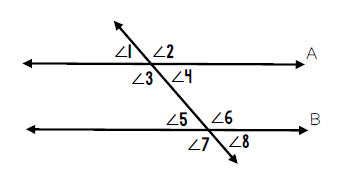
Angle 1 and Angle 5 are examples of which type of angle pair?
Alternate exterior angles
Alternate interior angles
Vertical angles
Corresponding angles
Angle 3 and Angle 6 are examples of which type of angle pair?
Alternate exterior angles
Alternate interior angles
Vertical angles
Corresponding angles
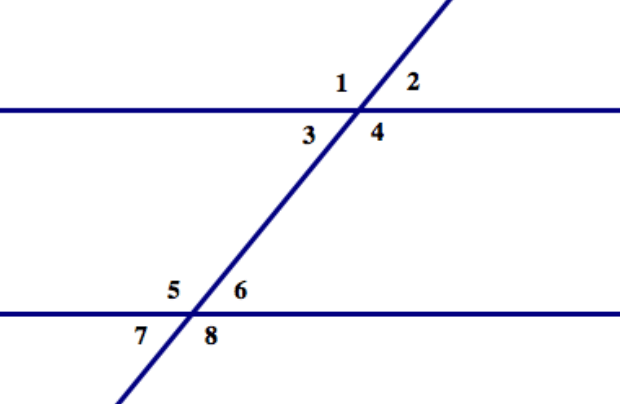
Angles ∠1 and ∠8 are...
Alternate Interior
Alternate Exterior
Corresponding
Consecutive (Same-side Interior)
Angles ∠1 and ∠5 are....
Alternate Interior
Alternate Exterior
Corresponding
Consecutive (Same-side Interior)
Angles ∠3 and ∠5 are....
Alternate Interior
Alternate Exterior
Corresponding
Consecutive (Same-side Interior)
Angles ∠2 and ∠7 are....
Alternate Interior
Alternate Exterior
Corresponding
Consecutive (Same-side Interior)
Angles ∠3 and ∠6 are....
Alternate Interior
Alternate Exterior
Corresponding
Consecutive (Same-side Interior)
Angles ∠4 and ∠6 are....
Alternate Interior
Alternate Exterior
Corresponding
Consecutive (Same-side Interior)
Angles ∠6 and ∠7 are....
Alternate Interior Angles
Linear Pair (Supplementary & Adjacent)
Corresponding Angles
Vertical Angles
Angles ∠5 and ∠7 are....
Alternate Interior Angles
Linear Pair (Supplementary & Adjacent)
Corresponding Angles
Vertical Angles
Angles ∠6 and ∠3 are....
Alternate Interior Angles
Linear Pair (Supplementary & Adjacent)
Corresponding Angles
Vertical Angles
Angles ∠6 and ∠5 are....
Alternate Interior Angles
Linear Pair (Supplementary & Adjacent)
Corresponding Angles
Vertical Angles
Angles ∠5 and ∠8 are....
Alternate Interior Angles
Linear Pair (Supplementary & Adjacent)
Corresponding Angles
Vertical Angles
Which of these is NOT a Linear Pair?
Angles 1 & 3
Angles 6 & 7
Angles 7 & 8
Angles 2 & 4
Which of these angle pairs are Same-side Interior (Consectutive)?
Angles 1 & 3
Angles 6 & 7
Angles 7 & 8
Angles 3 & 5
Which pair of angles are an Alternate Exterior pair? Choose 2!
Angles 3 & 6
Angles 1 & 8
Angles 2 & 7
Angles 1 & 7
Which of these angle pairs are Alternate Interior? Choose 2.
Angles 3 & 6
Angles 1 & 4
Angles 2 & 7
Angles 4 & 5
Which one of these is NOT a Vertical Angle Pair?
Angles 1 & 5
Angles 2 & 3
Angles 5 & 8
Angles 6 & 7
Which pair of angles are Corresponding? Choose 3!
Angles 1 & 5
Angles 4 & 8
Angles 3 & 7
Angles 2 & 4
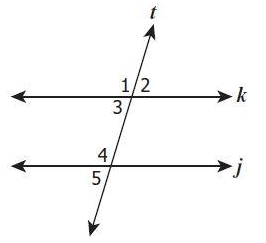
Angle 1 and Angle 5 are examples of which type of angle pair?
Alternate exterior angles
Alternate interior angles
Consecutive or Same Side Interior
Corresponding angles
Angle 3 and Angle 6 are examples of which type of angle pair?
Alternate exterior angles
Alternate interior angles
Consecutive or Same Side Interior
Corresponding angles
Angle 3 and Angle 5 are examples of which type of angle pair?
Alternate exterior angles
Alternate interior angles
Consecutive or Same Side Interior
Corresponding angles
Angle 1 and Angle 8 are examples of which type of angle pair?
Alternate exterior angles
Alternate interior angles
Consecutive or Same Side Interior
Corresponding angles
Angle 3 and Angle 4 are examples of which type of angle pair?
Consecutive or Same Side Interior
Corresponding angles
Vertical Angles
Linear Pair
Angle 2 and Angle 3 are examples of which type of angle pair?
Consecutive or Same Side Interior
Corresponding angles
Vertical Angles
Linear Pair




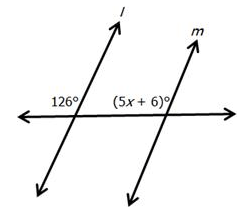

Find the value of x. Type only the number.
(a)

Find the value of x. Type only the number.
(a)
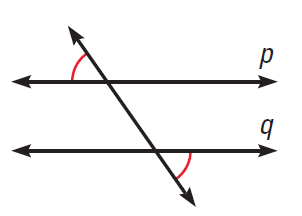
Which reason explains why the two lines are parallel?
Corresponding Angles Converse
Alt. Interior Angles Converse
Alt. Exterior Angles Converse
Consecutive Int. Angles Converse
Not Enough Information to Prove Parallel

Which reason explains why the two lines are parallel?
Corresponding Angles Converse
Alt. Interior Angles Converse
Alt. Exterior Angles Converse
Not Enough Information to Prove Parallel
Vertical Angles Theorem
Match the following:

Same-side Interior Angles

Alternate Exterior Angles

Alternate Interior Angles

Corresponding Angles

What do we call lines that cross?
Parallel
Perpendicular
Intersecting
Transversal
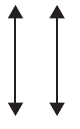
What do we call lines that will never intersect?
Parallel
Perpendicular
Intersecting
Transversal
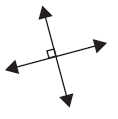
What do we call lines that intersect and form 90 degree angles?
Parallel
Perpendicular
Intersecting
Transversal
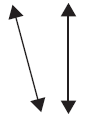
Are these lines parallel?
Yes
No

Are these perpendicular lines?
No
Yes


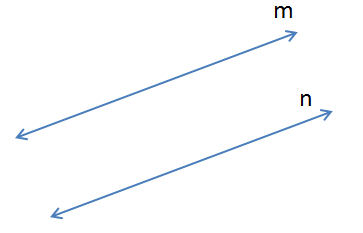
The slopes of parallel lines are...
the same
opposite
always different
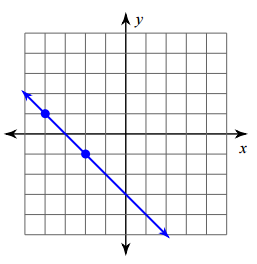
(6,7) and (4,2)
(2, 4) and (6, 12)
(10, 1) and (5, 2)

What is the slope represented in the table?
slope: 21
slope: 2
slope: −21
slope: −2

What is the Slope represented in this table?
slope: −41
slope: −4
slope: 41
slope: 4
m = 5/8
Line 1: (15, 20), (17, 18)
Line 2: (-22, -18), (-20, -16)
The two lines are _____________________.
Parallel
Perpendicular
Neither
y = 3x - 3
These lines are...
Match the following opposite reciprocal
-2/3
3/2
5/4
-4/5
15/4
-4/15
-7/5
5/7
What is the slope of this line?
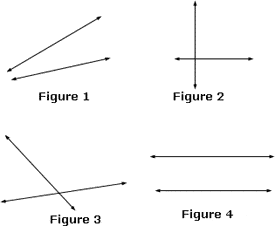
Two lines that are perpendicular lines have ...
Slope that is opposite reciprocals
No Slope
Slope that is the same
none of the above
The following represents slopes of two lines. Are they parallel, perpendicular, or neither?
m = 1/5 and m = 1/5
(a)
(10, 1) and (5, 2)
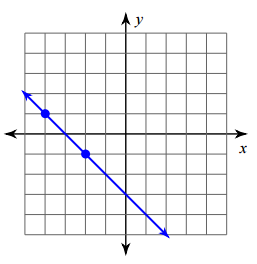
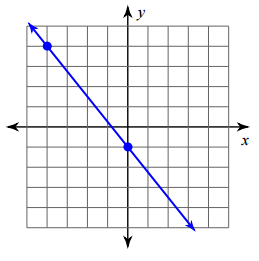
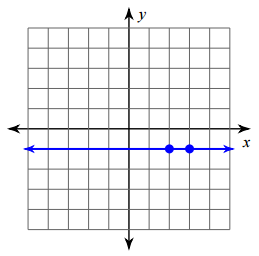
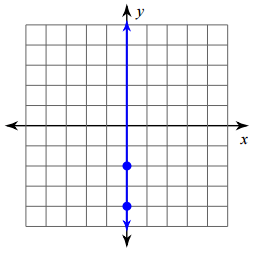
opposite reciprocals. (different signs and flipped over)
opposites.
identical.
always 7.
opposite reciprocals. (different signs and flipped over)
opposites.
identical.
always 7.
What slope is parallel to 3/4
4/3
3/4
-3/4
-4/3
What slope is parallel to 4
4
-1/4
-4
1/4
What slope is perpendicular to 5/8
-5/8
5/8
-8/5
8/5
What slope is perpendicular to 3
-3
-1/3
1/3
3
Use slope to determine if the lines are parallel, perpendicular, or neither:
A line with these points (-9,-4) and (-7,-1), and a line with these points (-2,5) and (-6,-1)
Parallel
Perpendicular
Neither
Use slope to determine if the lines are parallel, perpendicular, or neither:
A line with these points (-4,17) and (1,-3), and a line with these points (-9,3) and (-5,4)
Parallel
Perpendicular
Neither
Use slope to determine if the lines are parallel, perpendicular, or neither:
A line with these points (12,-2) and (5,-10), and a line with these points (-4,10) and (4,3)
Parallel
Perpendicular
Neither
Use slope to determine if the lines are parallel, perpendicular, or neither:
A line with these points (-3,14) and (2,-1), and a line with these points (4,8) and (-2,-10)
Parallel
Perpendicular
Neither
Use slope to determine if the lines are parallel, perpendicular, or neither:
A line with these points (-6,16) and (2,-4), and a line with these points (-6,14) and (-2,4)
Parallel
Perpendicular
Neither
Use slope to determine if the lines are parallel, perpendicular, or neither:
A line with these points (2,-1) and (-3,-1), and a line with these points (-11,9) and (-7,9)
Parallel
Perpendicular
Neither
Are these lines parallel, perpendicular, or neither?
y = 4x + 2
y = (-1/4)x + 12
parallel
perpendicular
neither
Are these lines parallel, perpendicular, or neither?
y = (-1/2)x + 1
y = (1/2)x - 5
parallel
perpendicular
neither
Are these lines parallel, perpendicular, or neither?
y = 12x + 4
y = 12x +14
parallel
perpendicular
neither

What is the location of Point A?
(6,2)
(2,6)
(2,1)
(1,2)
If we rotate the triangle 90° clockwise where would point A be?
If we rotate the triangle 90° clockwise where would point B be?
If we rotate the triangle 90° clockwise where would point C be?
If we rotate the triangle 90° counter clockwise where would point A be?
If we rotate the triangle 90° counter clockwise where would point C be?
If we rotate the triangle 90° counter clockwise where would point B be?
What would point L be after the rotation?

What would point F be after the rotation?

