
Font size
 Worksheets
HM Unit 4 Pre-Quiz
Total questions: 48
Worksheet time: 30mins
A marsh and a swamp are the same thing.
True
False
A marsh has a greater proportion of open water surface
True
False
Which is not a type of Marsh
Salt marshes
Freshwater marshes
Saltwater tidal marshes
Freshwater tidal marshes
The water of a marsh can be
fresh
brackish
saline
all of the above
Which of these retain water year round
Vernal pools
Prairie potholes
Playa lakes
Wet meadows

This picture is
Wet meadows
Prairie potholes
Playa lakes
Vernal pools
Salt marshe are nourished with sediment from inflowing rivers and streams.
True
False
Most salt marshes have a ___ topography with ___ elevations.
low,high
high, low
low, low
high, high
A Lagoons is a type Salt marsh.
True
False
The low physical energy and high grasses provide a refuge for animals.
True
False
Many marine fish use open waters as nursery grounds for their young before they move to salt marshes.
True
False
Which is not a food found for birds in the marsh
fish
frogs
insects
shellfish
worms
Marshes are formed by sediment
erosion
deposition

Which type of mangrove is seen here?
white
black
purple
red
How many type of mangroves are there?
2
3
4
5

What type of mangrove is seen here?
white
red
black
yellow
Mangroves are found on the entire east and west coast of the United States of America.
TRUE
FALSE

What type of mangrove leaf is seen here?
white
red
grey
black

What are these specialized roots?
phragmities
prop roots
onion roots
rhizomes

What type of mangrove leaf is seen here?
white
buttonwood
red
purple

What is the general name for mangrove seeds?
prop roots
lenticles
propagules
seedlings

What are these specialized roots called?
pneumoniacoccus
nematocysts
pnuematophores
matadors

What type of mangrove "seed" is seen here?
red
white
black
green

This mangrove is not considered a true mangrove.
Black Mangrove
Buttonwood Mangrove
Red Mangrove
Blue Mangrove

What is the function of these specialized roots?
air exhange
filter bacteria
poke people in the feet
no function

What specialized seed type is seen here?
white mangrove
black mangrove
red mangrove
green mangrove

What best describes a mangroves natural habitat?
estuarine
grasslands
taiga
savanna

What best describes these seeds?
viviparous
oviparous
ovoviviparous

2. Saltwater Marsh Animals
blue crab, hermit crab, shrimp
kelp, sea grass, red algae
cordgrass, glasswort, oxeye
coralline algae, phytoplankton

Estuary Plants
water lilies, algae, cattails
mallard duck, crayfish, snapping turtle
mangrove, sea rush, oioi, jointed rush
great blue heron, river otter, horseshoe crab, starry flounder

Freshwater Wetland/Swamp Plants
blue crab, hermit crab, shrimp
coralline algae, phytoplankton
green heron, fowlers toad, blue winged teal
duckweed, cypress tree, water tupelo

Estuary Animals
frilled shark, giant spider crab, Atlantic wolf fish, fangtooth fish
mangrove, sea rush, oioi, jointed rush
great blue heron, river otter, horseshoe crab, starry flounder
mallard duck, crayfish, snapping turtle

Saltwater Marsh Plants
coralline algae, phytoplankton
kelp, sea grass, red algae
blue crab, hermit crab, shrimp
cordgrass, glasswort, oxeye

Shallow Marine Plants
kelp, sea grass, red algae
coral, anemone, green turtle, spotted moray eel
cordgrass, glasswort, oxeye
blue crab, hermit crab, shrimp

Deepwater Marine Animals
green heron, fowlers toad, blue winged teal
blue crab, hermit crab, shrimp
frilled shark, giant spider crab, Atlantic wolf fish, fangtooth fish
coralline algae, phytoplankton

1. Which of the following is NOT a marine species of a plant?
Reeds
Mangroves
Rushes
Seagrasses
Azaleas

Which of the following is a threat to marine plants?
Dredging
Prop Scars
Coastal Development
All of these are correct

__ plants live entirely under water
Emergent
Submergent

Salt marsh grasses are __ plants
Emergent
Submergent
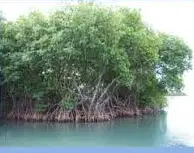
What is a way that plants have adapted to live in salt water?
Salt Glands
Waxy Coverings
Succulent Leaves and Stems
All of these are correct
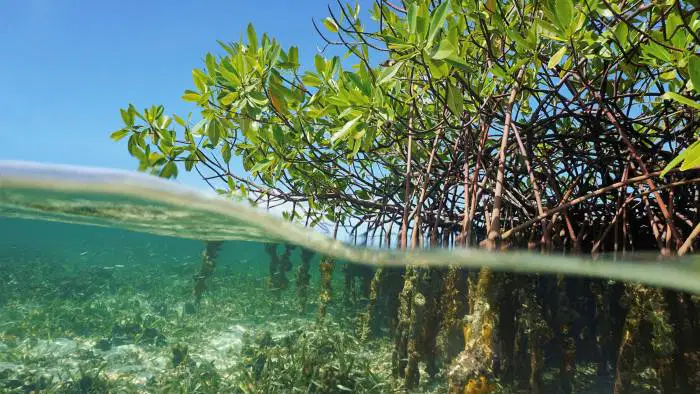
Which of the following is NOT one of the major Marine habitats?
Seagrasses
Salt Marsh
Seaweeds
Mangroves

Which of the following is an adaptation of Dunes / Upper Beach plants?
Store water in their stems
Leaves have a waxy coating
Both of these are correct
Neither of these are correct

Seagrasses grow totally under water
True
False
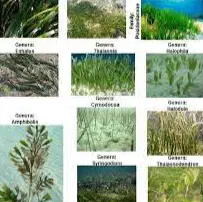
All of the following are types of common seagrasses EXCEPT:
Snake grass
Turtle grass
Eelgrass
Manatee grass
Paddle grass

Which is the most widely distributed seagrasses?
Surf grass
Turtle grass
Eelgrass
Manatee grass
Paddle grass
These areas of dark, muddy sand exposed at low tide accumulate decaying organic matter, giving off a foul odor.
Barrier beach.
Mudflats.
Mangrove swamps.
Lagoon.

An assemblage of mangrove trees found in coastal habitats.
Mangrove pod.
Mangrove swamp.
Mangrove herd.
Mangrove patch.
What are filter feeders?
A large pile of living organisms and the animals that live among them.
An organism that attaches onto another organism and feeds off of it.
Animals that feed by removing tiny bits of food from the water.
Producers