
 Worksheets
AP Bio Unit 2 Review
Total questions: 60
Worksheet time: 1hrs 11mins
During osmosis, water always moves from an area of ____ solute concentration to ____ solute concentration.
high, high
high, low
low, low
low, high
Cells in the pancreas will incorporate radioactively labeled amino acids into proteins. This "tagging" of newly synthesized proteins enables a researcher to track their location. Predict the most likely pathway of an enzyme secreted by pancreatic cells.
ER -> lysosomes -> vesicles that fuse with the plasma membrane
Golgi apparatus -> ER -> lysosome -> cytoplasm
Nucleus -> ER -> Golgi apparatus -> cytoplasm
Rough ER -> Golgi -> secretory vesicle -> Plasma membrane
what is osmoregulation?
Control of water and salt in the body
Control of blood pressure in the body
Control of blood glucose in the body
The diffusion of water through the cell membrane along its own concentration gradient is known as (a) .
What is the primary role of aquaporins?
To transport water across the membrane.
To change the state of water from gas to liquid.
To pump water into the mitochondria for cellular respiration.
To use water for hydrolytic purposes.
Does water require aquaporins to move across a cell membrane?
Yes, aquaporins are essential for the movement of water across a cell membrane.
No, water can move across the cell membrane without aquaporins.
Which substance would most easily pass through the cell membrane?
Oxygen
Glucose
Sodium ions
Water
What kinds of molecules pass through a cell membrane most easily?
ionic
small and hydrophobic
large polar
large and hydrophobic
Which of the following describes the endosymbiotic theory?
A prokaryotic cell engulfed several other types of smaller prokaryotic cells, and eventually its compartmentalization made the cell eukaryotic.
A eukaryotic cell engulfed several other types of smaller prokaryotic cells, and eventually its compartmentalization made the cell prokaryotic.
A prokaryotic cell engulfed several other types of smaller eukaryotic cells, and eventually its compartmentalization made the cell eukaryotic.
A eukaryotic cell engulfed several other types of smaller eukaryotic cells, and eventually its compartmentalization made the cell prokaryotic.
Which of the following is one way that cells increase their surface area without increasing their size?
Cells will often include perfectly spherical membranes.
Cells will often include folds in their membranes.
Cells will often include holes in their membranes.
Cells will maximize their volume.
Which of the following is required for facilitated diffusion?
ATP
Concentration gradient
Glycolipid
Membrane Protein

What ions do this protein carrier pump from low to high concentration?
calcium and lithium
nitrogen and sodium
sodium and potassium
potassium and calcium
How does a carrier protein typically return to its original shape after undergoing a conformational change during the transport of substances across a biological membrane?
The carrier protein spontaneously reverts to its original conformation without any external influences.
ATP hydrolysis provides the energy required for the carrier protein to regain its original shape.
Interaction with other proteins in the membrane promotes the carrier protein's return to its original state.
The phosphate provided by ATP will detach causing the protein to return to its original state.
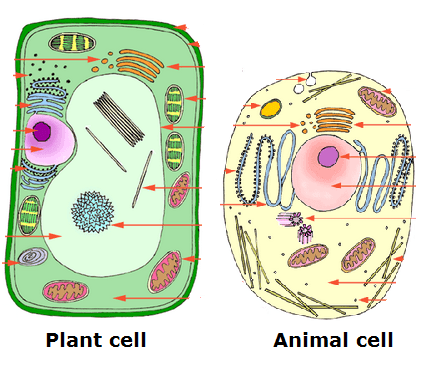
What distinguishes a plant cell from an animal cell? (How do you tell them apart) Hint: There's 3 ways (Check all 3)
Central Vacuole
Mitochondria
Cell Wall
Ribosomes
Chloroplasts

An experiment was set up to determine the movement of molecules through a dialysis-tubing bag into water. A dialysis-tubing bag containing 5% lactose and 5% fructose was placed in a beaker of distilled water, as illustrated. After four hours, fructose is detected in the distilled water outside of the dialysis-tubing bag, but lactose is not. What conclusions can be made about the movement of molecules in this experiment?
Fructose, being a monosaccharide, diffused through the dialysis bag into the distilled water. However, lactose, being a disaccharide, could not diffuse through the dialysis bag.
Fructose was homogenized by lactose, allowing the fructose to diffuse through the dialysis bag and into the distilled water. Lactose is not homogenized, so it could not pass through the dialysis bag.
Fructose and lactose are oppositely charged and separated out due to the force of repulsion.
Fructose diffused because of the pore specificity of the semipermeable membrane, not because of its concentration gradient.

Calculate the water potential of a 1.0 M sucrose solution at 22⁰C under standard atmospheric conditions.
24.51
-24.51
-49.03
-22.69
Calculate the water potential of a 0.6 M NaCl solution at 10⁰ C under standard atmospheric conditions
47.03
-47.03
-14.11
-28.22
If the intracellular concentration is 1.0 M and extracellular concentration is 0.4M. Which direction does water flow?
Both in and out (equilibrium)
Into the cell
Out of the cell
Cellular eating, use pseudopod to engulf food
Exocytosis
Phagocytosis
Pinocytosis
Receptor Mediated Endocytosis

B is a ____.
Peripheral protein
Glycoprotein
Glycolipid
Cholesterol
What is the function of carbohydrates on the membrane? (glycolipids and glycoproteins)

Which do BOTH prokaryotes and eukaryotes contain?
nucleus
mitochondria
ribosomes
cell wall
Which cell type tends to be smaller?
Prokaryote
Eukaryote
there is not a size difference

Which of the following is found only in eukaryotic cells?
nucleus
DNA
cell membrane
ribosomes

Assuming that the purple molecules are too large to pass through the membrane, what would happen to the water level as a result of osmosis?
The water level would rise on the A side
The water level would rise on the B side
The water level would remain constant
The water level would drop on the A side.
If a cells Ψp = 3 bars and its Ψs = -4.5 bars, what is the resulting Ψ ?
-7.5
7.5
-1.5
1.5

Which of the following is a difference between smooth and rough endoplasmic reticulum (ER)?
Smooth ER exists in a part of the cell near the cell membrane, while rough ER exists in a part of the cell near the nucleus.
Smooth ER is not studded by ribosomes, while rough ER is studded by ribosomes.
Smooth ER is meant to compartmentalize the cell, while rough ER detoxifies and synthesizes lipids.
Smooth ER is made without the additional help of proteins, whereas rough ER is made with the help of special proteins called reticuloproteins.
The theory of Endosymbiosis explains
The origin of eukaryotes
How bacteria live
How species develop
Why cells rely on one another
What are the main structural and functional benefits of cell compartmentalization? (Select ALL correct answers.)
increased surface area for more nutrient and wasted exchange
decreased surface area for greater mobility
membrane separated microenvironments for specialized biochemical reactions
specialization of compartments leads to increased overall cell efficiency
Compartmentalization means a cell
has membrane bound organelles.
is undivided.
is simple.
All of the above
Which of the following are pieces of evidence that support the theory of endosymbiosis in mitochondria and chloroplasts? (Select ALL correct answers.)
both organelles have their own DNA which is similar in structure to some modern day bacteria
both organelles are more independent than other organelles
both organelles have a double, not a single, membrane
both organelles have a large surface area
both organelles reproduce in a manner similar to modern day bacteria
If a cells Ψp = 3 bars and its Ψs = -4.5 bars, what is the resulting Ψ ?
-7.5
7.5
-1.5
1.5
What is the Ψs of a 1.0M sugar solution at 22 ° C under standard atmospheric conditions?
-24.5 bars
24.5 bars
-2.45
2.45
Which of the following organelles have highly folded membranes to increase efficiency?
(Select all that apply)
Endoplasmic Reticulum
Ribosome
Mitochondria
Vesicles
Which of the following is NOT a function of the Golgi apparatus?
Processes proteins and lipids
Modifies proteins and lipids
Packages proteins and lipids
Creates proteins and lipids
Match each organelle to the correct function
Rough ER
Protein synthesis and processing
Smooth ER
Lipid synthesis and detoxification
Golgi Apparatus
Modification and packaging of proteins
Mitochondria
Energy production
Lysosome
Digestion of waste materials
Cell need a (a) surface area to volume ratio in order to (b) cell efficiency.

Which of the following is least efficient?
A
B
C
D
The descriptions to the correct terms
Nonpolar substances are
hydrophobic
Polar substances are
hydrophilic
When a substance has polar and nonpolar regions are
amphipathic
What is a channel protein?
What is the primary difference between active and passive transport?
Explain the difference between exocytosis and endocytosis.
What is membrane potential?
Which of the following impacts a cells membrane potential?
Ion concentration gradients
You put a cell into a solution, the cell SWELLS. Is the solution hypotonic or hypertonic to the cell?
hypertonic
hypotonic
isotonic
not enough information

If a cells Ψp = 3 bars and its Ψs = -4.5 bars, what is the resulting Ψ ?
-7.5
7.5
-1.5
1.5
What is the measure of how likely water is to move from one location to another?
Water concentration
Water potential
Water pressure
Water equilibrium
What is the effect of solutes on a solution's overall water potential?
Increases water potential
Decreases water potential
Has no effect on water potential
Creates equilibrium

Describe the movement of molecules going through the proteins in the illustration.
Molecules are moving from a higher concentration to a lower concentration.
Molecules are moving from a lower concentration to a higher concentration.
Molecules are moving from a higher concentration to a lower concentration and then from a lower to higher concentration.
Molecules are moving from a lower concentration to a higher concentration and then from a higher concentration to a lower concentration.
Drag the labels to the appropriate area
hydrophilic
hydrophobic

