wayground logo

Free Printable Worksheets

Font size

S
M
L
XL
Worksheets

6th Grade Benchmark Review

Total questions: 89

Worksheet time: 1hrs 26mins

Name
Class
Date
1.
Which type of rock results from melting and cooling of magma?
a)
Igneous
b)
Metamorphic
c)
Sedimentary
d)
Extrusive
2.
Which type of rock forms from extreme heat and pressure?
a)
Igneous
b)
Sedimentary
c)
Organic
d)
Metamorphic
3.
A metamorphic rock changes into an igneous rock by what two processes?
a)
Melting and cooling
b)
Extreme heat and pressure
c)
Compaction and cementation
d)
Weathering and erosion
4.
Wind, water, and ice breaking down rock is called
a)
Erosion
b)
Deposition
c)
Compaction
d)
Weathering
5.
What is the MAIN way rocks are classified?
a)
Their color and shapes
b)
How they form
c)
Mineral bands
d)
Where they form
6.
When sediments are pressed together tightly, this is called ____________.
a)
Compaction
b)
Cementation
c)
Weathering
d)
Erosion
7.
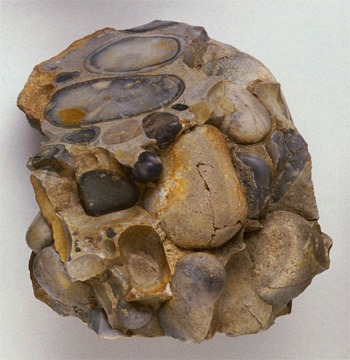
This rock was formed by smaller pieces of rock that settled at the bottom of a lake millions of years ago. What type of rock is this?
a)
Sedimentary
b)
Igneous
c)
Metamorphic
8.
What are the 3 major types of rocks?
a)
Igneous, Metamorphic, Sedimentary
b)
Metamorphic, Igneous, Cementation
c)
Brown, Red, Gray
d)
Streak, Hardness, Breakage
9.
This rock is made from tiny pieces of other rocks that settled to the bottom of a valley millions of years ago. What type of rock is this?
a)
Sedimentary
b)
Igneous
c)
Metamorphic
10.
This rock cooled on the outside of a volcano and contained air bubbles when it was forming. What type of rock is this?
a)
Sedimentary
b)
Igneous
c)
Metamorphic
11.
After lots of time, pressure, and heat, you get this kind of rock. What type of rock is this?
a)
Sedimentary
b)
Igneous
c)
Metamorphic
12.
The core is mostly made up mostly of which elements?
a)
Oxygen and Silicon
b)
Silicon and Magnesium
c)
Nickel and Iron
d)
Iron and Magnesium
13.

What are the two types of crust?

a)

Continental and Landforms

b)

Oceanic and Mountains

c)

Mountains and Landforms

d)

Oceanic and Continental

14.
Which layer of the Earth is the only liquid layer?
a)
Outer Core
b)
Inner Core
c)
Mantle
d)
Lithosphere
15.
Which layer is considered the thinnest layer?
a)
Mesosphere
b)
Core
c)
Mantle
d)
Crust
16.
What is the correct order of Earth's layer starting from the surface?
a)
Crust, mantle, outer core, inner core
b)
outer core, inner core, crust, mantle
c)
crust, outer core, inner core, mantle
d)
mantle, outer core, inner core, crust
17.

What do geologists call the crust and uppermost mantle?

a)

lithosphere

b)

mesosphere

c)

asthenosphere

18.

Which of Earth’s layers is the thickest?

a)

core

b)

crust

c)

mantle

19.

In which layer is the asthenosphere located?

a)

mantle

b)

core

c)

crust

20.

In which layer do convection currents take place?

a)

core

b)

mantle

c)

crust

21.

A large, giant supercontinent land mass is called

a)

continental drift

b)

plate tectonics

c)

pangaea

d)

oceanic crust

22.

Plates that diverge or move apart from each other

a)

divergent

b)

transform

c)

convergent

d)

lithosphere

23.

Cracks or breaks in earth's crust where plates slip past each other

a)

subduction

b)

faults

c)

mid-ocean ridge

d)

san andreas

24.

Continental plate collides with another continental plate creates

a)

volcanoes

b)

earthquake

c)

trench

d)

folded mountains

25.

Occurs when a less dense plate slides under a more dense plate

a)

tectonic plates

b)

subduction

c)

continental drift

d)

landmass

26.

What type of plate boundary is shown in the picture

a)

convergent

b)

divergent

c)

transform

d)

faults

27.

Plates boundary where plates slide or move past each other

a)

divergent

b)

continental drift

c)

transform

d)

convergent

28.

The type of geological event that occurs under transform boundaries

a)

folded mountains

b)

earthquakes

c)

volcanoes

d)

tsunamis

29.

What plate boundary is shown in the picture?

a)

convergent

b)

divergent

c)

transform

d)

neither

30.

What type of plate boundary is shown in the picture?

a)

folded mountains

b)

transform

c)

convergent

d)

divergent

31.

Which natural occurance causes the tectonic plates to move?

a)

ocean plates subducted under continental plates

b)

convection currents

c)

continental drift

d)

earthquakes

32.

Subduction occurs under which plate boundary?

a)

lithosphere

b)

divergent

c)

convergent

d)

transform

33.

Which description of the energy conversions in this process is correct?

a)

The chemical energy in the fuel-air mixture is converted to thermal energy, which is then converted to mechanical energy

b)

The mechanical energy in the fuel-air mixture is converted to electrical energy, which is then converted to thermal energy

c)

The electrical energy in the fuel-air mixture is converted to mechanical energy, which is then converted to thermal energy

d)

The thermal energy in the fuel-air mixture is converted to electrical energy, which is then converted to mechanical energy

34.

Students build a circuit that has wires that connects a battery to a switch and a fan.

Which energy transformations happen when the students close the circuit and the blades of the fan begin to spin?

a)

Chemical to mechanical to electrical

b)

Electrical to chemical to mechanical

c)

Chemical to electrical to mechanical

d)

Mechanical to electrical to chemical

35.

Which energy transformation happens when the blades are spinning as shown?

a)

Electrical to mechanical

b)

Chemical to electrical

c)

Mechanical to electrical

d)

Chemical to mechanical

36.

Which statement describes the energy changes that occur when water in a tea kettle is heated on a stove that uses natural gas?

a)

Chemical energy to thermal energy to sound energy

b)

Thermal energy to sound energy to light energy

c)

Electrical energy to thermal energy to sound energy to light energy

d)

Light energy to chemical energy to kinetic energy to sound energy

37.

A cook heats a meal in a microwave oven. What energy transformations occur between the microwave oven and the meal?

a)

Electrical energy to light energy to chemical energy

b)

Chemical energy to thermal energy to light energy

c)

Electrical energy to electromagnetic energy to thermal energy

d)

Chemical energy to electromagnetic energy to chemical energy

38.

A teacher rubbed a match against a piece of sandpaper. The match started to burn. Which statement best describes the energy changes that occurred?

a)

The chemical energy stored in the match changed to thermal energy and light energy

b)

The thermal energy stored in the match changed to light energy and chemical energy

c)

The light energy and thermal energy stored in the match changed to mechanical energy

d)

The light energy and thermal energy stored in the match changed to chemical energy

39.

This appliance dries clothes primarily by converting -

a)

electrical energy to heat and mechanical energy

b)

mechanical energy to heat and electrical energy

c)

electrical energy to heat and light

d)

mechanical energy to heat and vaporization

40.

When a lion eats a zebra and then uses the energy from the zebra to run, the lion's body converts =-

a)

chemical energy to mechanical energy

b)

electrical energy to chemical energy

c)

chemical energy to light energy

d)

mechanical energy to chemical energy

41.

What energy transformations occur when propane gas is used to lift the balloon?

a)

Mechanical -> light -> chemical

b)

Chemical -> mechanical -> thermal

c)

Thermal -> chemical -> light

d)

Chemical -> thermal -> mechanical

42.

Match the following

a)

Electrical Energy

1.

Electrical Outlet

b)

Chemical Energy

2.

Battery

c)

Mechanical Energy

3.

Movement

d)

Thermal Energy

4.

Heat

43.

Match the following

a)
1.

Chemical Energy

b)
2.

Thermal Energy

c)
3.

Light Energy

d)
4.

Mechanical Energy

44.

Boiling Water (a)  

Choose from the below words
Conduction
Convection
Radiation
45.

Curling Iron (a)  

Choose from the below words
Conduction
Convection
Radiation
46.

Weather Patterns (a)  

Choose from the below words
Conduction
Convection
Radiation
47.

Sun Bathing (a)  

Choose from the below words
Conduction
Convection
Radiation
48.

Mantle (a)  

Choose from the below words
Conduction
Convection
Radiation
49.

Feet on Hot Sand (a)  

Choose from the below words
Conduction
Convection
Radiation
50.

Lava Lamp (a)  

Choose from the below words
Conduction
Convection
Radiation
51.

Heat Lamps (a)  

Choose from the below words
Conduction
Convection
Radiation
52.

Cold Pack on Person

a)

Heat is transferred from the cold pack to the person.

b)

Heat is transferred from the person to the cold pack

c)

The cold pack is getting warmer. The person is getting colder.

d)

The cold pack is getting colder. The person is getting warmer.

53.

What is the transfer of heat by movement of liquids or gases? (a)  

Choose from the below words
Radiation
Convection
Conduction
Heat
54.

What is a transfer of heat energy by electromagnetic waves? (a)  

Choose from the below words
Radiation
Convection
Conduction
Heat
55.

What is the transfer of heat by direct contact? (a)  

Choose from the below words
Convection
Electromagnetic waves
Radiation
Conduction
56.

What is the measurement of the average kinetic energy of a substance? (a)  
Choose from the below words
Kinetic energy
Temperature
Thermal energy
Potential energy
57.

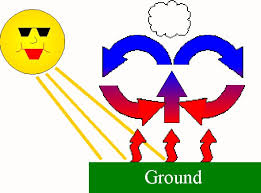
Warm air rises and the cool air sinks. This is...

(a)  

58.

Heat transfers from an area of (a)   temperature to an area of (b)   temperature.

Choose from the below words
high to low
low to high
high to high
59.

Warm water from the ocean moves to the north while cool waters moves to the south. This is an example of..  (a)  

Choose from the below words
Conduction
Convection
Radiation
60.

If an object has particles that are moving very quickly, the object 's temperature is probably (a)   .

Choose from the below words
cold
slow
big
hot
61.
You're holding hands with your best friend.  Your friend's hands are REALLY warm and yours are really cold.  After a few minutes, this has changed.  How might you explain what happened?
a)
The cold energy from your hand transferred to your friend's hand through conduction.
b)
The heat energy from your friend's hand transferred to your hand through conduction. 
c)
The cold energy from your hand transferred to your friend's hand through convection.
d)
The heat energy from your friend's hand transferred to your hand through convection.
62.

Match the following

a)

conduction

1.

ironing a shirt

b)

convection

2.

a radiator heating a cold room

c)

radiation

3.

a microwave heating food

63.

Heat transfer through waves is called___

a)

conduction

b)

convection

c)

radiation

64.

Which ball has the greater potential energy and why?

a)

The blue ball has more PE because it is closer to the ground.

b)

The blue ball has more PE because it has more mass.

c)

The green ball has more PE because it's height is greater.

d)

The green ball has more PE because it has less mass.

65.

Which pie chart represents the energy balance of the rollercoaster in this diagram?

a)

Choice A

b)

Choice B

c)

Choice C

d)

Choice D

66.

Which pendulum position has maximum KE?

a)

1

b)

2

c)

3

d)

4

67.

Which pendulum position has 50% PE and 50% KE?

a)

1

b)

2

c)

3

d)

4

68.

This diagram and formula illustrates

a)

kinetic energy

b)

potential energy

c)

mechanical energy

d)

none of the above

69.

Which of the three springs represents increased potential energy?

a)

The compressed spring only because potential energy is only gained when an object is squeezed.

b)

The stretched spring only because potential energy is only gained when an object is stretched out.

c)

The compressed and stretched spring both have elastic potential energy gained from being squeezed or stretched.

d)

none of the springs possesses potential energy

70.
Tyreese sprinted down the hallway for a science project. He ran a total of 40 meters in 20 seconds. What was his average speed?
a)
2 meters per second
b)
20 meters per second
c)
40 meters per second
d)
10 meters for second
71.
How far will a person go if they jog for 2 hours at a speed of 12 km/hr?
a)
6 km
b)
0.5 km
c)
10 km
d)
24 km
72.
Shona cycles at an average speed of 8km/h. How far has she travelled if she cycles for 4 hours?
a)
55km
b)
32km
c)
43km
d)
32miles
73.
A runners races in the 100 meter dash.  It takes her 10 seconds to finish.  What is her average speed?
a)
10 m/s
b)
1000 m/s
c)
100 seconds
d)
10 seconds
74.
What is the formula to calculate speed?
a)
S=t/d
b)
S=d/t
c)
S=d*t
d)
S=d*t
75.
Which is correct?
a)
speed = distance x time
b)
speed = speed divided time
c)
speed = distance divided by time
d)
speed = time x speed
76.
What is speed?
a)
how far you go
b)
how much distance is covered over a period of time
c)
how fast you accelerate
d)
the change in the location of a object
77.
Bob runs from 4:50 pm until 5:20pm at an average speed of 7km/h. How far did he go?
a)
4.5km
b)
2.5km
c)
3.5km
d)
14km
78.
Which is correct?
a)
speed = distance x time
b)
speed = speed divided time
c)
speed = Distance divide time
d)
Speed = time x speed
79.
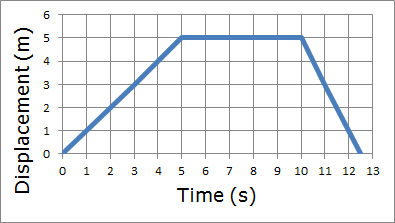
What does this graph represent?
a)
Constant Speed
b)
Acceleration
c)
Not moving
80.
What is happening at D?
a)
Stationary
b)
Accelerating
c)
Fast steady speed; moving away from the starting position
d)
Slower steady speed; moving away from the starting position
81.

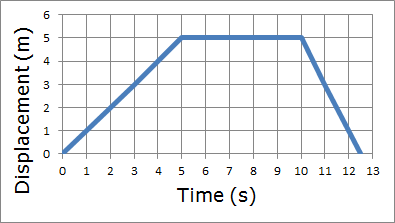
According to the graph how far does the person travel in the first 5 seconds?

a)

2 m

b)

10 m

c)

0 m

d)

5 m

82.
What is the person doing from 5 seconds to 10 seconds?
a)
Walking 
b)
Running
c)
Standing Still 
d)
Walking Fast
83.
What is the average speed of the person during the first 5 seconds?
a)
0 m/s
b)
1 m/s 
c)
3 m/s
d)
6 m/s 
84.
Which of the following is a unit of speed ?
a)
sec
b)
mi
c)
m/s
d)
min
85.
Which of the following is a unit of time?
a)
sec
b)
mi
c)
m/s
d)
km
86.
Which of the following is a unit of distance ?
a)
miles/hr
b)
mi
c)
sec
d)
min
87.
Which of the following is a unit of distance ?
a)
miles/hr
b)
hr
c)
km
d)
min
88.
What is this object doing?
a)
moving at a constant speed away from start and then stops
b)
increasing speed and then stops
c)
decreasing speed and then constant speed
d)
moving at a constant speed away from start and then constant speed
89.
A person walked 10 miles.  It took them 2 hours.  How fast were they walking?
a)
8 mph
b)
5 mph
c)
2 mph
d)
10 mph