
 Worksheets
Unit 3 Test Review - Cells and Transport
Total questions: 50
Worksheet time: 38mins
Which of the following converts food into energy for the cell?
vacuole
mitochondria
cytoplasm
cell membrane
The fluid that surrounds the organelles is... (hint... "Try to pull a fast one and..."
chloroplast
cytoplasm
vacuole
cell wall
Which organelle takes in "sun showers" and helps plants with the process or photosynthesis?
Vacuole
Mitochondria
Cytoplasm
Chloroplast
Active transport is the movement of large materials across a cell membrane from ______ to ______ concentration
high to low
low to high
high to high
low to low
Active transport across a cell membrane from low to high concentration, requires
energy (ATP)
no energy
water
oxygen
A type membrane protein that can pump one substance in one direction, while transporting another substance in the opposite direction.
pump transport
bulk transport
diffusion
osmosis
An example of pump transport is
glucose transport
osmosis
Na+/K+ Pump
CO2 + O2 Transport
white blood cells engulfing invading bacteria is an example of
Endocytosis
Exocytosis
Diffusion
Facilitated Diffusion
When the number of water molecules outside of the cell is greater than inside the cell, which will most likely occur?
Molecules of water will NOT MOVE either way.
Molecules of water will move OUT of the cell.
Molecules of water will move INTO the cell.
Molecules of water will EVAPORATE.
A cell that is unable to import substances required to process chemical energy is most likely a result of a malfunctioning of the ____________________.
cell membrane
golgi body
endoplasmic reticulum
nuclear envelope
The thin, semi-permeable membrane that encloses a cell allows nutrients to enter and wastes to be ____________________.
digested
recycled
protected
removed
All of the following are functions of a cell membrane EXCEPT
surrounding and protecting the contents of the cell.
releasing waste products from the cell.
producing energy for the cell processes.
allowing gases to enter the cell.
Which characteristic of a cell membrane allows it to control materials entering and leaving a cell?
A cell membrane is surrounded by fluid.
A cell membrane is semi-permeable.
A cell membrane holds organelles in place.
A cell membrane is found in plant and animal cells.
The processes of diffusion AND active transport are both used to...
break down molecules to release energy
move molecules into or out of cells of the body
bring molecules into cells ONLY when they are more concentrated outside of the cell
move molecules ONLY against a concentration gradient, using ATP molecules
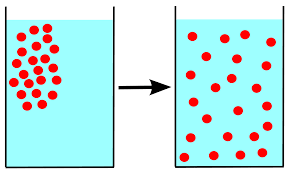


In which osmotic state does the cell shrink?
hypertonic
isotonic
hypotonic
In which osmotic state does the cell look normal?
hypertonic
isotonic
hypotonic
During which osmotic state does the cell swell and get bigger?
Hypertonic
Isotonic
Hypotonic
What happens to a cell in a hypertonic solution?
it shrinks
it swells and gets bigger
it stays the same
In which solution the cell happy and in a state of equilibrium?
hypertonic
hypotonic
isotonic
Which statement was NOT included in cell theory?
All living things are composed of cells.
Living cells come only from other living cells.
Each cell contains a cell membrane, cytoplasm, nucleus, mitochondria, and endoplasmic reticulum.
Cells are the smallest structure of living things that can perform the functions necessary for life.

Robert Hooke, Anton van Leeuwenhoek, Theodor Schwann, Rudolf Virchow, and Matthias Schliden were all responsible for what theory?
The Theory of Gravity
The Theory of Relativity
The Cell Theory
The Theory of Continental Drift
What is the basic structural and functional unit of all living things?
atom
cell
bacteria
animalcules
All cells come from ___________ cells
Both prokaryotes and eukaryotes have DNA.
True
False

Which type of cell?
Prokaryote
Eukaryote
Both
Neither

Which type of cells has a chloroplast?
Prokaryote
Plant Cell
Animal Cell
Bacteria
Plants and animal cells are examples of ___ cells
prokaryotic cells
eukaryotic cells
both eukaryotic and prokaryotic
neither
Which of the following is NOT a characteristic of a Prokaryotic cell?
unicellular
floating DNA
very small
complex
What type of cell has a nucleus?
eukaryotic
prokaryotic
neither
both
The __________ is the control center of a cell.
mitochondrion
nucleus
vacuole
Which cell part protects and provides shape for a plant cell?
nucleus
mitochondrion
vacuole
cell wall
The __________ produces energy in the cell.
mitochondrion
nucleus
vacuole
A cell membrane works to
store all information
give the cell support
keep thing in and out of the cell
get rid of waste
Which of the following shows the levels of organization in order from simple to complex?
1. Cell
2. Tissue
3. Organ
4. Organ System
5. Organism
1. Cell
2. Tissue
3. Organelle
4. Organ
5. Organ System
1. Tissue
2. Organelle
3. Cell
4. Organ
5. Organism
1. Organ
2. Tissue
3. Cell
4. Organism
5. Organ System

