
 Worksheets
Ancient Greece Review #2
Total questions: 55
Worksheet time: 1hrs 8mins


What is a form of government in which power lies in the hands of all citizens? (Remember in Ancient Greece not everyone was considered a citizen.)
Democracy
Assembly
Oligarchy
Tyranny


For instance, women COULD NOT participate in political activities or own property, and they were always under the care of a male family member.

Athens joined with other city-states to form a defensive league, or protective group, to defend its members against the Persians after the Persian War. What was it called?
Delian League
Council of Elders
General Assembly
Greek Alliance

Who was a great Greek thinker who taught young Alexander?
Aristotle
Olympias
Philip
Bucephalus
The belief in many gods and goddesses.
Monotheism
Polytheism
Monistic
Atheistic
Who was the goddess of wisdom and battle strategy?
Hera
Persephone
Athena
Aphrodite
Who is the king of all other god, the head god?
Zeus
Poseidon
Apollo
Helios

Premier Greek foot soldiers, dressed in leather and bronze body armor, carrying a bronze & leather shield, long spear, & short sword.
philosopher
hoplite
metic
phalanx

A person who studies ideas about knowledge, truth, the nature and meaning of life, etc.
philosopher
polis
strategoi
trireme

Who championed Democracy and extended citizenship in Greece after Cleisthenes?
Alexander the Great
Aristotle
Plato
Pericles
Who were the participants in the Peloponnesian War? (This also included The Delian League vs. The Peloponessian League.)
Corinth vs. Athens
Persia vs. Greece
Athens vs. Sparta
Sparta vs. Thebes
Mark all the people that were not allowed to vote in Athenian Democracy.
Men
Women
Slaves
Immigrants
Why is Ancient Greece considered important to Western Civilization?
Greek culture influenced today’s democracy, architecture, and entertainment
Athens defeated Sparta in the Peloponnesian Wars
The Greeks borrowed ideas from Rome and improved upon them
The Greeks invented the world’s first monotheistic religion
Which great leader is most closely associated with the spread of Hellenistic civilization?
Augustus Caesar
Chandra Gupta
King Phillip II of Macedonia
Alexander the Great

Greek tyrants were
hired soldiers.
all oppressive and wicked.
supporters of aristocrats.
rulers who seized power by force.

In ancient Athens, a woman who was married to a wealthy land-owner would most likely have been
teacher.
a homemaker.
active in politics.
active in business.

Choose the answer choice that correctly labels the City-State for symbol D on the map below.
Knossos
Athens
Olympia
Sparta

Choose the answer that correctly labels the geological feature for symbol B on the map below.
Island of Crete
Mt. Olympus
Peloponnese Peninsula
Gobi Desert
Which statement best describes the influence Solon and Draco had on Athenian society?
Solon and Draco created written legal code of law which created reforms to ensure greater fairness and justice to many Athenians
Solon and Draco created a government in which a small group of aristocrats held all power.
Solon and Draco denied citizenship to foreigners and enforced immigration laws
Solon and Draco ensured all citizens had equal opportunities to hold government positions.
Which of the following is a way the geography of Greece shaped how the Ancient Greeks lived?
They had one large united kingdom.
They were able to travel and communicate easily.
They never fished or traveled by sea.
They had small city-states that ran themselves.
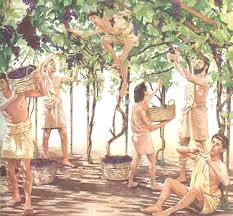
What crop did most farmers grow that needed less land?
grapes and olives
wheat and barely
grapes and wheat
barely and olives
What animal(s) would you most likely find on an ancient Greek farm?
cows
sheep and goats
horses
Llamas


What is the best title for this list?
Types of Incan roads
Types of Roman arches
Types of Egyptian pyramids
Types of Greek columns
How did geography influence the development of ancient Greece?
The rugged mountainous terrain led to the creation of separate city-states
Open plains and numerous rivers allowed for the creation of a large and powerful empire
Ease of trade and communication led to enhanced unity among all Greeks
Mountains in the south provided for isolation of Greece from the rest of the world
What is a government ruled by the people--direct or representative?
tyrrany
democracy
monarchy
Athenian
Who were the helots?
nobles who ran the country
slaves who worked the land
merchants or artisans who lived in the villages
soldiers who protected the city-state

The Olympic games were held in honor of what?
Athena, the Goddess of Wisdom
Zeus, the King of all Gods
The Summer Solstice

Ancient Greece is .....
flat, with a lot of land to grow many different crops, and thousands of islands
flat, with out arable land to grow crops
Mountainous with a lot of land to grow many different crops
Mountainous without much arable land to grow crops, and thousands of islands
Why is Greece so important to understanding Western Civilization (The Civilization you live in)
We borrowed their government, culture, olympics, art, philosophy, science theories, theater and plays, language
We borrowed their weapons, religion, clothes, shoes, music, food, and art.
We borrowed their way of life
We borrowed their religion, military, clothes, singing, movies, technology, language, houses, dogs
Athens was known as the birthplace of
democracy.
war.
philosophy.
slavery.
Person who rebuilt the Parthenon during the "Golden Age" of Greece?
Alexander the Great
Julius Caesar
Pericles
Philip II
Who fought in the Peloponnesian War?
Athens (Delian) Vs Persia
Sparta (Peloponnesian League) & Persia
Athens (Delian League) & Sparta (Peloponnesian League)
The Trojan Horse is filled with...
Greek soldiers
Trojan women
tasty food
gasoline and wood
Who is the god of the seas?
Poseidon
Zeus
Odysseus
Kronos
How was the development of Greek city-states impacted by their geography? Pick all that apply
They developed separate cultures
They traded by sea
They established colonies in other places
They were easily united under one government
During every Olympics, there was a strictly enforced _________, or agreement not to fight.
procession
pagan
truce
treaty
One effect of rugged, mountainous geography on the civilization of ancient Greece was the development of
absolute monarchies
separate, independent city-states
extensive trade with the Persians
belief in one God
Greek playwrights were famous for writing
cartoons
anime
drama and comedies
novels
Intense military training occurred in which Greek city-state?
Athens
Sparta

Which civilization welcomed Alexander and proclaimed him pharaoh?
Egypt
Persia
India
What is the name for the era of Greek-like culture Alexander spread throughout his empire?
Alexandria
Hellenistic
Macedonian
Medieval
During the Golden Age, the __________________, a temple dedicated to the goddess Athena, was rebuilt.
Parthenon
Pantheon
Oracle of Delphi
Erechtheion
Hoplites fought in a formation called__________
polis
phalanx
persians
hoplite

