
 Worksheets
Science - Pre Test
Total questions: 211
Worksheet time: 3hrs 56mins
Choose all the items that are elements.
NaCl (table salt)
Sulfur
O2
Water
Air
Choose all of the items that are compounds.
NaCl (table salt)
Sulfur
O2
Water
Air
Choose all of the items that are mixtures
NaCl (table salt)
Sulfur
O2
water
Air
Which element is similar to Li?
Be
K
Which element is similar to Mg?
Ca
B
Which element is similar to B?
C
Al
Which element is similar to F?
Ne
Cl
Which element is similar to He?
H
Ar
Which element is the least reactive?
Li
Ne
B
C
Which element is the least reactive?
Mg
Na
C
S
Which choice shows the elements in order from most reactive to least reactive. Sr, K, Cl, P
Sr, K, Cl, P
K, Cl, Sr, P
K,P, Sr, Cl
K, Sr, P, Cl
Students in Mrs. Clark's science class are investigating a substance that has the following properties
-shiny
-bends easily
-hard, not easily broken
Based on these properties how would you classify the substance?
metal
nonmetal
metalloid
Which best describes the sequence of the elements in Period 5 of the periodic table?
highly reactive gases, relatively nonreactive metals, metalloids, very nonreactive gases, nonreactive nonmetals
highly reactive metals, relatively nonreactive metals, metalloids, reactive nonmetals, nonreactive gases
nonreactive gases, metalloids, nonreactive metals, highly reactive metals, highly reactive gases
nonreactive gases, nonreactive metals, highly reactive metals, metalloids,
reactive nonmetals, reactive gases

Carbon
Hydrogen
Aluminum
Lithium


Elements in a .................. have similar chemical properties.
period
group
row
Elements in the same group have : (2 correct answers)
Similar chemical properties
Similar names
Same number of outer (valence) electrons)
The same number of protons

The blue elements (left side) are called
lithium
2 energy levels
helium
1 energy level
aluminum
3 energy levels
bromine
4 energy levels
strontium
5 energy levels

which 2 elements have the same number of valence electrons?
Mg
Ca
B
He
which 2 elements have the same number of valence electrons?
Mg
Ca
B
He

which 2 elements have the same properties like families
Ne
He
Fe
Mg
Groups run:
up and down
left to right
Periods run:
up and down
left to right

Which two elements share common characteristics based on the periodic table?
Sodium and Magnesium
Chlorine and Sulfur
Argon and Neon
Calcium and Bromine

How are the 3 elements in the picture organized on the periodic table?
Niobium and cobalt have the same energy levels.
Cobalt and scandium have the same energy levels.
Cobalt and scandium have the same characteristics.
Niobium and cobalt have the same characteristics.
Metals are on the:
Left side
Right Side
Stairstep
Metalloids are on the:
Left side
Right Side
Stairstep
Nonmetals are on the:
Left side
Right Side
Stairstep
A student is studying a mystery substance. It breaks easily. It has a very dull luster. It doesn't conduct any electricity. What is the most likely substance this is?
Metal
Metalloid
Nonmetal
The same student works with a new substance. He concludes it conducts electricity very well. It has a very shiny luster. When he hammers it, it simply dents and flattens. What is the most likely substance type?
Metal
Metalloid
Nonmetal
The third substance the student works with is a little brittle. It is just a little shiny. When he tries to conduct electricity through it at first, it doesn't conduct, but upon heating up, it does start to allow electrons to flow. What is the most likely substance type?
Metal
Metalloid
Nonmetal
In nature a relationship between two organisms that last a long time is called ...
parasitism
symbiosis
mutualism


Which of these diseases is caused by a bacterium?
rabies
influenza
strep throat
chicken pox
The flu, which is caused by Influenza, is caused by a?
Bacteria
Virus
Which pathogens are largest in size?
Viruses
Bacteria
Both viruses and bacteria are about the same size
Which are considered pathogens which can cause diseases?
Viruses
Bacteria
Both viruses and bacteria
Which can come in a variety of shapes and sizes?
Viruses
Bacteria
Both viruses and bacteria
Composed of a protein coat called a capsid which contains DNA or RNA, or never both?
Viruses
Bacteria
Both viruses and bacteria
These are considered to be living organisms _________________.
Viruses
Bacteria
Both viruses and bacteria
These are considered to be non-living particles __________________.
Viruses
Bacteria
Both viruses and bacteria
Which one(s) reproduce on their own both sexually and asexually?
Viruses
Bacteria
Both viruses and bacteria
Which one(s) reproduce by hi-jacking a host cell machinery?
Viruses
Bacteria
Both viruses and bacteria
A disease causing microorganism such as fungi, protozoans, parasites, bacteria, or virus is called a _____________________.
Pathogen
Infectious Disease
Virus
Bacteria
Antibiotics can treat infections caused by __________________.
viruses
bacteria
viruses or bacteria
anything
These are single-cell organisms ______________________.
Viruses
Bacteria
Both viruses and bacteria
What is a host?
An organism that eats another organism
An organism or a cell that the virus needs to reproduce in
Something that causes harm to the cell
The person that greats you at a resturant

Where is DNA stored in a eukaryotic cell?
Cytoplasm
Mitochondria
Ribosomes
Nucleus

Which type of cell is this?
Prokaryotic Cell
Eukaryotic Cell

This is a picture of:
Prokaryotic Cell
Eukaryotic Cell
What do you need to be able to see bacteria?
Microscope
Telescope
Sunglasses
3D Glasses
Where are bacteria located?
No where.
Every where!
Only in the restroom.
On my hands only.
Tiny single-celled organisms that live almost everywhere
ribosomes
cytoplasm
bacteria
virus
Bacteria are prokaryotes, meaning they ________.
lack a nucleus
are very large
contain no DNA
have a cytoplasm
Bacteria are prokaryotes, meaning they ________.
lack a nucleus
are very large
contain no DNA
have a cytoplasm

Which of these statements is true?
A virus is unicellular, it has only one cell.
A virus may sometimes be multicellular, have many cells.
A virus has no cells
A viruses are considered
Living
Non-living
When a virus attaches to a host, what does it inject into the host
protein coat
Capsid
DNA/ RNA
Envelope
Which pathogen is non-living?
Virus
Bacteria
Fungi
Parasite/Protist
They are all alive
Which type of pathogen is responsible for causing the flu, chicken pox, and yellow fever?
viruses
parasites
fungi
bacteria
Which pathogen is treated with antibiotics?
virus
bacteria
parasite
fungi
Athlete's Foot is caused by:
fungus
bacteria
parasite
virus
Diabetes
Tetanus
Measles
Malaria is a common disease in many countries. What type of pathogen is malaria?
a virus
a bacterium
a fungus
a protist
Sabrina has the flu. Her neighbor suggests she get a prescription for an antibiotic, but Sabrina's mothers says that antibiotics would not help in this situation. Why?
the flu is caused by a virus, and it cannot be treated with an antibiotic.
the flu is caused by a fungus, and it must be treated with antifungal medication
the flu is caused by a parasitic worm, and must be treated with an anti-parasitic medication
the flu is caused by a bacterium, and it cannot be treated with an antibiotic.

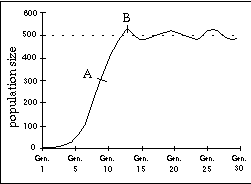
In the graph to the right, what is the population of deer at the carrying capacity of the environment?
3
7
70
40


A lion and a cheetah attempt to occupy the same niche. The more aggressive lion survives; the cheetah does not.
Density-Dependent: Competition
Density-Independent: Competition
Density-Dependent: Predator-Prey
Density-Independent: Predator-Prey
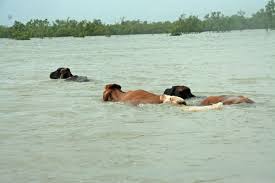
Since lynx prey on hares, an increase in the hare population causes an increase in the lynx population.
Density-Dependent: Competition
Density-Independent: Competition
Density-Dependent: Predator-Prey
Density-Independent: Predator-Prey
What will happen if all of the frogs in a population die?
The frogs' predators will decrease and the frogs' prey will increase
The frogs' predators will increase and the frogs' prey will decrease
We better all pray because there isn't anymore frogs.
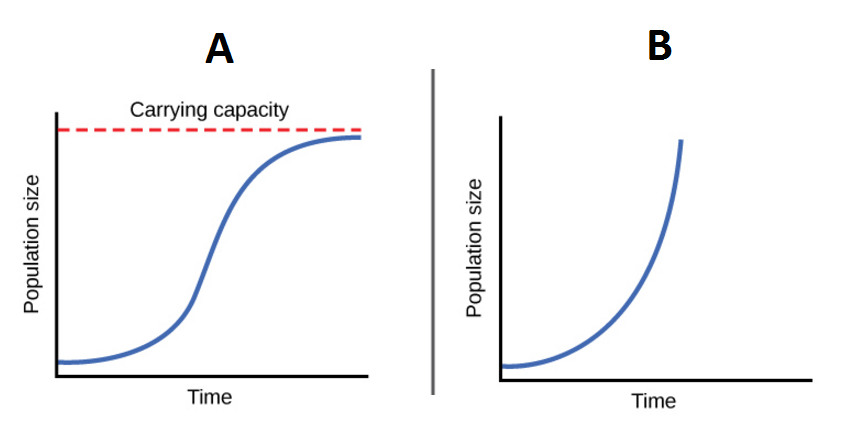
What type of growth model is shown in image A?
Exponential
Logistic
What type of growth model is shown in image B?
Exponential
Logistic

What are the 3 types of dispersion?
Size, Density, Dispersion
Groups, Couples, Single
Near, Far, Wherever you are
Random, Clumped, Uniform

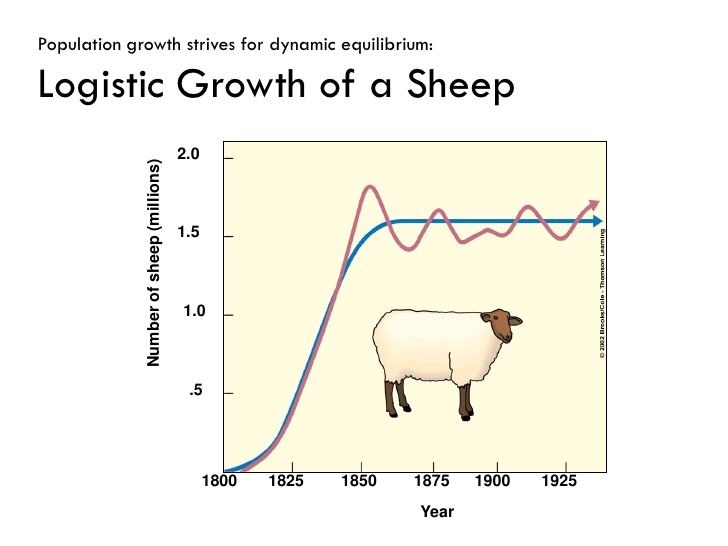
What does the yellow line represent?
exponential growth
logistic growth
carrying capacity
none of the above
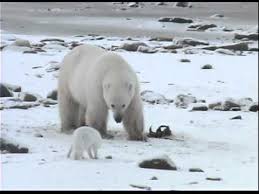
Two arctic fox are fighting with a polar bear for a sea lion carcass. One fox distracts the bear while the other eats. What type of limiting factor is the polar bear?
Predator-Prey Relationships
Competition
Herbivory Effect
Weather

A group of elephants gets stuck in mud at the edge of the river from a recent mud slide. A lion waits for an elephant to get tired before it attacks. What is the limiting factor to the elephant population?
Predator-Prey Relationships
Natural Disaster
Herbivory Effect
Competition

A duck population normally begin migrating south right after the last rain of the late summer season. Suddenly, they’re migrating much earlier. The climate has been changing far too often which is altering the effects of their magnetite.
Predator-Prey Relationships
Weather
Herbivory Effect
Competition

The wolf goes extinct, and the deer population has no predator to worry about. They graze the land. Because there is no more food. Some of the deer begin to bite at each other, while others die of starvation. What is the limiting factor to the deep population?
Competition
Overcrowding
Predator-Prey Relationships
Herbivory Effect

All energy in an ecosystem comes from the sun. This energy is passed through the ecosystem as organisms eat other organsims.
Ominvores
Herbivores
Detritivores
Flow of energy

Animal that gets its energy and nutrition from eating plants.
Parasite
Herbivore
Carnivore
Ominvore

Animal that gets its energy and nutrition from eating meat.
Detritivore
Ominvore
Carnivore
Herbivore

Organisms that produce their own food mostly through photosynthesis (producers). Examples are plants and algae.
Ominvore
Detritivore
Heterotroph
Autotroph
All energy in an ecosystem comes from the sun. This energy is passed through the ecosystem as organisms eat other organsims.
Ominvores
Herbivores
Detritivores
Flow of energy
Animal that gets its energy and nutrition from eating plants.
Parasite
Herbivore
Carnivore
Ominvore
Animal that gets its energy and nutrition from eating meat.
Detritivore
Ominvore
Carnivore
Herbivore
Organisms that produce their own food mostly through photosynthesis (producers). Examples are plants and algae.
Ominvore
Detritivore
Heterotroph
Autotroph

Organisms that get their energy and nutrition from other organisms (consumers).
Heterotroph
Autotroph
Decomposer
Detritivore

Heterotrophs that get energy and nutrition from dead or decaying organisms or their waste products and recycle nutrients back to the ecosystem.
Producer
Trophic
Decomposer
Autotrooph

Heterotrophs that “clean up” the ecosystem by eating dead and decaying organisms.
Autotrophs
Herbivores
Ominvores
Detritivores

The level in an Ecological pyramid that includes all the organisms that share the same place in a food chain.
Trophic Levels
Toxic Levels
KeKe Levels
Environmental Systems

Autotrophs--The bottom trophic level where all organisms produce their own food, usually by photosynthesis.
Trophic Levels
Producers
Ominvores
Herbivores

Herbivores--The second trophic level where herbivores eat the primary producers.
Detritivores
Autotrophs
Producers
Primary Consumers

The third trophic level where the animals eat herbivores.
Abiotic Factor
Biotic Factor
Secondary Consumer
Secondary Producer

The fourth trophic level where animals eat secondary consumers or below.
Herbivore
Autotroph
Tertiary Consumer
Tertiary Producer

Only 10% of the energy is passed on from one trophic level to the next. 90% is lost as heat due to cellular respiration or waste.
Tertiary Consumer
Biotic Factor
Abiotic Factor
10% Rule

Matter is passed up the ecological pyramid in a similar way to energy but recycled by decomposers and detritivores. This Biomass pyramid roughly follows the 10% rule as well.
Flow of energy
Flow of matter
Ecological Hysteria
Producers

Complex trophic relationships in an ecological pyramid.
Food Chain
Food Web
Abiotic Factor
Biome

Parts of an ecosystem that are living or deal with the living. Examples include producers, consumers, decomposers, predation, disease, competition, parasitism, and symbiosis.
Abiotic Factors
Biotic Factors
Community
Population

One organism consuming another organism.
Producers
Biotic factors
Abiotic Factors
Trophic Relationships

Parts of an ecosystem that are not living. Examples: water, soil, sunlight, temperature, altitude.
Detritivores
Herbivores
Biotic Factors
Abiotic Factors

The flow of nitrogen from the atmosphere to the soil, to plants, to animals and then back to the soil or back into the atmosphere.
Nitrogen Cycle
Carbon Cycle
Trophic Cycle
Abiotic Cycle

The flow of carbon from the atmosphere to plants, to animals to the soil and back into the atmosphere.
Bi-Cycle
Nitrogen Cycle
Carbon Cycle
Abiotic Cycle
What process converts nitrogen gas into a biologically useful (fixed) form?
Respiration
Assimilation
Denitrification
Nitrogen fixation
Which organisms play the largest role in converting nitrogen into various usable forms and back to a gas form?
rabbits
bacteria
plants
worms
How do animals get nitrogen to make important biological molecules?
Breathe it in through the air
Fix it from nitrogen gas
Consume other organisms
Assimilate it through the soil
Which of the following cannot fix nitrogen?
lightning
fertilizer production
combustion
rain
Which of the following is not a possible process that results in ammonification?
photosynthesis
decomposition
nitrogen fixation
fertilizer production
Carbon moves between which two reservoirs through the process of diffusion?
atmosphere & biosphere
atmosphere & lithosphere
lithosphere & biosphere
hydrosphere & atmosphere
What happens to carbon during the process of photosynthesis?
CO2 is released by plants
CO2 is taken up by plants
organic carbon is taken up through plant roots
carbon is lost through heat
All the gases surrounding Earth are known collectively as the...
hydrosphere
biosphere
atmosphere
lithosphere
The process of breathing in oxygen and releasing carbon dioxide into the air (or water) is...
Assimilation
Decomposition
Photosynthesis
Respiration
Which of the following best describes weathering and erosion?
when it rains on rocks
decay of dead organisms
break down of rocks that wash into the water
when a volcano erupts
Which of the following best describes the Greenhouse Effect?
when solar radiation reflects off the atmosphere
heat is retained in Earth's atmosphere by greenhouse gases
plants grow better when a greenhouse is filled with CO2
when solar radiation hits Earth's surface directly
Which gas is most abundant in the atmosphere?
carbon dioxide
methane
nitrous oxide
nitrogen gas
Which of the following does NOT release carbon dioxide into the atmosphere?
volcanic activity
respiration
photosynthesis
fossil fuel combustion
The most abundant Greenhouse Gas in the atmosphere is...
carbon dioxide
nitrogen gas
nitrate
oxygen
The process of making nitrites and nitrates is...
denitrification
nitrogen fixation
nitrification
ammonification
What does denitrification do?
converts fixed nitrogen into nitrogen gas
converts nitrogen gas into fixed nitrogen
makes nitrates
makes ammonia
Which of the following is not a form of fixed nitrogen?
ammonia
nitrogen gas
nitrate
nitrite
Which of the following best describes the movement of nitrogen between reservoirs in the process of assimilation?
from the soil into plants
from the air into plants
from the air into soil
from soil into animals
The process that releases carbon and nitrogen into the soil through decay is...
erosion
photosynthesis
decomposition
assimilation
Which of the following would not be included in the hydrosphere?
ocean
trees
surface water
groundwater
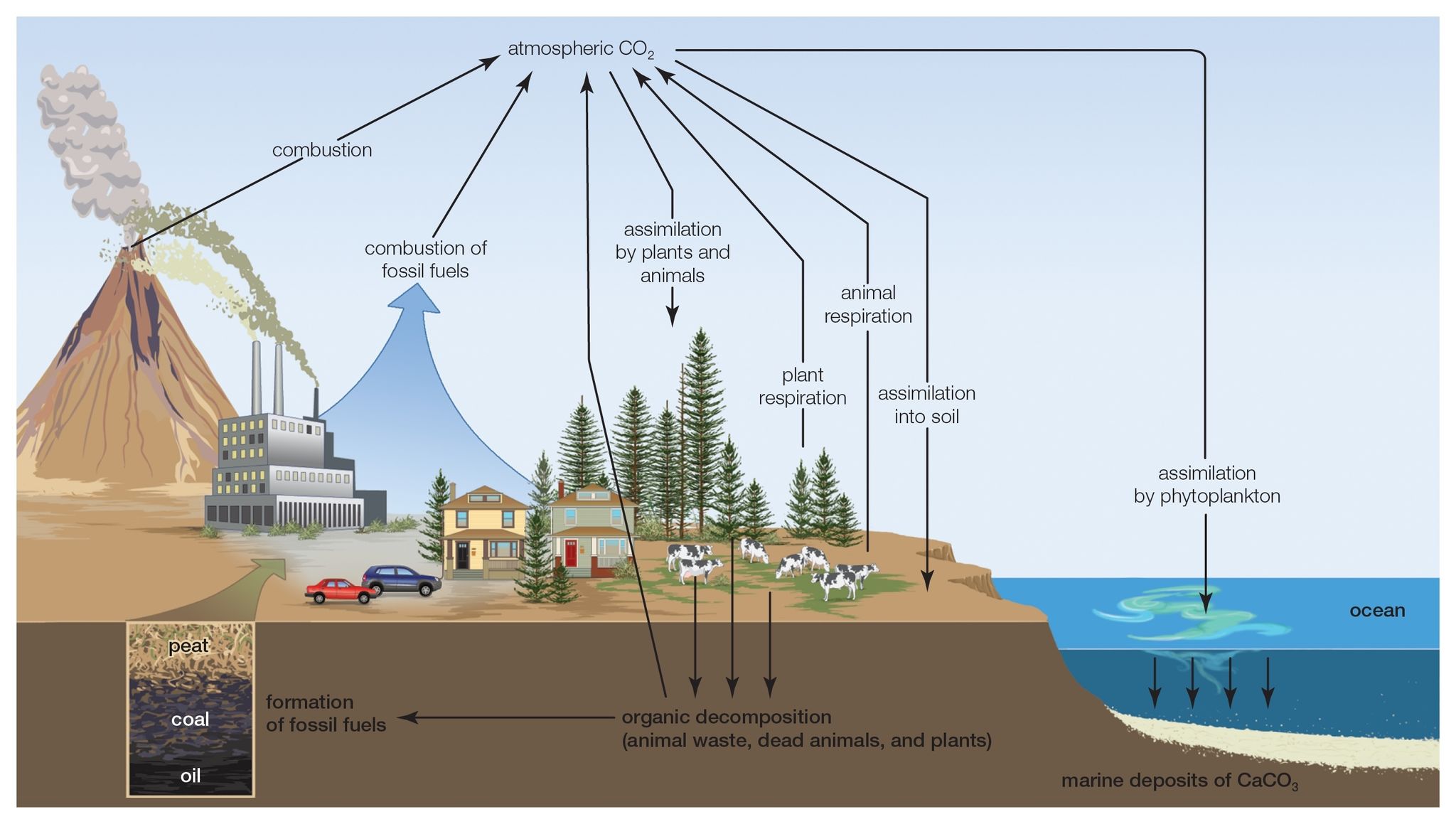
With the help of the Sun, through the process of photosynthesis, carbon dioxide is pulled from the air to make plant________
leaves
food
roots
nutrients
Through food chains, the carbon that is in plants moves to the animals that eat them. When an animal eats another animal, carbon is ___________________.
released
transferred
dissolved
gone
Which process contributes carbon dioxide to the atmosphere?
respiration
photosynthesis
tree farms
Which process removes carbon dioxide from the atmosphere?
deforestation
tree farms
burning fossil fuels
cellular respiration
Which of the following is correct?
There is as much carbon on earth as when it was formed
Carbon is being created whenever it is recycled
Carbon is lost every time it is recycled
Carbon changes to different forms and is never recovered
What is the greatest contributor to atmospheric carbon?
burning garbage
burning biomass
transportation
household usage

What are two (2) ways to reduce the carbon emissions from passenger cars?
Use less expensive gas
Carpooling
Public Transportation
Driving only passenger cars
Respiration is the process by which animals take in _____ and release _____ to make energy.
CO2 +light+H2O --> O2 + glucose
CO2 + glucose + H2O --> O2 + light
O2 + light + H2O --> CO2 + Glucosg
CO2 + O2 + H2O --> Light+ glucose
Cellular Respiration involves the chemical breakdown of _____ to form ATP Energy
Fats
Fructose
Glucose
Proteins
A trait or change in lifestyle that helps a plant or animal survive in its environment
adaptation
evolution
homologous
vestigial
A harmless species resembles a dangerous species
batesian
mullerian
aggressive
When two or more species that are poisonous or dangerous or not very tasty resemble each other
batesian
mullerian
aggressive
When predators or parasites share similar signals or characteristics which allow them to avoid being correctly identified by the prey or host
batesian
mullerian
aggressive
When HUMANS select or choose a plant or animal for breeding based on a desired trait
natural selection
artificial selection
Shows how different groups of organisms have changed over time.
fossil record
homologous structures
embryology
Parts of the body that are similar to other species because they have a common ancestor
fossil record
homologous structures
embryology
Body part you have that use to have a purpose but now has little or no function
vestigial organ
embryology
homologous structures
When living organisms that are not closely related have very similar DNA bases it means they had a common ancestor
biomechanical evidence
embryology
fossil record
homologous structures
Scientist that contributed the most to our understanding of evolution
Darwin
Lamarck
Organisms with the best suited adaptations for their environment are more likely to survive and reproduce than organisms that are not very well adapted
natural selection
artificial selection
creationism
The more offspring an organism has the greater the odds that a few of them will survive, reproduce and pass on those traits
overproduction
variation
selection
adaptation
Organisms from the same species can vary in…
1) physical appearance
2) genetic makeup
overproduction
variation
selection
adaptation
a trait that gives an organism an advantage in their particular environment
overproduction
adaptation
selection
variation
Over long periods of time natural selection produces organisms different than their ancestors
overproduction
selection
adaptation
variation
Species not closely related evolve similar traits due to their similar environment
Convergent evolution
divergent evolution
parallel evolution
Species from very different areas of the world evolve in a similar manner in order to survive
convergent evolution
parallel evolution
divergent evolution
Species from the same ancestor accumulate differences over time
convergent evolution
divergent evolution
parallel evolution
What is the most useful change biotechnology has made in agriculture?
Crops need more water
Crops need more nutrients
Crops need more time to grow
Crops resist more diseases
What term describes how humans created pure-bred dogs?
artificial selection
cloning
crossbreeding
selective breeding
Which area of biotechnology is most likely to create ethical problems?
insulin production by bacteria
organ cloning
genetic engineering to increase crop yields
forensic testing of crime scene evidence
1) What would be a positive reason to genetically alter Fraser Fir trees in North Carolina to make them more resistant to rot?
By producing crops that are frost resistant
By making robots to replace large farm machines
The population of fir trees would increase and grow healthier.
By increasing the use of wind farms that produce electricity
2) In what way is biotechnology useful to law enforcement agencies such as the police or FBI?
It can help identify who was present at the scene of a crime.
It can help undercover officers disguise themselves.
It might help determine who might be the victime of a future crime.
It can help determine who is most likely to become a criminal in the future.
3) How can agricultural biotechnology have a positive impact on the environment?
By developing crops that are pest resistant requiring fewer pesticides to be used.
planting crops in shaded areas.
Harvesting crops that have thick stems and leaves.
water crops with a recycled irrigation system.
What type of job could a person who studies biotechnology in college have?
Create new medicines and vaccines
Create disease/pest resistant crop varieties
Work in a forensic lab testing crime scene evidence
Create environmentally friendly ways to clean up pollution
9) What are some examples of biotechnology being used in agriculture?
Crop irrigation
DNA fingerprinting
Gentically modified crops
Crop rotation
12) What would be a negative side of genetically modified foods?
Lower cost of production.
Long-term health effects, such as possible allergies to proteins not found in foods before GMO’s.
Ability to produce more food in less time.
Ability to grow more nutritious food in less time.
13) What would increase the money made by farmers in North Carolina through biotechnology?
Tomatoes that are different in color.
Tomatoes that are smaller.
Tomatoes that taste the same.
Tomatoes that are resistant to disease.

19) Which suspect was most likely present at the crime scene?
Suspect 1
Suspect 2
Suspect 3
None of them match
A company that creates hair dye would most likely employ a bio-technician for which job?
researching trends
developing new colors
creating cost effective packaging
developing a product that will be safe for consumers
Which are most closely related to biotechnology?
medicine and agriculture
construction and engineering
water treatment and electricity generation
communication and information technology
Which is a concern of scientists when genetically modifying plants?
Plants will pass on diseases to animals.
There will be a decrease in biodiversity.
Plants will have a longer growing season.
There will be a decrease in revenue for pesticide manufacturers.
Which is most important when investigating ethical issues in biotechnology?
cost of the technology
advantage of the technology
public opinion of the technology
benefits of the technology outweighing the harm
Personal medical records become more available and more detailed because of biotechnological research. Based on this information, which is a major concern to the public?
transmission of more diseases
an increase in under qualified doctors
inappropriate use of medical information
overdiagnosis of certain medical conditions
Residents of North Carolina presently burn 5 billion gallons of imported petroleum-based liquid fuel per year. How would the state’s economy be affected if North Carolina could produce bio-fuels locally as a replacement?
Tax revenues would decrease.
Unemployment would increase.
The economy would decline due to exports.
The economy would improve with new jobs and tax revenue.
Supercow was created using which field of biotechnology?
DNA Fingerprinting
Cloning
Artificial Selection
Selective Breeding
Tomatoes are genetically modified to have a longer shelf-life. Which best describes a concern people have with eating GM tomatoes?
GM tomatoes do not taste as good as organic
GM tomatoes are more expensive
the DNA used to modify the tomatoes could change the DNA of the person eating the tomato
GM tomatoes ripen and rot more quickly
True or False: There are bacteria that can clean up oil spills.
True
False
Which do you think is larger?
Epidemic
Pandemic
Which of the following most accurately describes the difference between an epidemic and a pandemic?
A pandemic is the result of a disease more easily cured than an epidemic.
A pandemic occurs in a rural area, an epidemic occurs in large cities.
A pandemic describes a disease that kills people more quickly than an epidemic.
A pandemic affects a larger region and more people than an epidemic.
Which situation would most favor the spread of infectious disease?
overcrowding
use of vaccines
small population
sanitary conditions
Which most likely spreads disease such as rabies or Lyme disease?
contact with an infected animal
contact with an infected human
ingesting contaminated food
breathing contaminated air
Which will most likely occur when the quality of sanitation in an area improves?
The number of disease carriers will increase.
The number of infectious disease cases will decrease.
The amount of available food resources will decrease.
The amount of necessary medical treatment will increase.
Which best distinguishes an infectious disease from a noninfectious disease?
Infectious diseases can be cured with antibiotics; noninfectious diseases cannot.
Infectious diseases can be prevented with vaccines; noninfectious diseases cannot.
Infectious diseases can be spread from one organism to another; noninfectious diseases cannot.
Infectious diseases cannot be transmitted from one organism to another; noninfectious diseases can.