
NEW
Font size
 Worksheets
1B Periodic Trends Review
Total questions: 53
Worksheet time: 57mins
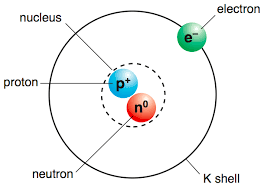

Typically in an atom, which two subatomic particles are equal in number?
protons and neutrons
all subatomic particles are equal in number
neutrons and electrons
protons and electrons
How many electrons does an atom of Krypton have?
36
83.80
48
119.80
How many protons are present in phosphorus?
15
16
31
46
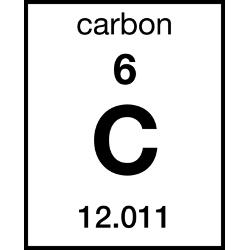
To have a charge of zero, what two particles must be balanced in an atom?
Protons and Electrons
Protons and neutrons
Electrons and neutrons
What subatomic particle is different between isotopes?
Electrons
Protons
Neutrons
Which statement is true about oxygen-16 and oxygen-18 ?
They do not have the same number of protons
their atoms have identical mass
they are isotopes of oxygen
they have the same mass number
Moving from left to right across a row of the periodic table, which of the following values increases by exactly one from element to element?
isotope number
atomic number
atomic mass unit
mass number
The atomic mass of an element is
the sum of the protons and neutrons in one atom of the element.
twice the number of protons in one atom of the element.
a ratio based on the mass of a carbon-12 atom.
a weighted average of the masses of an element’s isotopes.
Which list of elements contains only metals?
carbon, iodine, tin
tin, copper, cesium
helium, iron, copper
iodine, carbon, argon
Which statement is true about the metalloid silicon?
Silicon is a better conductor of electric current than silver is.
Silicon does not conduct electric current under any conditions.
Silicon's ability to conduct electric current does not vary with temperature.
Silicon is a better conductor of electric current than sulfur is.
Group 7A of the periodic table contains the
most reactive metals.
most reactive nonmetals.
least reactive nonmetals.
least reactive metals.
Which of the following Group 1A elements is the most reactive?
Cs (cesium)
Li (lithium)
K (potassium)
Na (sodium)
Sulfur is often found in nature as an element, not combined with other elements in a compound. What does this fact tell you about the reactivity of sulfur?
Very reactive
Not reactive
Sodium chloride is a compound of sodium and chlorine. Which of these elements is the alkali metal, and which is the halogen?
Sodium is the metal, chlorine is the halogen
Sodium is the halogen, chlorine is the metal
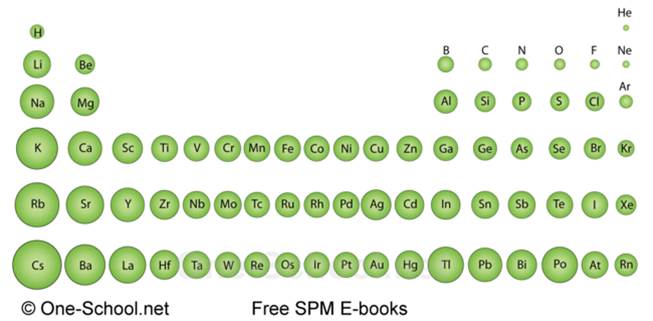
Group 18 elements are called ________________
Alkali metals
Transition metals
Halogen
Noble gases
Group 1 elements are called ________________
Alkali metals
Transition metals
Halogen
Noble gases
Which statement is true concerning the periodic table?
periods go up and down and groups go across the table
groups go up and down and periods go across the table
periods go up and down and groups go up and down the table
periods go across the table and groups go across the table
A Bromine ion gains 1 electron, which of the following is the correct symbol for a Bromine ion?
Br-1
Br+1
Br+7
Br-7
If an atom loses electrons, the charge will be positive.
true
false
What is the ion formed from Sulfur?
S+2
S-2
S+6
S-6
Elements that are in the same group have ______________.
properties that are similar to each other and behave the same.
nothing in common at all.
the same number of protons.
very different properties.
Which element has similar properties to Calcium
Potassium
Magnesium
Scandium
Fluorine
Na1+ F1-
What is the overall charge of the ionic compound NaCl
+1
+2
+3
0
Anions gain...
Their onions
respect
electrons
binaries
Cations lose
their cats
Their electrons
Their anions
their bonds
Cr3+ O2-
Al3+ O2-

The structure of most ionic compounds is known as a
diamond.
crystal lattice.
cube.
trigonal planar.
Sulfide and Sulfate are both ions. Look at how they are named and determine which of these is the polyatomic ion.
Sulfur
Sulfide
Sulfate
Copper is less reactive than iron. What do you expect to happen when copper is placed inside a solution of iron(II) sulfate?
No reaction takes place.
A reaction takes place. And a colour change is observed.


Which elements have the most similar chemical properties?
boron and carbon
oxygen and sulfur
aluminum and bromine
argon and silicon
Which particle is responsible for the reactivity of an element?
proton
neutron
electron
what is the big group of metals called found within the metals
transition metals
nonmetals
noble gases
halogens
The boiling point of HCl is –85°C while the boiling point of HI is –36°c. Estimate the boiling point of HBr, in °C.
-51 C
-41 C
-56 C
-61 C
Which formula is correct for the ionic compound formed from combining magnesium ions and chloride ions?
MgCl
MgCl2
Mg2Cl
Mg2Cl2
The chemical name of K2SO4 is
Phosphorus sulfate
Potassium sulfate
Potassium sulfite
Potassium sulfide

