
 Worksheets
Biology 9 C1-C4 SE1 revision 2
Total questions: 176
Worksheet time: 2hrs 14mins
___________a molecule that is present in all living cells and that contains the information that determines the traits a living thing inherits and needs to live.
Cell
Stimulus
Homeostasis
DNA
Living things are based on a universal genetic
code. What molecule is responsible for that code?
RNA
Lipid
Protein
DNA


Which molecule transfers light energy into chemical energy for the synthesis of carbohydrates
Chloroplast
Chlorophyll
Mitochondria
Vacuole

State the name of structure A
Vascular bundle
Upper epidermis
Palisade mesophyll
Spongy mesophyll
State the balanced symbol equation for photosynthesis
CO2 + H2O -> C6H12O6 + O2
C6H12O6 + 6O2 -> 6CO2 + 6H2O
6CO2 + 6H2O -> C6H12O6 + 6O2
CO2 + H2O -> 6C6H12O6 + O2
Which is the word equation for photosynthesis?
glucose + oxygen -> carbon dioxide + water
methane + oxygen -> carbon dioxide + water
glucose + carbon dioxide -> oxygen + water
carbon dioxide + water -> oxygen + glucose
Which is a definition for photosynthesis?
Releasing energy from nutrients
The breaking down of large insoluble molecules into small soluble molecules
The process by which plants make carbohydrates from raw materials using energy from light
The movement of particles from a high concentration to a low concentration
The specialized sensory receptor that detects light is
mechanoreceptor
chemoreceptor
thermoreceptor
photoreceptor
How long does diffusion last?
Until the concentration of particles in the system is equal
Until a region in the system has a smaller concentration of particles than the other
Until a region in the system has a greater concentration of particles than the other
Until the particles disappear from the system
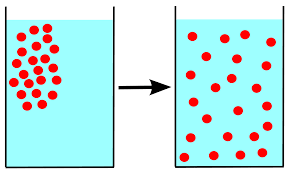
The picture below is an example of _________________.
osmosis
isotonic
diffusion
active transport
Which of the following is NOT a biotic factor?
mushroom
air
elephant
coyote
Which blood vessel carries blood at the highest pressure?
Arteries
Veins
Capillaries
Where does sugar transport begin?
Roots
Leaves
Root hairs
Vascular bundles
What is the main factor that influences the rate of sugar transport?
movement of water
Rate of photosynthesis
capillary action
uprooting plants
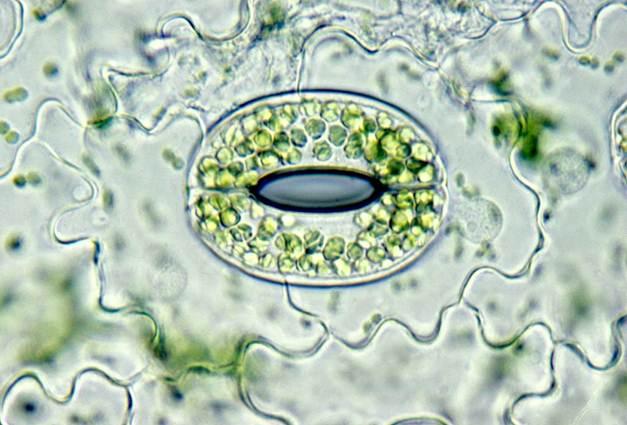
What do the guard cells do?
Control active transport
Control nutrients moving into the cell
Controls the rate of transpiration (loss of water through the leaf)
Where is xylem found in the plant?
leave -> roots -> stem
roots -> stem -> leaves
root hairs -> leaves -> veins
stem -> roots
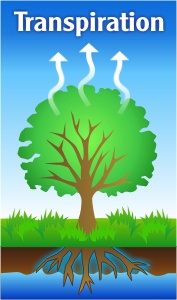
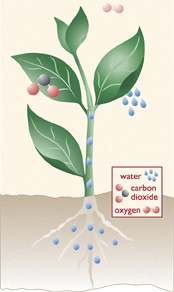
How does water enter a plant?
through the stomata
through the roots
by active transport in root hair cells
by osmosis in root hair cells
Phloem tubes transport substances..
From the roots to the stem and leaves
From the leaves to the rest of the plant

Recall what is dissolved in the water in the xylem.
Glucose
Amino acids
Mineral ions
Starch

Recall the main function of a xylem cell.
To transport nutrients (mainly sucrose) to different parts of a plant.
To make energy for the plant via photosynthesis.
To transport carbon dioxide to the leaves for photosynthessis.
To transport water to different parts of plant.
How is sugar transported in the plant?
though diffusion which requires energy
through active transport which requires energy
though diffusion which does not require energy
though active transport which does not require energy
In what plant cell organelle does photosynthesis occur?
Chloroplasts
Mitochondria
Nucleus
Cell Wall
Where does photosynthesis occur in the plant?
In the stem
In all parts of the plant
In the leaves
In the flower
What is a function of protein?
Repair and build muscle
Keep the body warm
Help with the digestive system
Cures asthma
In which part of the digestive system are most of the nutrients absorbed into the bloodstream?
Stomach
Oesophagus
Small Intestine
Large Intestine

What is the function of the gall bladder?
absorption of fat
digestion of fat
production of bile
storage of bile
Where does most of the digestive process take place?
Small intestine
Stomach
Large intestine
Oils and butter are rich in...
proteins.
fats.
carbohydrates.

Identify the type of teeth________________
Molar
Canine
Milk teeth
Name the process by which the digested food molecules are taken up by the intestine wall and sent to circulatory system.
Assimilation
Digestion
Absorption
Egestion
The ___ helps in mixing saliva with food.
Heart
Stomach
Nose
Tongue
The process of intake of food is called...........
Ingestion
Digestion
Absorption
Assimilation
Water from the undigested food is absorbed mainly in the
stomach
foodpipe
small intestine
large intestine
4.Bile is produced in the
stomach
small intestine
pancreas
liver
The pointed teeth in your mouth are
premolars
incisors
molars
canines
Where do plants get the energy for photosynthesis to take place?
nutrients in the soil
the sun
chlorophyll
bee pollination
What is the role of the spongy mesophyl?
It allows gas to move through the leaf
It transports water
It transports sugars
It is where photosynthesis happens
The stomata are openings in the leaf which allow for gas exchange. Which cells found either side of the opening control the stomata?
Guard Cells
Palisade Cells
Spongy mesophyll
What does the plant need magnesium for?
For the production of chlorophyll
For the production of amino acids
For the production of glucose
For the production of starch
What is the role of stomata?
Openings in the leaf that allows gas in and out of the plant
Transports water and supports the plant
transports sugars
Where photosynthesis happens
What is structure F called?
Vascular bundle
Cuticle
Palisade mesophyll
Stomata
What is the role of the phloem?
transports water and help supports the plant
transports sugars
where photosynthesis happens
where respiration happens
What is the role of the xylem?
transports water and help supports the plant
transports sugars
where photosynthesis happens
where respiration happens
What are the cells in layer B called?
Vascular bundle
Cuticle
Palisade mesophyll
Spongy mesophyll
State the name of structure A
Vascular bundle
Upper epidermis
Palisade mesophyll
Spongy mesophyll
Which molecule transfers light energy into chemical energy for the synthesis of carbohydrates
Chloroplast
Chlorophyll
Mitochondria
Vacuole
Which is the word equation for photosynthesis?
glucose + oxygen -> carbon dioxide + water
methane + oxygen -> carbon dioxide + water
glucose + carbon dioxide -> oxygen + water
carbon dioxide + water -> oxygen + glucose
A student wanted to see if covering a leaf in foil would stop it from producing starch. Why should the student put the plant in a dark cupboard for 48 hours before returning it to the light and starting the experiment?
To make the results reliable
So that the plant would photosynthesise faster when returned to the light
So that any starch already in the leaf was used up by the plant
What is the correct chemical equation for photosynthesis?
CO2 + 5H2O --light/chlorophyll--> C16H2O16 + 5O2
CO2 + H2O --light/chlorophyll--> C6H12O6 + O2
2CO6 + 6H2O --light/chlorophyll--> C12H6O12 + 6O2
6CO2 + 6H2O --light/chlorophyll--> C6H12O6 + 6O2
Which two substances are the raw materials for photosynthesis?
carbon dioxide and oxygen
carbon dioxide and water
starch and water
starch and oxygen
Each enzyme only has 1 substrate that will fit its active site. What is this called?
reusable
catalyst
fragile
specific

Based on the graph, what pH does Enzyme C work best at?
1.5
6
8
9
What are the 2 factors that denature an enzyme?
pH and concentration
concentration and temperature
temperature is the only factor
pH and temperature

Based on the graph, what is the optimal temperature for the enzyme?
20
40
43
60
What is a substance called if it speeds up a chemical reaction?
reusable
catalyst
specific
fragile
What does an enzyme do to a chemical reaction?
Speeds it up (catalyzes)
Slows it down
Breaks it down
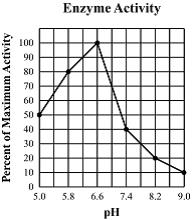
What happens to an enzyme when it is denatured?
Activation energy is lowered
It becomes stronger
It loses its shape
Activation energy is raised

Letter E...
active site
products
substrate
enzyme

Letter C...
products
substrate
enzymes
active site
Enzymes are specific. This means that an enzyme only works with molecules that are....
the right size and shape
broken down already
present in water
too big for the body to handle
Which category of macromolecules do enzymes belong to?
Carbohydrates
Proteins
Fats/Lipids

What do enzymes do?
Build things up or break them down
Help filter waste from the body
Create environments where food can be eaten
Add and remove water
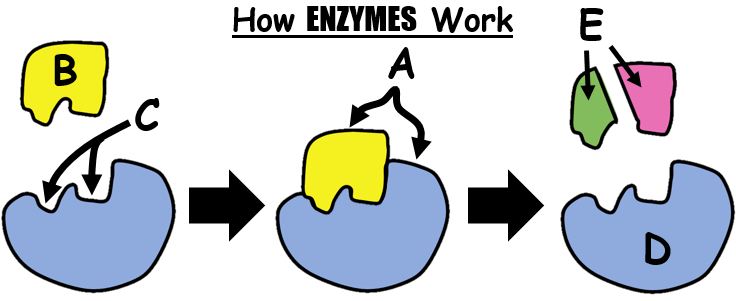
What does the term optimum mean for enzyme temperature?
The lowest temperature at which the enzyme works
The temperature which gives the highest enzyme activity
The temperature which gives the lowest enzyme activity
The highest temperature before denaturing occurs
The protease enzyme works best in the ..................... condition of the stomach.
acidic
alkaline
basic
neutral
Different enzymes work best in different pH.
True
False
The ..................... of the active site depends on the temperature.
shape
substrate
lock
collision
Enzymes are ............................
Alkaline
Biocatalysts
Lipids
Sugars

Letter B...
substrate
active site
enzyme
products

Letter D...
enzyme
active site
substrate
products
organisms that can capture energy from nonliving sources and convert it into forms living cells can use?
heterotrophs
Autotrophs
Decomposers
Which of the following organisms have vital roles in the movement of energy and matter through food webs?
Herbivore and carnivore
Chemosynthesis
Decomposers and detritivores
Omnivores and carnivores
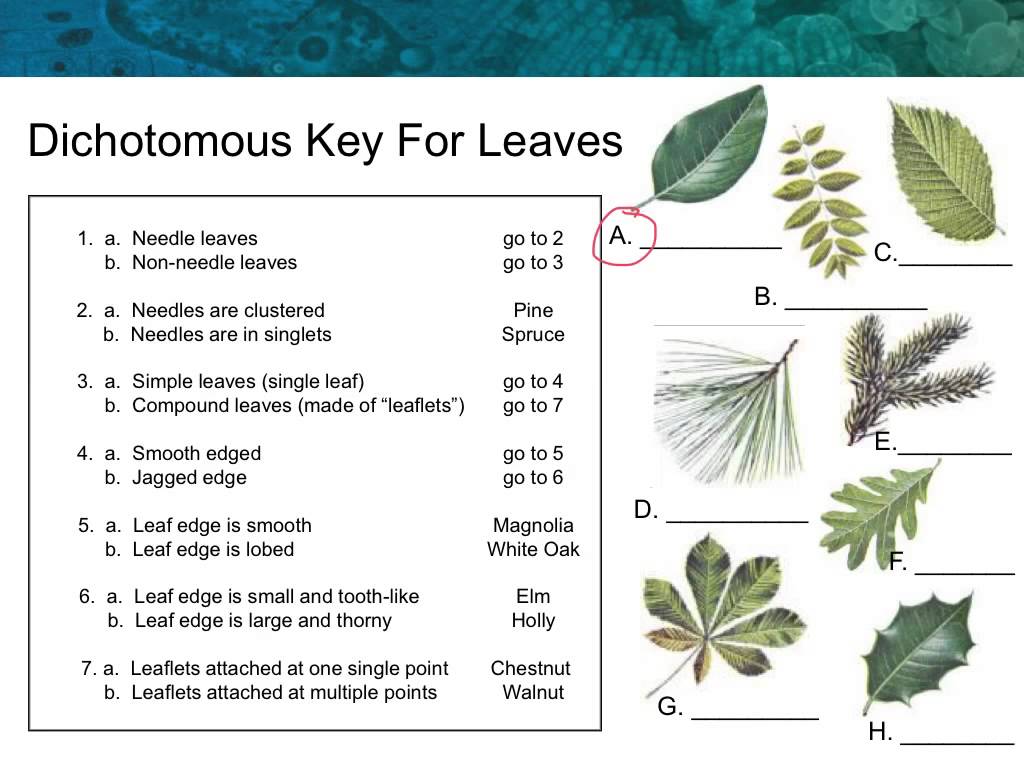

arachnids and insects?
Prokaryote are ______.
bacteria
fungi
large in size
complex cells
Chloroplasts are the site of photosynthesis and are found only in _____.
the ocean
in green plants
animals
rocks
A cell wall is an inflexible for support and structure and can only be found in ____.
plants
animals
birds
humans

Which type of cell?
Prokaryote
Eukaryote
The two kinds of cells are Prokaryotes and Eukaryotes. How are they different?
Prokaryotes are plant cells
Eukaryotes have a nucleus
Prokaryotes have a nucleus
There is no difference
Where are proteins made?
Golgi Body
Ribosomes
Chromosomes
Mitochondria
What is the gel-like substance inside of cells called?
Cytoplasm
Cytoskeleton
Cell membrane
Vacuole
The _____________ holds the DNA, and controls the functions of eukaryotic cells.
Nuclear membrane
Nucleus
mitochondria
Lysosome

What is the function of an organelle?
to take up space
to carry out a specific function in the cell
to carry out all the functions of a cell
to create new cells
What is the function of the mitochondria?
to capture energy from the sun and turn it to sugar
to release usable energy for the cell
to store energy for when the cell needs it
to remove waste from the cell
What organelle allows plants to create their glucose?
Mitochondira
Lysosome
Ribosome
Chloroplast
Which organelle provides structure and protection to plant cells?
cell membrane
ribosome
golgi apparatus
cell wall

Nucleus control center of the cell
Selectively Permeable golgi apparatus
Non Permeable membrane

Simple Diffusion
Facilitated diffusion

When the concentration of solutes on both sides of a membrane is the SAME, the solution is
Hypertonic
The solution contains a high concentration of solute an and low concentration of water
Hypotonic
The solution contains a low concentration of solute an and high concentration of water
Isotonic
The solution has an equal concentration of solute and water compared to the inside of the cell
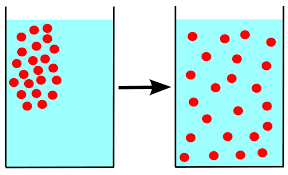
What is DIFFUSION?


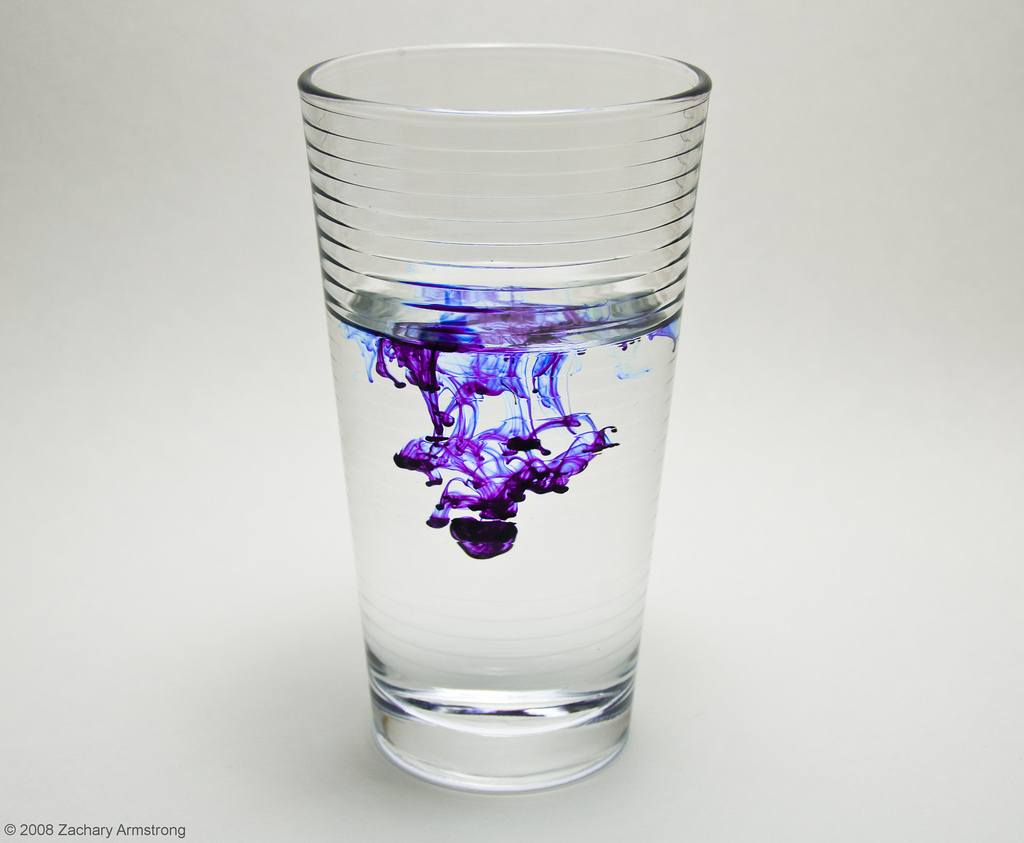
Where is there a low concentration of dye?
at the bottom of cup
in the dye
at the top of cup
at the sides of the cup
Dissolved gases move between the blood and body cells by which process?
absorption
respiration
diffusion
osmosis
Which of the following statements about diffusion is true?
substances move from high to low concentration
diffusion only happens across a partially permeable membrane
water moves from high to low water potential
substances move from low to high concentration
Basic units of cabohydrates.
simple sugars
amino acids
fatty acids and glycerol
nucleotides
Basic units of lipids.
nucleotides
amino acids
simple sugars
fatty acids and glycerol
An example of simple sugar (monosaccharide).
glucose
sucrose
starch
glycogen
An example of larger sugar molecule (disaccharide).
glucose
sucrose
cellulose
glycogen
Total number of amino acids in plant and animal cells.
15
17
19
20
Lipids are important in forming _____________.
DNA
RNA
cell membanes
cytoplasm
Glucose is an example of a
monosaccharide
polysaccharide
lipid
protein
What is the most common type of organic compound (biological molecule)?
proteins
carbohydrates
lipids
nucleic acids
(a) is an example of a polysaccharide.
What determines the primary structure of a protein?
DNA
RNA
polypeptide
carbohydrate
One example of a lipid is
oil
meat
sugar
vegetables
Which biological molecule is used for long-term energy storage? (a)
The information in (a) is passed from parents to offspring when organisms reproduce.
In DNA, A always binds to (a) , and G always binds to (b) .
What are the four nitrogenous base of the DNA? Choose four (4) from the choices.
Adenine
Guanine
Cytosine
Uracil
Thymine
What is the colour change if you add Iodine (Brown colour) to the food contains protein?
Red Brick
No changes (Negative Results)
Black
Navy Blue
Which chemical elements are found in lipid molecules ?
Carbon, hydrogen & oxygen
Carbon, nitrogen & oxygen
Nitrogen, hydrogen & oxygen
Nitrogen, carbon & hydrogen
Which of following molecules is NOT a sugar ?
Sucrose
Glucose
Glycogen
Maltose
Which biological molecule provides insulation ?
Protein
Glycogen
Starch
Lipid
Which chemical element is only found in proteins ?
Carbon
Nitrogen
Oxygen
Hydogen
When starch is present iodine turns...
purple
blue-black
orange
brick red
When protein is present Biuret turns...
purple
blue-black
orange
brick red
A negative test for protein will cause Biuret to stay...
brick red
blue
black
orange
A negative test for starch will cause Iodine to stay...
orange/red
blue
black
brick red
A negative test for glucose will cause Benedicts to stay...
brick red
blue
black
orange
How do you test for lipids?
By using Ethanol and water
By using Benedicts solution
By using Iodine
By using Biuret test
What is a positive result for the lipid emulsion test?
milky white colour
clear
yellow
green
I am used to test for the presence of complex carbohydrates (starch)
Benedict's Test
Biurets Test
Iodine Test
Ethanol Emulsion Test
I am used to test for the presence of simple carbohydrates (sugars)
Benedict's Test
Biurets Test
Iodine Test
Ethanol Emulsion Test
I am used to test for the presence of protein
Benedict's Test
Biurets Test
Iodine Test
Ethanol Emulsion Test
I am used to test for the presence of lipids (fats)
Benedict's Test
Biurets Test
Iodine Test
Ethanol Emulsion Test
If I am positive, I will produce a precipitate
Benedict's Test
Biurets Test
Iodine Test
Ethanol Emulsion Test
If I am positive, I will turn red
Benedict's Test
Biurets Test
Iodine Test
Ethanol Emulsion Test
If I am positive, I will turn purple
Benedict's Test
Biurets Test
Iodine Test
Ethanol Emulsion Test
In this experiment, you must put your test tubes into a hot water bath
Benedict's Test
Biurets Test
Iodine Test
Ethanol Emulsion Test

This photo represents a
negative test for glucose
negative test for protein
positive test for starch
positive test for glucose