
 Worksheets
Science Bio Y8Y9 Y8 C4.4B _Biases in Bioaccumulation
Total questions: 22
Worksheet time: 17mins
Microplasics ______ biodegradable
are
are not
Microplastics are tiny pieces of plastic less than 5 mm long
True
False
Some microplastics come from large pieces of ........that break up into small pieces. Others are manufactured as microplastics, used in products such as face creams and toothpaste
paper
plastic
Some (a) sink to the bottom because they are (b) than water. Some go into the bodies of (c) and may be carried to the bottom when the animal (d)
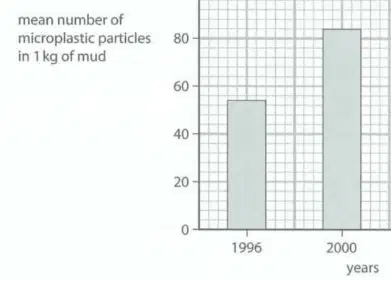
State the number of microplastics particles found in 1 kg of mud in year 2000?
81 kg
90 kg
84 kg
60 kg
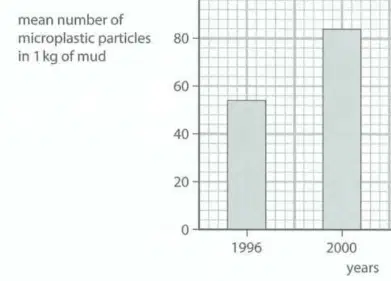
Calculate the increase in the number of microplastic particles in 1 kg of mud between 1996 and 2000?
81 - 43 = 38
84 - 44 = 40
84 - 54 = 30
84 + 54 = 30

As the (a) feed on the (b) , they take in (c) that are in the (d) of zooplankton .
(a) is the build-up of substances in an (b) ’s body over its (c) , because the substance (d) in its body

Seals eat many (a) in their lifetimes, and all of the (b) in the fish that they eat gradually (c) in their bodies.
What are the potential effects of bias on bioaccumulation?
Bias leads to more accurate assessments of bioaccumulation levels
Bias can lead to inaccurate assessments of bioaccumulation levels, potentially resulting in inadequate regulatory measures to protect ecosystems and human health.
Regulatory measures are not affected by bias
Bias has no impact on bioaccumulation
The agricultural company wants to (a) by selling (b) , so it might try to make the (c) posed by using the spray seem (d) than it really is by saying there is only (e) in animals eating the crops.
(a) friendly means (b) is done to (c) that (d) in the area.
Some main factors that can lead to (a) in bioaccumulation studies include sample (b) , improper (c) techniques, and (d) in environmental conditions.
How can bias impact the accuracy of bioaccumulation data?
Bias can lead to inaccurate or skewed bioaccumulation data, as it may favor certain factors or overlook others, leading to misleading results.
Bias can improve the accuracy of bioaccumulation data
Bias has no impact on the accuracy of bioaccumulation data
Bias only impacts the quantity of bioaccumulation data, not the accuracy
Explain how bias can influence the interpretation of bioaccumulation results.
Bias only affects the interpretation of other types of scientific data
Bias has no impact on the interpretation of bioaccumulation results
Bias can influence the interpretation of bioaccumulation results by leading to inaccurate or skewed conclusions. For example, if there is a bias in the selection of samples or data analysis methods, it can result in overestimation or underestimation of bioaccumulation levels, leading to incorrect interpretations.
Bioaccumulation results are always accurate regardless of bias
What are the main factors that can lead to bias in bioaccumulation studies?
Some main factors that can lead to bias in bioaccumulation studies include sample contamination, improper sampling techniques, and variability in environmental conditions.
Lack of funding for the study
Use of advanced technology in sampling
Inaccurate data analysis
Discuss the role of environmental factors in influencing bias in bioaccumulation.
Environmental factors such as temperature, pH, and presence of other chemicals can influence the rate of bioaccumulation in organisms, leading to potential bias in the accumulation of certain substances.
Environmental factors have no impact on bioaccumulation
Bioaccumulation is only influenced by the size of the organism
Bioaccumulation is solely determined by genetic factors
How can the choice of sampling methods contribute to bias in bioaccumulation research?
The choice of sampling methods has no impact on bias in bioaccumulation research
Using a variety of sampling methods reduces bias in bioaccumulation research
The choice of sampling methods only affects the accuracy of bioaccumulation research
The choice of sampling methods can contribute to bias in bioaccumulation research by leading to non-representative samples, which may not accurately reflect the true bioaccumulation levels in a given environment.
Explain the potential impact of species selection on bias in bioaccumulation studies.
The potential impact of species selection on bias in bioaccumulation studies is that different species may have different rates of bioaccumulation, leading to biased results if the wrong species is chosen for the study.
Different species will have the same rate of bioaccumulation
All species have the same rate of bioaccumulation
Species selection has no impact on bias in bioaccumulation studies
What are the limitations of using bioindicators in bioaccumulation research, and how can they introduce bias?
Bioindicators have consistent response to bioaccumulation in different environments
Bioindicators are not affected by human activities or pollution
Bioindicators may have limited distribution, may not represent all species, and their response to bioaccumulation may vary. This can introduce bias by not providing a comprehensive understanding of bioaccumulation in an ecosystem.
Bioindicators are always accurate in representing all species in an ecosystem
Discuss the influence of analytical techniques on bias in bioaccumulation data.
Analytical techniques always result in accurate bioaccumulation data
Analytical techniques can influence bias in bioaccumulation data by affecting the accuracy and precision of measurements, leading to potential errors in the data interpretation.
Analytical techniques have no impact on bias in bioaccumulation data
Analytical techniques only affect the precision of measurements, not the accuracy
How can researcher bias affect the outcomes of bioaccumulation studies?
Researcher bias can improve the accuracy of bioaccumulation studies
Researcher bias only affects the conclusions drawn from bioaccumulation studies
Researcher bias has no impact on bioaccumulation studies
Researcher bias can affect bioaccumulation studies by influencing data collection, analysis, and interpretation, leading to skewed results.

