
 Worksheets
modes of nutrition
Total questions: 20
Worksheet time: 11mins
1-The green stems and green branches can do ………………………
Because they contain ……………………………………….
photosynthesis,
chlorophyll
respiration ,
chlorophyll
photosynthesis,
stomata
respiration, stomata
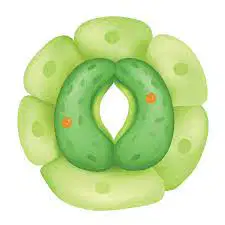
what is this structure?
chloroplast
stomata
mitochondria
vacuole
A plant or animal which lives on or inside another organism called host and derives food from it, is called ………………………
rhizobium bacteria
saprophyte
parasite
legumes
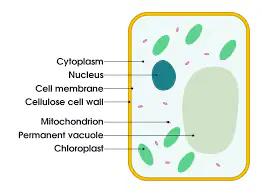
what is the type of cell?
plant cell
animal cell
prokaryotic cell
paramecium
…............ bacteria can can convert nitrogen gas of air into nitrogen compounds like nitrates.
yeast
penicillium
rhizobium
virus.
choose 2 parts which are present in plant cell but not in animal cell.
vacuole,
cell membrane.
chloroplast , mitochondria
cell membrane ,
mitochondria
cell wall , chloroplast
What is the process called when a plant or animal lives on or inside another organism and derives food from it?
rhizobium bacteria
saprophyte
parasitism
legumes
What is the main difference between a plant cell and an animal cell?
Plant cell has a cell wall, while animal cell does not.
Animal cell has chloroplast, while plant cell does not.
Plant cell has a nucleus, while animal cell does not.
Animal cell has a large central vacuole, while plant cell does not.
Which structure in a plant cell is responsible for the process of photosynthesis?
Chloroplast
Stomata
Mitochondria
Vacuole
What is the process called when a plant or animal lives on or inside another organism and derives food from it?
parasitism
autotrophy
heterotrophy
mutualism
What is the function of chlorophyll in a plant cell?
It helps in cellular respiration
It absorbs sunlight for photosynthesis
It stores water and nutrients
It provides structural support
Which organelle is responsible for the storage of water, nutrients, and waste in a plant cell?
Chloroplast
Vacuole
Mitochondria
Nucleus
What is the function of the nucleus in a plant cell?
It helps in cellular respiration
It absorbs sunlight for photosynthesis
It stores water and nutrients
It contains genetic material and controls cell activities
What is the main function of mitochondria in a plant cell?
It helps in cellular respiration
It absorbs sunlight for photosynthesis
It stores water and nutrients
It provides structural support
Which organelle is responsible for the process of cellular respiration in a plant cell?
Chloroplast
Vacuole
Mitochondria
Nucleus
fungi like ...................... and ..............................are useful.
(a)
organisms which can make food themselves from simple substances by the process of photosynthesis.
(a)
those organisms which cannot make food themselves by the process of photosynthesis and take it from green plants or animals are called........
food web
autotrophs
heterotrophs.
food chain
the green plants which obtain their food partly from insects are called.........
saprophytes
host
parasites
insectivorous
the living together of two different species of plants as if they are parts of the same plant and help each other in obtaining food is called ......................................
symbiosis
parasitism
photosynthesis
respiration.

