
Font size
 Worksheets
Energy Review
Total questions: 31
Worksheet time: 16mins
Which of the following best describes the two variables that determine the kinetic energy of an object?
mass and gravity
mass and volume
mass and velocity
speed and velocity
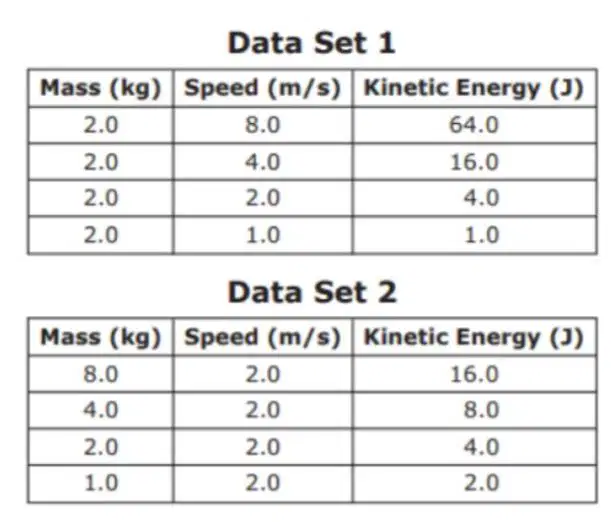
Students record the mass, speed, and kinetic energy of objects moving along a track. The students create these data tables.
Which two statements correctly relate the mass and the speed of an object to its kinetic energy?
When an object's speed doubles, its kinetic energy doubles.
When an object's speed doubles, its kinetic energy more than doubles.
When the mass of an object doubles, its kinetic energy doubles.
When the mass of an object doubles, its kinetic energy more than doubles.
When both the speed and the mass of an object double, its kinetic energy doubles.
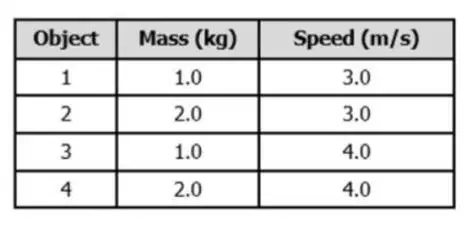
The table shows four moving objects with different masses and speeds.
Which object has the most kinetic energy?
Object 1
Object 2
Object 3
Object 4

A bowling ball and baseball move at the same speed.
How does the kinetic energy of each ball compare, and why?
The bowling ball has greater kinetic energy because it has more mass than the baseball.
The baseball has greater kinetic energy because it has less mass than the bowling ball.
The bowling ball has less kinetic energy because it has a larger volume than the baseball.
The bowling ball and the baseball have the same kinetic energy because they have the same speed.
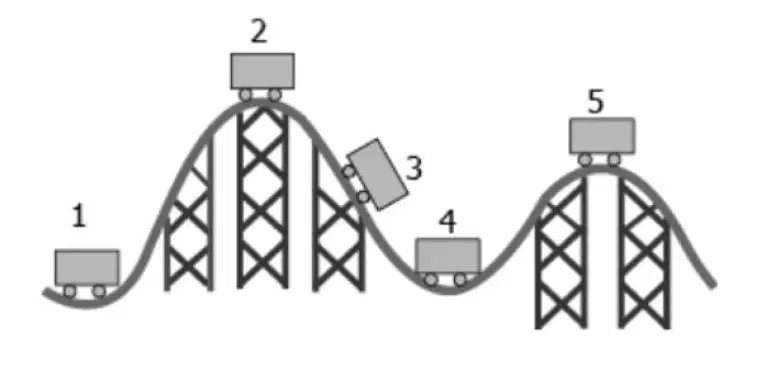
The image shows a roller coaster car at five positions along its track.
For which parts of the motion is some part of the kinetic energy of the car transformed into potential energy?
when moving from 1 to 2 and 4 to 5
when moving from 2 to 3 and 3 to 4
when moving from 2 to 4 and 4 to 5
when moving from 1 to 2 and 2 to 4
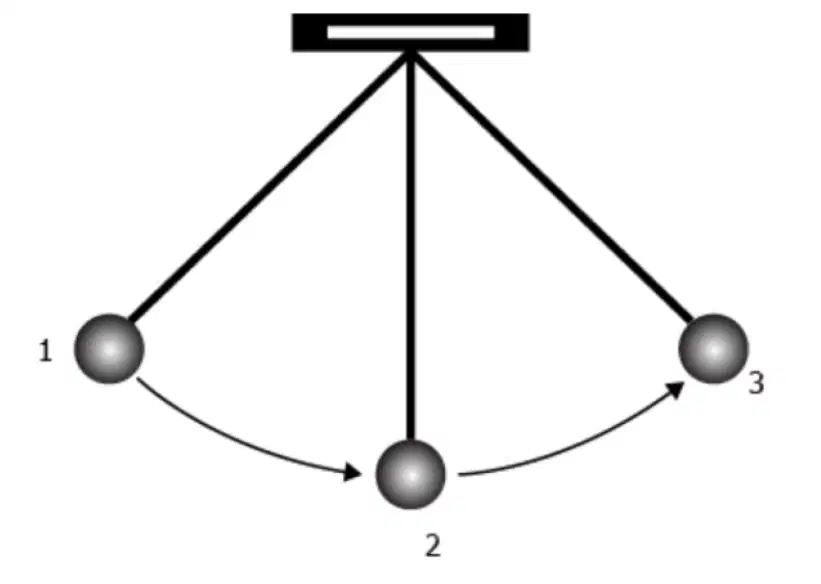
A pendulum is attached to a fixed point and then released with a swinging motion. Three positions (1, 2, and 3) are marked on the path of the pendulum as it swings, as shown in the image
If the energy of the pendulum follows the Law of Conservation of Energy, which table could represent the kinetic and potential energy values at the three positions?


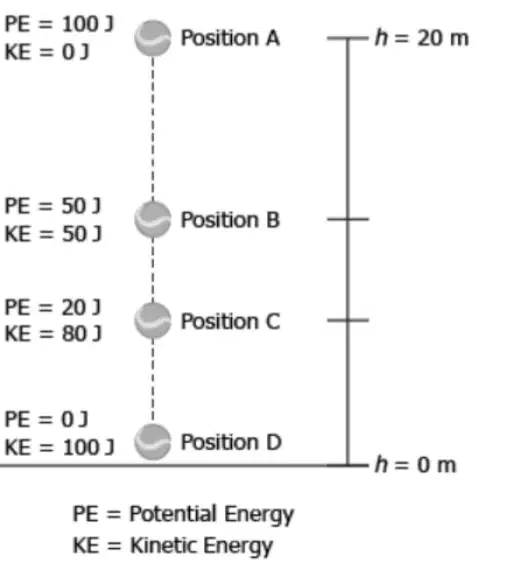
The diagram shows the various energies possessed by a ball falling from a height of 20 m.
Which statement is an accurate conclusion made from the data?
The total energy of the ball decreases during its fall.
The total energy of the ball is equal to potential energy.
The total energy of the ball remains constant during its fall.
The total energy of the ball is converted into kinetic energy during its fall.
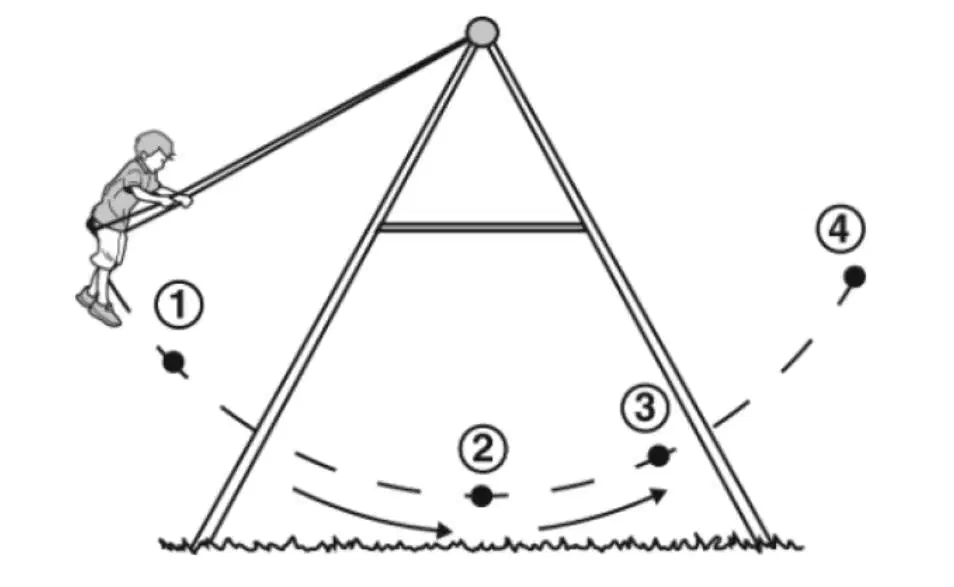
The diagram shows a child swinging on a swing set.
As the child moves from left to right, at which point will the maximum kinetic energy be reached?
1
2
3
4
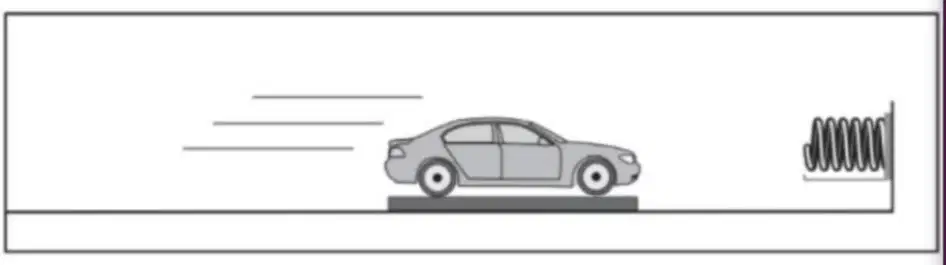
A student pushed a toy car along a level track toward a spring. The car collided
with the spring, causing the spring to compress. After the spring decompressed,
the car traveled backward a short distance before stopping.
Which statement accurately explains the energy transformation that occurred during the collision with the spring?
As the spring is releasing, kinetic energy in the spring is converted to kinetic energy in the car.
As the spring is releasing, kinetic energy in the car is converted to elastic
potential energy in the spring.
As the car is compressing the spring, kinetic energy in the car is converted to elastic potential energy in the spring.
As the car is compressing the spring, elastic potential energy in the spring is converted to kinetic energy in the car.
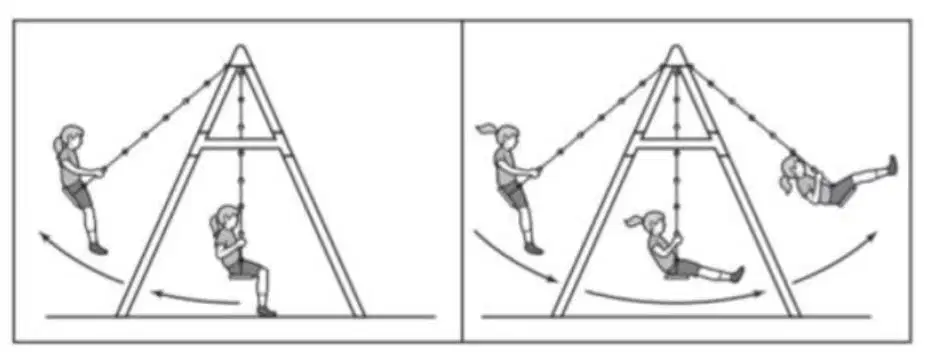
This is a diagram of a system that includes a girl and Earth. In the first picture, the girl sits on the motionless swing. Then she pushes herself backwards. In the second picture, the girl moves forward on the swing. The swing moves the girl back and forth.
Which of these best describes when the system has the greatest gravitational potential energy?
when the girl is seated on the motionless swing
when the swing is at its highest point above the ground and begins moving down
when the swing is at its lowest point above the ground and begins moving up
when the swing is moving at a constant speed
Mr. Brown puts his hot chocolate in an insulated cup. It stays hot even though the day is cold. How does the cup keep the hot chocolate from getting cold?
It adds heat to the hot chocolate.
It blocks the flow of heat from the liquid.
It keeps the cold from flowing into the container.
It gives energy to the hot chocolate that makes it warmer.
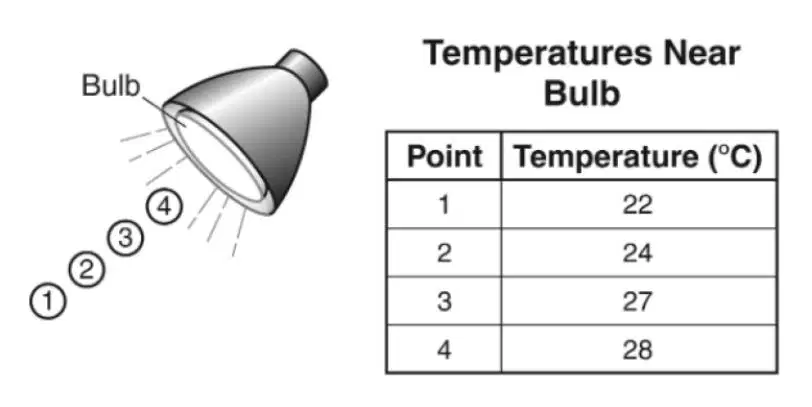
Mary used a thermometer to test the air temperature at four points near a lit bulb. She recorded her data in the table.
Which best explains why the air closest to the bulb was warmest?
The bulb was insulated.
The bulb gave off light.
The bulb radiated heat.
The bulb conducted electricity.
Which picture shows the transfer of heat by conduction?
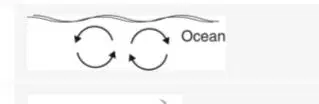

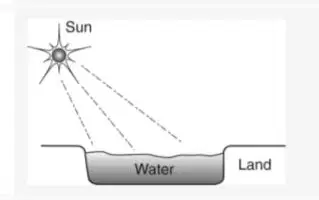
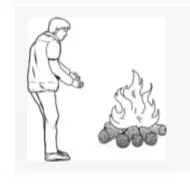
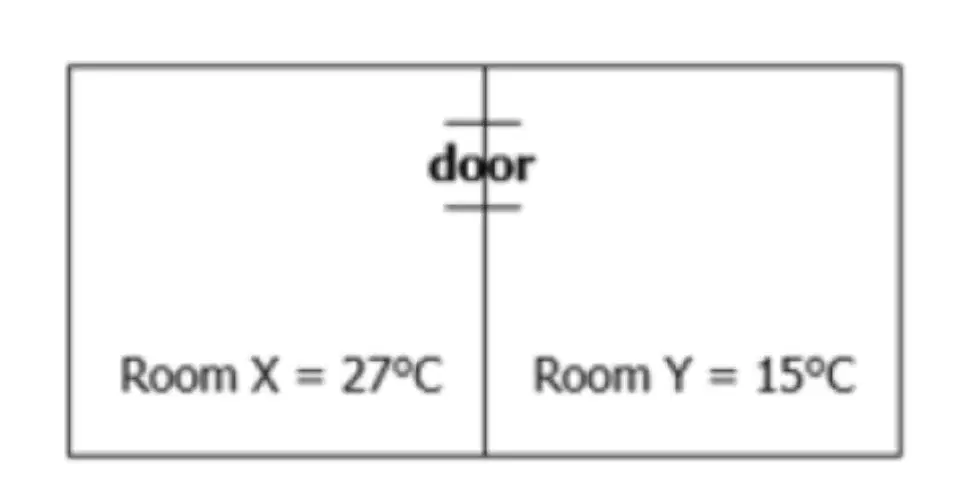
Two rooms separated by a closed door are at different temperatures.
If the door between the rooms is opened, and the temperatures are measured after one hour, what is the best prediction of the temperatures for Rooms X and Y?
Room X = 30°C; Room Y = 12°C
Room X = 30°C; Room Y = 18°C
Room X = 24°C; Room Y = 18°C
Room X = 27°C; Room Y = 15°C
Which activity best demonstrates the transfer of heat energy through radiation?
An egg is frying in a heated pan.
A marshmallow is burning when held above a campfire.
A hamburger is cooking on a hot grill.
A metal spoon is heated when held in a cup of hot tea.
Which example shows heat transfer by convection?
an ice cube melting in the palm of your hand
a spoon becoming warm when kept in a cup of hot soup
a piece of macaroni rising and falling in a pan of boiling water
a playground slide becoming hot on a sunny day
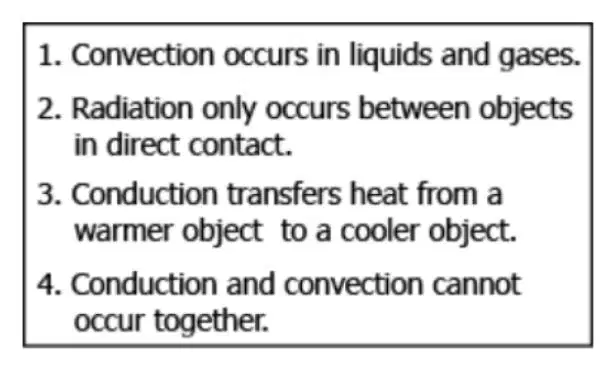
Before studying heat transfer, a group of students create a list of things they think they know about the topic.
Which statements are correct?
1 and 2
1 and 3
2 and 3
2 and 4
Which term describes the energy that is stored due to the height of the object from the ground?
kinetic energy
chemical energy
mechanical energy
gravitational potential energy
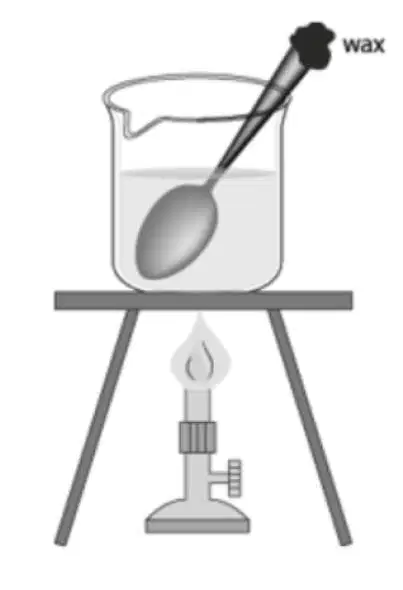
A student fills a beaker with water and places it over a burner. The student attaches a ball of wax on one end of a metal spoon and places the spoon in the beaker, as shown.
After a few minutes, the student observes that the ball of wax starts to melt. What explains the observation?
Heat from the water in the beaker travels through the spoon to the ball of wax through radiation.
Heat from the water in the beaker travels through the spoon to the ball of wax through convection.
Heat from the water in the beaker travels through the spoon to the ball of wax through conduction.
Heat from the water in the beaker travels through the spoon to the ball of wax through evaporation.
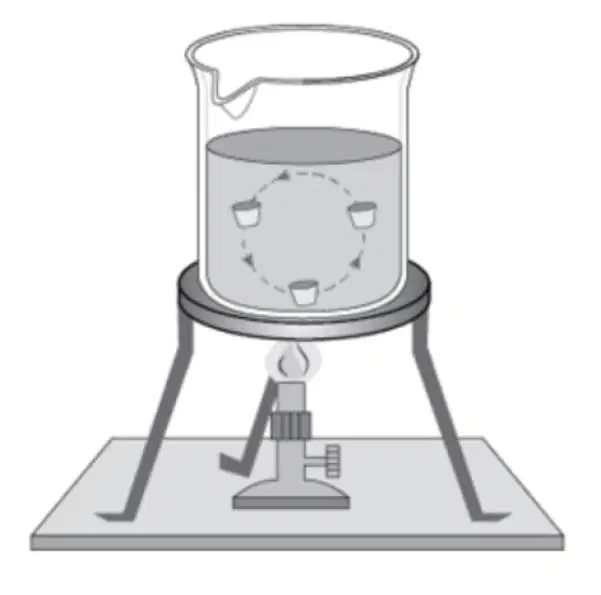
A student drops a solid piece of foam in boiling water. The piece of foam rises to the top of the container, gets pushed to the side, sinks to the bottom, and then rises again repeatedly.
What causes the foam to move in a circular motion?
conduction
convection
evaporation
radiation
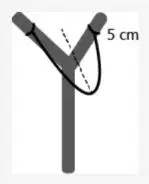
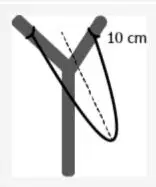
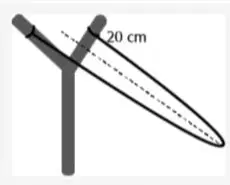
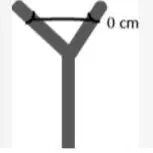
A student constructs a new slingshot. To ensure a paper ball will travel the greatest distance, the student varies the amount the rubber band is pulled back from the slingshot.
Which slingshot would cause the paper ball to travel the greatest distance?
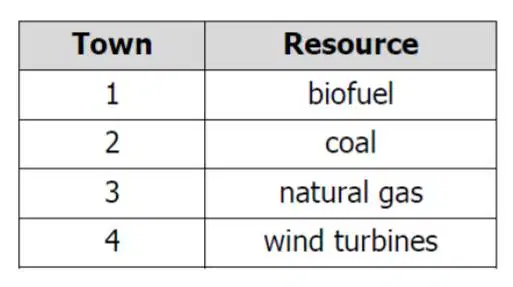
Four towns use different resources to produce electricity.
Which town uses a resource that is least likely to be depleted as electricity is produced?
Town 1
Town 2
Town 3
Town 4
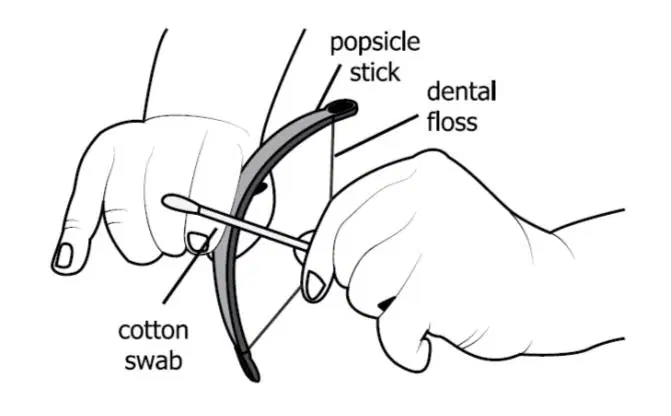
A student builds a model bow and arrow using a popsicle stick, cotton swab, and dental floss.
The student stretches the dental floss different amounts and releases it to launch the cotton swab. Which statement correctly describes the energy the student is using in the experiment?
The student is experimenting with gravitational potential energy, and the amount of stored energy increases as the dental floss is pulled back farther.
The student is experimenting with elastic potential energy, and the amount of stored energy increases as the dental floss is pulled back farther.
The student is experimenting with gravitational potential energy, and the amount of stored energy decreases as the dental floss is pulled back farther.
The student is experimenting with elastic potential energy, and the amount of stored energy decreases as the dental floss is pulled back farther.
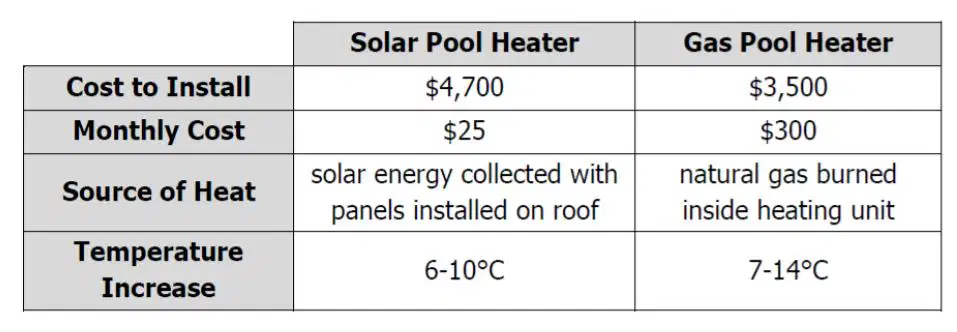
A family is installing a heater to warm a swimming pool. The table shows the two options the family is considering.
The family wants to conserve resources from the natural environment. Which is the best choice, and why?
the solar heater because it costs less to operate each year
the solar heater because it does not consume materials to heat the pool
the gas heater because it increases the temperature of the pool more
the gas heater because it costs less to install
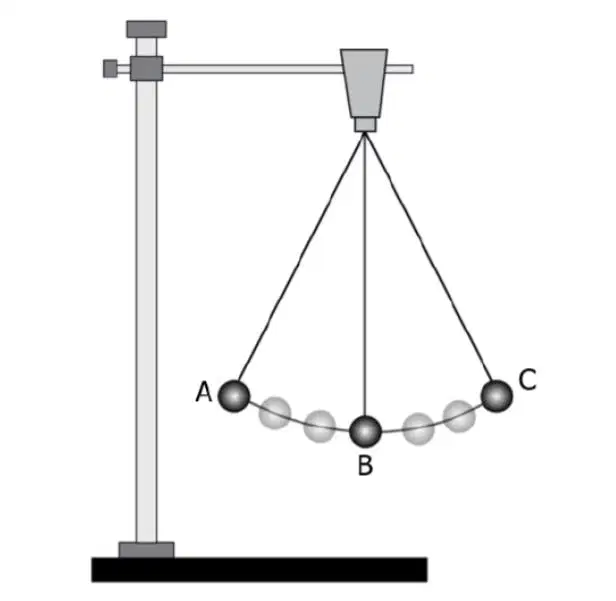
A pendulum swings between points A and C.
Which statement best describes the energy transformation taking place in the pendulum?
All the kinetic energy of the pendulum is converted to potential energy at points B and C.
All the potential energy of the pendulum is converted to kinetic energy at points B and C.
All the potential energy of the pendulum is converted to kinetic energy at points A and C.
All the kinetic energy of the pendulum is converted to potential energy at points A and C.
Rubber for car tires is made from latex, a substance found in the bark of the rubber tree. Crumb rubber is a recycled product made from grinding the rubber from old tires. Crumb rubber can be used to create a soft surface under playground equipment, serve as a soil alternative on sports turf, and make running tracks.
How can crumb rubber help the environment?
It can reduce the cost to build playgrounds and sports fields.
It can help decrease rubber waste in landfills.
It can decrease the growth of new bark on trees.
It can create safer playgrounds and sports fields for children.
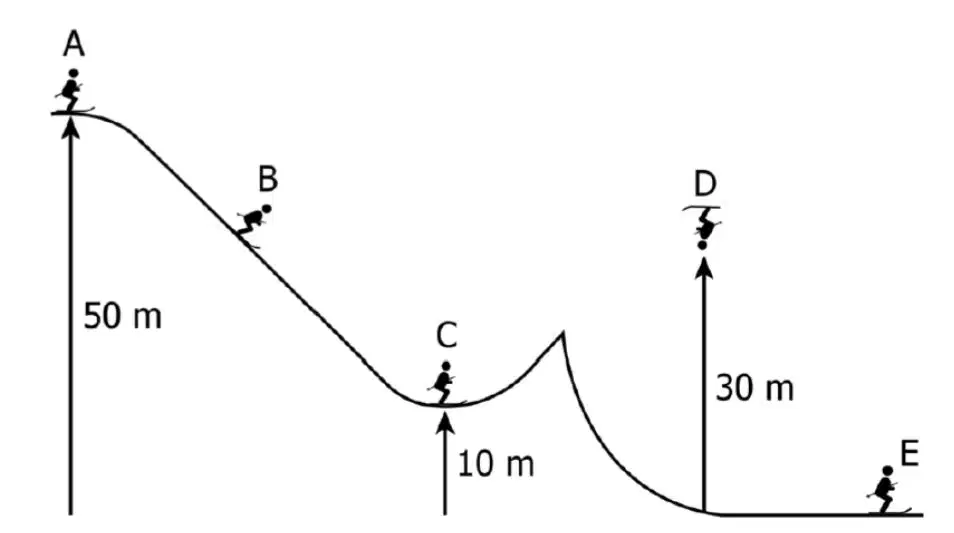
A skier starts skiing from a hilltop 50 meters from the ground. The diagram shows different positions (A-E) of the skier.
Which statement is correct about the kinetic energy transformation taking place in the motion of the skier?
It is converted to potential energy when the skier moves from point A to point B.
It is converted to potential energy when the skier moves from point B to point C.
It is converted to potential energy when the skier moves from point C to point D.
It is converted to potential energy when the skier moves from point D to point E.
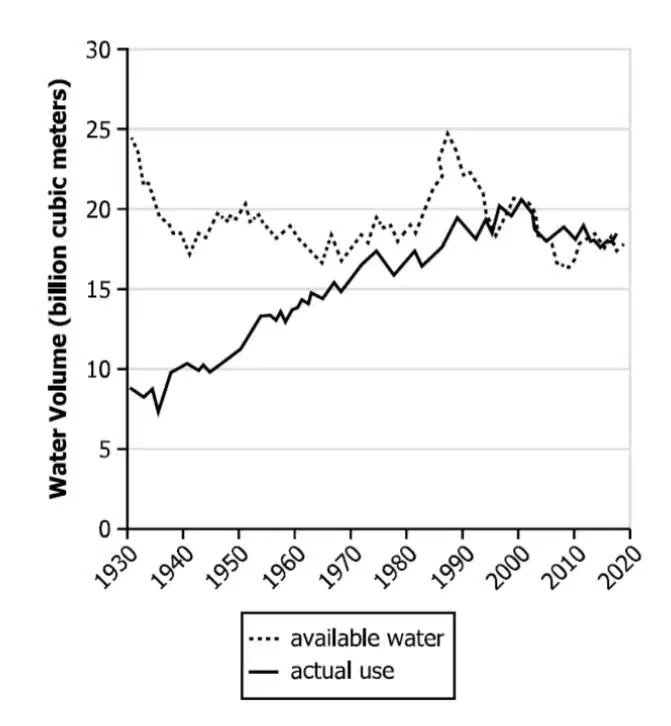
The graph compares the available water and people’s actual use of fresh water from the Colorado River located in the western United States.
What can be argued from the graph?
There has always been a shortage of water in the region around the Colorado River.
The demand for water has constantly reduced over time.
There is no change in either demand or availability of water over time.
The rate of use of available water will reduce the fresh water available in the future.
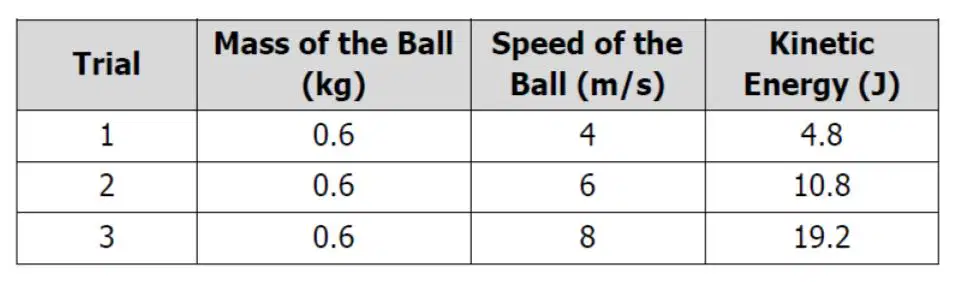
A student rolls a 0.6 kg ball on the floor in three trials with a different amount of force in each trial. The student records the average speed and the kinetic energy of the ball in each trial.
If the student performs a fourth trial with the ball moving at 10 m/s, what is the best prediction for the kinetic energy of the ball?
30.0 J
22.2 J
14.0 J
3.2 J
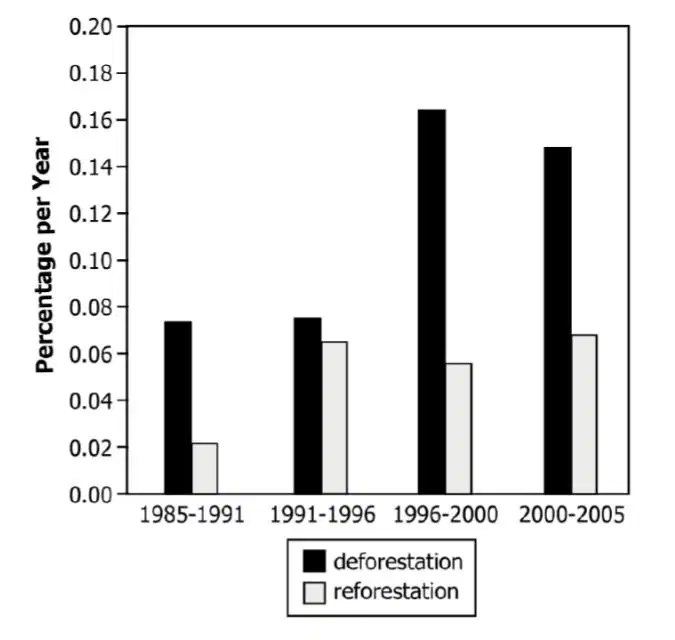
People in the country of Bolivia use forest timber as fuel for their homes. The graph shows the rate of deforestation and reforestation in northern Bolivia from 1985-2005.
How does the use of timber affect the forests of northern Bolivia?
Trees are renewable resources, and the country is replacing the trees as they are cut to maintain the stability of the forest environment.
Trees are renewable resources but are being used faster than they are being replaced, which decreases the stability of the forest environment.
Trees are nonrenewable resources because they are being used at a faster rate than they can grow, which increases the stability of the forest environment.
Trees are nonrenewable resources, so the country is reducing the percentage of trees cut to maintain the stability of the forest environment.
A student places a hand on a rock sitting out in the Sun and the other hand on a rock sitting in the shade. The rock in the Sun feels hot, and the rock in the shade feels cool.
Why do the rocks feel different?
The rock in the Sun is warmer than the hand. Heat energy transfers from warm areas to cool areas due to conduction.
The rock in the shade is cooler than the hand. Heat energy transfers from cool areas to warm areas due to radiation.
The rock in the Sun is cooler than the hand. Heat energy transfers from cool areas to warm area due to radiation.
The rock in the shade is warmer than the hand. Heat energy transfers from warm areas to cool areas due to conduction.

