
Font size
 Worksheets
Regents Rocks & Mins
Total questions: 31
Worksheet time: 5hrs 10mins

The image is a geologic cross section. Location A is within the metamorphic rock. Click the image to enlarge.
The metamorphic rock at location A is most likely
marble
quartzite
slate
phyllite
Using your ESRT, find the mineral that has a metallic luster, can scratch glass and contains sulfur.
Garnet
Galena
Magnetite
Pyrite

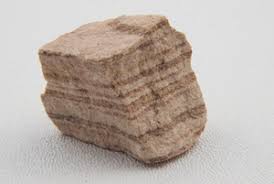
A student classified the rock below as sedimentary.
Which observation about the rock best supports this classification?
The rock is composed of several minerals.
The rock has a vesicular texture.
The rock contains fragments of other rocks.
The rock shows distorted and stretched pebbles.
Which texture best describes an igneous rock that formed deep underground?
glassy
vesicular
fine grained
coarse grained

Which mineral could this be (on your ESRT)?
Garnet
Olivine
Pyrite
Pyroxene
This is the only type of rock that can contains fossils.
sedimentary rocks
metamorphic rocks
extrusive igneous rocks
intrusive igneous rocks

Marble is made from the sedimentary rock _______ under high pressures and temperatures.
Limestone
Sandstone
Granite
Shale

Using the photograph and your knowledge of Earth Science,
Identify the name of this sedimentary rock.
Sandstone
Rock Gypsum
Breccia
Conglomerate

Name the type of rock and one characteristic that helped you ID this rock

Name the type of rock and 1 characteristic that helped you ID this rock.

Name the type of rock and 1 characteristic that helped you ID this rock.
Which mineral can be found in the rocks phyllite, sandstone, and granite?
quartz
pyroxene
gypsum
calcite
A fine-grained igneous rock composed mostly of plagioclase feldspar and hornblende and containing no quartz or pyroxene would be classified as
granite
andesite
peridotite
scoria
Which minerals contain the two most abundant elements by mass in Earth’s crust?
fluorite and calcite
magnetite and pyrite
galena and sulfur
amphibole and quartz
What mineral has a hardness of 7.5, has fracture, and is red?
(a)
Use youy ESRT's to answer the following:
List the minerals that can be used to make jewlery. (Click all that apply)
Quarts
Olivine
Garnet
Hematite
Pyroxene and Amphibole

What is the order of sedimentary rock formation? (hint: follow the arrows from igneous to sedimentary)
1. deposition and burial,
2. weathering and erosion,
3. compaction and cementation
1. compaction and cementation
2. deposition and burial,
3. weathering and erosion,
1. compaction and cementation,
2. weathering and erosion,
3. deposition and burial,
1. weathering and erosion,
2. deposition and burial,
3. compaction and cementation
Which rock is only formed by regional metamorphism?
slate
hornfels
dunite
marble
The rock formed by contact metamorphism between magma and sandstone would be...
marble
quartzite
phyllite
slate
Which mineral can be used for jewelry?
Dolomite
Selenite gypsum
Hematite
Pyrite
Which two elements are found in most of the minerals listed on page 16 of the ESRT?
Carbon and Iron
Iron and Lead
Calcium and Potassium
Silicon and Oxygen
Fossils are a form of:
Mineral
Igneous Rock
Sedimentary Rock
Metamorphic Rock

