
 Worksheets
Aromaticity
Total questions: 20
Worksheet time: 16mins

The compound is ____________________ .
aromatic
not aromatic

The compound is ____________________ .
aromatic
not aromatic

The compound is ____________________ .
aromatic
not aromatic

The compound is ____________________ .
aromatic
not aromatic

The compound is ____________________ .
aromatic
not aromatic

The compound is ____________________ .
aromatic
not aromatic

The compound is ____________________ .
aromatic
not aromatic

The compound is ____________________ .
aromatic
not aromatic

The compound is ____________________ .
aromatic
not aromatic

The compound is ____________________ .
aromatic
not aromatic

1. Which of the following compounds is not aromatic?
a
b
c
d
2. Which of the following statements is true for benzene?
Benzene easily undergoes addition due to unsaturation
𝞹-electrons are delocalised in the benzene ring
Three isomeric forms are formed on monosubstitution of benzene
Two types of C-C bonds are present in benzene
Which of the following is aromatic?


Which of the following is aromatic?
A
B
C
D
E

Which of the following has significant resonance stabilization?
I
II
III
None
All of the above

Which is NOT aromatic?
I
II
III
IV
V
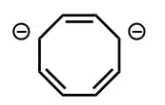
Classify the aromaticity of the following molecule.
Aromatic
Non aromatic
Anti-aromatic
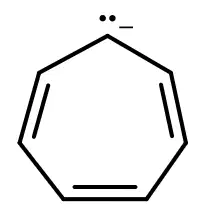
Classify the aromaticity of the following molecule. (Assume planarity)
Aromatic
Non aromatic
Anti-aromatic
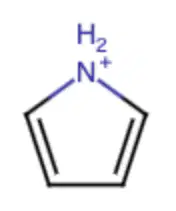
Classify the aromaticity of the following molecule. (Assume planarity)
Aromatic
Non aromatic
Anti-aromatic
Which of the following is/are the number of π electrons that satisfy Huckel's rule?
4
6
12
18

