
 Worksheets
Musical Composition Elements
Total questions: 73
Worksheet time: 6hrs 5mins
a short melodic or rhythmic musical idea. They have distinct melodic, pitch, or rhythmic patterns. It is used throughout a piece of music as a unifying element.
Motif
Theme
Ostinato
Sequence
a longer musical idea, typically several measures. It may contain one or several phrases
Repetition
Motif
Theme
Sequence
takes place when a motive or theme is repeated exactly the way it was the first time it occurred, on the same note
Repetition
Imitation
Sequence
Retrograde
occurs when a motive is repeated immediately on a different note, usually a 2nd or 3rd higher or lower
Sequence
Imitation
Repetition
Motif
occurs when a motive is repeated immediately in another voice, such as in the bass clef following a statement of the motive in the treble clef, or by a different instrument.
Sequence
Motif
Repetition
Imitation
refers to the rise and fall by pitch
Conjunct motion
Disjunct motion
Ostinato
Contour
occurs when only a portion of the motive appears.
Ostinato
Theme
Fragmentation
Sequencing
a continually repeated musical phrase or rhythm
Ostinato
Imitation
Sequencing
Motif
when a melody moves in a stepwise manner
Conjunct motion
Parallel motion
Disjunct motion
Contrary motion
when the notes form intervals larger than a second
Conjunct motion
Disjunct motion
Parallel motion
Oblique motion
same melody but the duration of the notes are longer by the same ratio
Diminution
Augmentation
Sustained chords
Modulation
same melody but the duration of the notes are shorter by the same ratio
Diminution
Augmentation
Fragmentation
Modulation
the process of changing from one key to another
Fragmentation
Modulation
Transposition
Ornamentation
a theme that is written backwards, that is, the last note becomes the first, and the first becomes last
Inversion
Retrograde
Sequencing
Contrary motion
the intervals of a melody are turned upside down
Inversion
Counterpoint
Retrograde
Motif
the process of presenting the melody in a key other than the original. It differs from sequence because the intervals keep the same qualities as in the original
Modulation
Fragmentation
Ornamentation
Transposition
When a note or portion of a melody is placed in a different octave
Transposition
Octave displacement
Fragmentation
Sequencing
a contrasting melody which can stand on its own but also complements the theme or original melody. It may occur at the same time as the theme, may follow it, or may begin part way through the theme
Couterpoint
Countermelody
Pedal Point
Alberti bass
Another name for a question phrase
Antecedent
Consequent
Another name for answer phrase
Antecedent
Consequent
is the process of developing a theme by changing it in various ways
Variations
Thematic Transformation
Motivic transformation
Modulation
kind of broken chord or arpeggiated accompaniment, where the notes of the chord are presented in the order lowest, highest, middle, highest.
Alberti bass
Ornamentation
Chordal texture
Ostinato
Types of contour:
Ascending
Descending
Repeated
Angular
Two musical phrases moving in the same direction, by the same interval:
Parallel motion
Oblique motion
Contrary motion
Similar motion
progression of two voices moving in opposite directions.
Parallel motion
Contrary motion
Oblique motion
Similar motion
occurs when one voice stays the same and the other voice moves up or down by step or leap.
Contrary motion
Parallel motion
Oblique motion
Similar motion
occurs when two melodies move in the same direction by different intervals:
Parallel motion
Contrary motion
Oblique motion
Similar motion
a note that is held through changing harmonies, starting as a chord tone before becoming a non-chord tone.
Pedal point
Counterpoint
Chordal texture
Contrapuntal texture
a compositional technique in which two or more melodic lines (or "voices") complement one another but act independently.
Pedal Point
Counterpoint
Alberti bass
Polyphony
a technically brilliant, sometimes improvised solo passage toward the close of a section.
Cadenza
Inversion
Retrograde
Register
two or more voices play the same tune starting at different times.
Canon
Rondo
Fugue
Invention
A note held for the duration of multiple measures:
Drone
Cadenza
Retrograde
Inverted sequence
a primary part is supported by one or more additional strands that provide the harmony.
Homophony
Monophony
Polyphony
Heterophony
consisting of a melody, typically sung by a single singer or played by a single instrument player without accompanying harmony or chords.
Monophony
Homophony
Heterophony
Antiphony
the simultaneous performance of different versions of the same melody by different voices or instruments.
Monophony
Homophony
Heterophony
Polyphony
the style of simultaneously combining a number of parts, each forming an individual melody and harmonizing with each other.
Polyphony
Heterophony
Homophony
Monophony
performed by two choirs in interaction, often singing alternate musical phrases.
Polyphony
Antiphony
Counterpoint
Heterophony
In monophonic texture, melodies can be sung/played in unison at different octaves.
True
False
added notes are placed within the motive
Extension
Internal Expansion
Motivic transformation
Thematic transformation
created by adding to the motive
Internal Expansion
Extension
Inversion
Retrograde
Sonata-Allegro Form contains:
Rondo
Closing themes
Coda
Cadenza
Common texture used in Counterpoint:
Polyphony
Antiphony
Contrapuntal
Chordal

Which of the following elements are NOT included
Antecedent
Consequent
Phrase Elision
Monophony

The following is an example of:
Trill
Turn
Mordent
Tremelo

The following is an example of:
Arpeggio
Mordent
Apoggiatura
Acciacctura
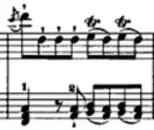
The Downbeat is an example of:
Acciacctura
Appoggiatura
Arpeggio
Grace note
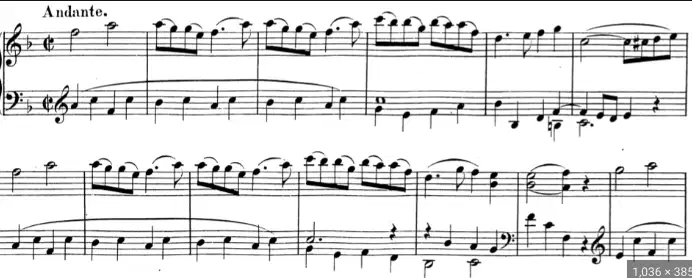
What relationship do measures 2 and 3 share?
Imitation
Repetition
Sequences
Ostinatos
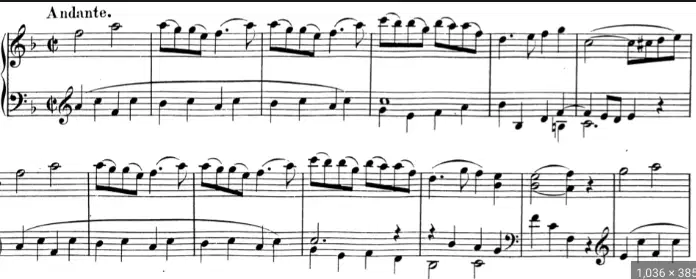
In the last measure, which device is used?
Extension
Sequencing
Repetition
Retrograde

The following is known as:
Retrograde
Inversion
Retrograde-Inversion
Sequencing
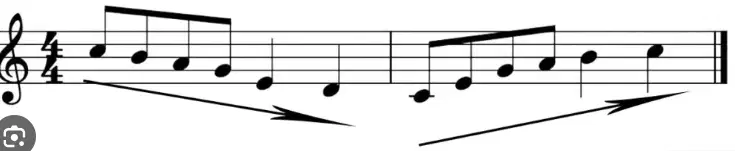
Which of the following types of contour is shown?
Arch
Ascending
Descending
Inverted Arch
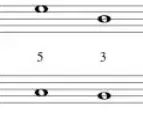
The type is motion is called...
Oblique
Similar
Contrary
Parallel
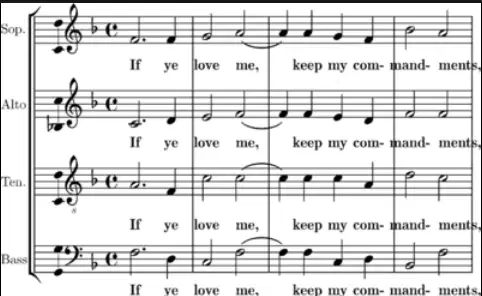
Which of the following textures is this excerpt?
Homophony
Monophony
Heterophony
Polyphony
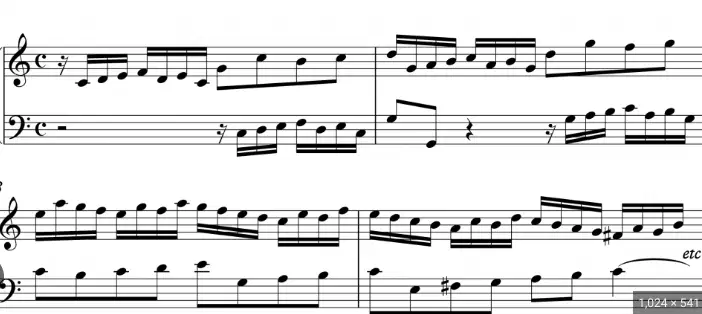
The following texture can be described as...
Polyphonic
Monophonic
Homophonic
Heterophonic
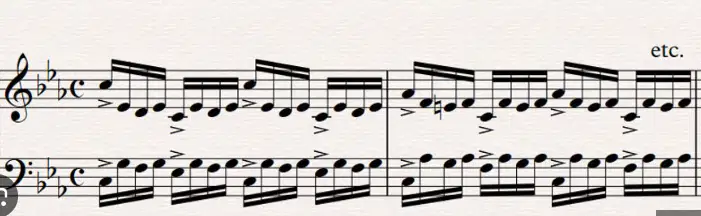
The following texture can be described as...
Monophonic
Homophonic
Polyphonic
Heterophonic
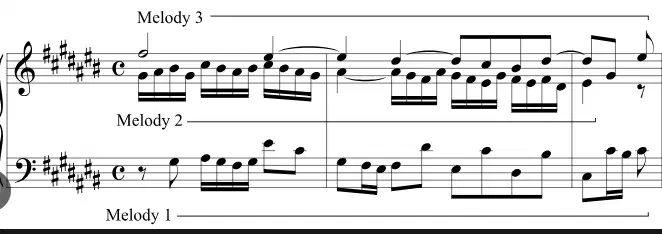
This excerpt can be identified as...
Canon
Rondo
Counterpoint
Homophonic
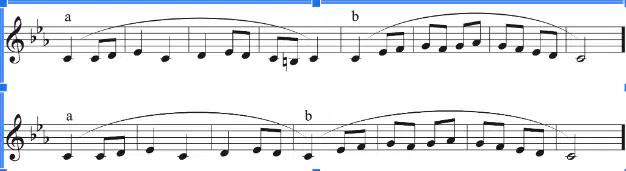
Example 2 differs because...
Material is added to the motive
Motivic transformation takes place in Phrase Groups
The second line is an example of Phrase Elision
In the second example, B acts as a consequent of A
AAA
Strophic Form
Rondo Form
Sonata-Allegro Form
Theme and Variations
ABCBA
Strophic Form
Binary Form
Ternary Form
Arch Form
Select all that apply: The tonic moves to the dominant key in:
Strophic Form
Binary Form
Ternary Form
Sonata-Allegro Form
How many themes are there usually in the Exposition of Sonata-Allegro Form?
1
2
3
4
The Second Theme in the Exposition of the Sonata-Allegro Form usually modulates to which two scale degrees?
i
III
V
VI
How does the Exposition differ from the Recapitulation?
In the Exposition, the material of the motive does not modulate.
In the Exposition, the material of the motive modulations to a close key.
In the Recap, the material of the motive stays in the tonic
In the Recap, the material of the motive is usually modulated when entering the coda
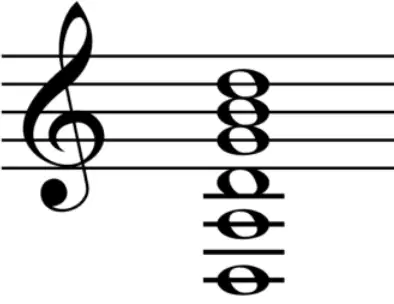
Which element is used here?
Pedal Point
Drone
Doubling
Octave Displacement
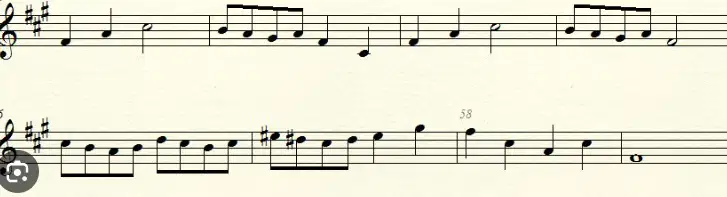
Which device is used starting at line 2, compared to measure 2.
Ornamentation
Ostinatos
Fragmentation
Transposition
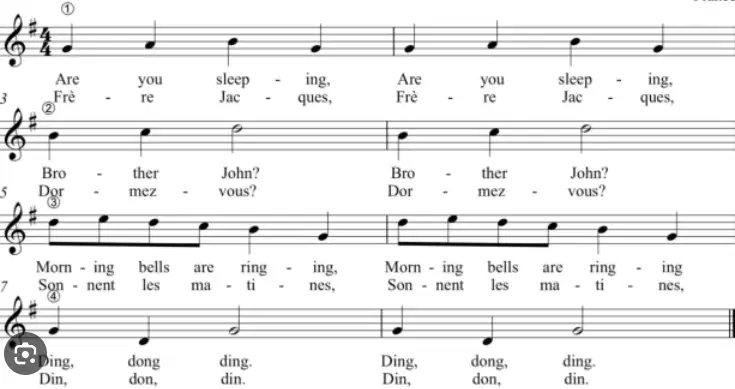
In Line 2, measure 1, the last beat of the phrase ending on the dominant makes this an example of...
An Antecedent, Consequent relationship
Internal Expansion and Extension
Fragmented melodies
A change in the main motive or theme

The short excerpt represents...
Augmentation
Diminution
Ostinato
Fragmentation
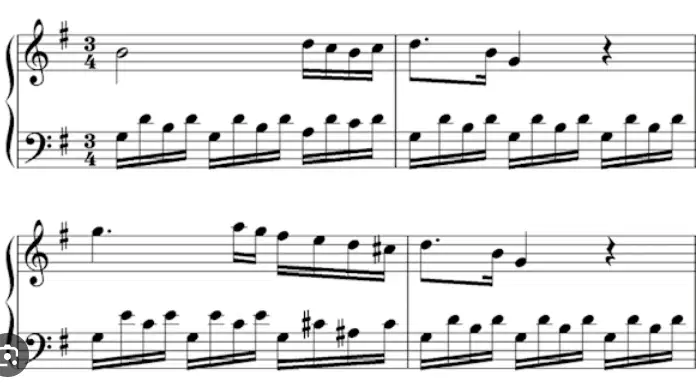
The bass can be identified as...
An Ostinato
Alberti bass
Walking bass
Repetition
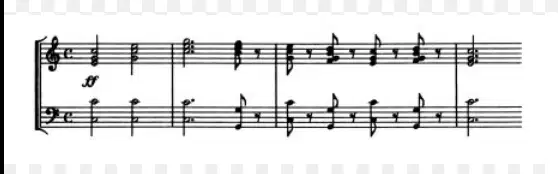
Based off the excerpt, we know the texture is most likely...
Polyphonic
Monophonic
Chordal
Contrapuntal
The last section of a Fugue is called the...
Answer
Episode
Stretto
Exposition
the primary melodic idea stated by each voice in the exposition of the Fugue is the...
Answer
Subject
Countersubject
Episode
What is a Fugue?
contrapuntal, polyphonic compositional technique in two or more voices, built on a subject
contrapuntal, homophonic compositional technique in two or more voices, built on a subject
contrapuntal, polyphonic compositional technique in two or more voices, built on a answer
contrapuntal, homophonic compositional technique in two or more voices, built on a answer
The Countersubject takes place...
With the first statement of the Subject
With the first statement of the answer
Completely alone
With reoccurring fragments of the Subject
The answer of the Fugue takes place in the ____________ key, and this is called a ______ answer, when the answer is an EXACT transposition of the original Subject.
Submediant,
Real
Dominant,
Tonal
Submediant,
Tonal
Dominant,
Real

